
Reviewed · ANCIENT CITY & ERAWAN MUSEUM TRIPS
The Erawan Museum: A Cultural Treasure in Bangkok
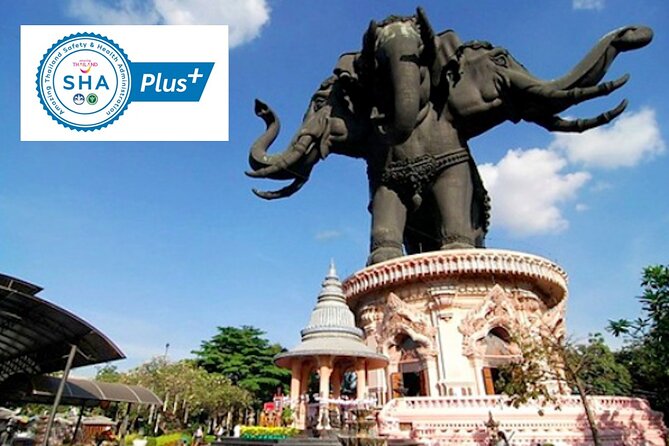
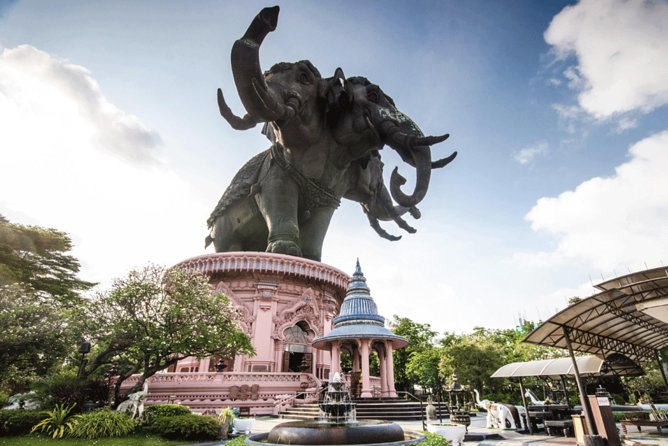
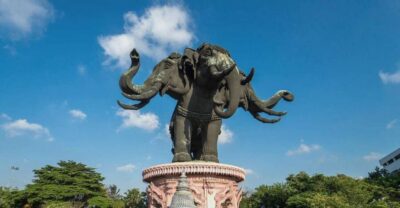
The first thing you notice is the enormous three-headed elephant rising above the museum roof. It is not a small museum with a decorative entrance. The building itself is the main event, and the grand staircase, painted interiors, and elephant-filled gardens make the short trip from central Bangkok feel worthwhile.
I like the clear symbolic plan: one level for the underworld, one for earth, and one for heaven. I also like the included flower, incense sticks, lotus, and multilingual audio guide, which give your visit more context than a quick photo stop. The main drawback is that the museum can feel small for the admission price, and tour-bus crowds may make photography difficult.
In This Review
- Key points to know before you go
- The giant elephant that gives Erawan its identity
- Three levels, three views of the universe
- What the audio guide adds
- The gardens provide breathing room
- Getting there from Bangkok by BTS
- Is the $16.21 ticket good value?
- When to visit and how long to stay
- Who will enjoy Erawan Museum most?
- Practical booking advice
- Should you book the Erawan Museum?
- FAQ
- Where is the Erawan Museum located?
- How much does the experience cost?
- What does the ticket include?
- What languages are available for the audio guide?
- How long should I spend at the museum?
- What are the opening hours?
Key points to know before you go
- The three-headed elephant is the main attraction: Its scale is difficult to judge from photographs, so allow time to see the building from the garden and from the entrance steps.
- The interior follows a three-level religious design: The displays connect the underworld, earth, and heaven with Thai art, antiques, and Buddhist objects.
- The museum is easy to reach by BTS: Ride to Chang Erawan Station, then walk about five to ten minutes.
- Your ticket includes more than entry: You receive a flower, incense sticks, and lotus for floating in water, plus an audio guide.
- A focused visit takes about 30 minutes: You can stay longer for the gardens, photographs, and slower listening.
- The price is $16.21 per person: That can be fair if you value the architecture and setting, but it may feel high if you expect a large conventional museum.
The giant elephant that gives Erawan its identity
The Erawan Museum was created to present Thailand’s long history, culture, fine arts, and religious traditions inside an unusual structure. The result is part museum, part religious art display, and part architectural spectacle.
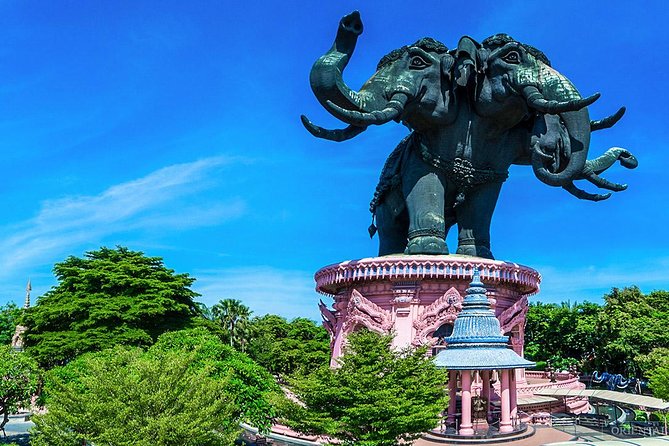
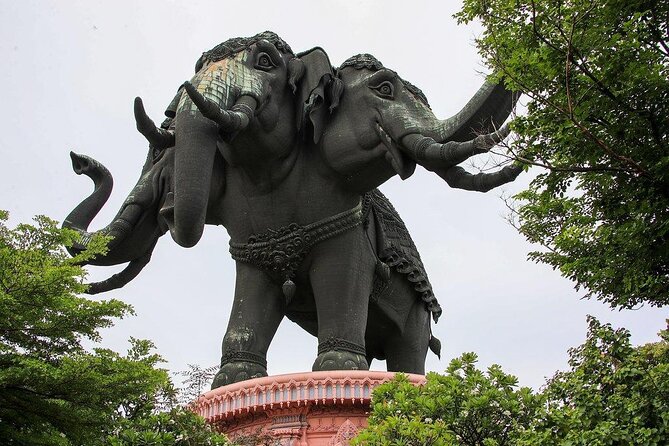
The three-headed elephant is the image you will remember. It represents Erawan, the celestial elephant associated with Hindu and Buddhist traditions. You do not need to know every detail of the mythology to appreciate the scale. From the ground, the elephant looks almost too large for the building beneath it.
Give yourself a few minutes outside before going in. Walk around the grounds, look up at the different angles of the sculpture, and take in the smaller elephant figures placed around the gardens. Photographs from the front show the basic shape, but they do not fully communicate how much the building dominates the property.
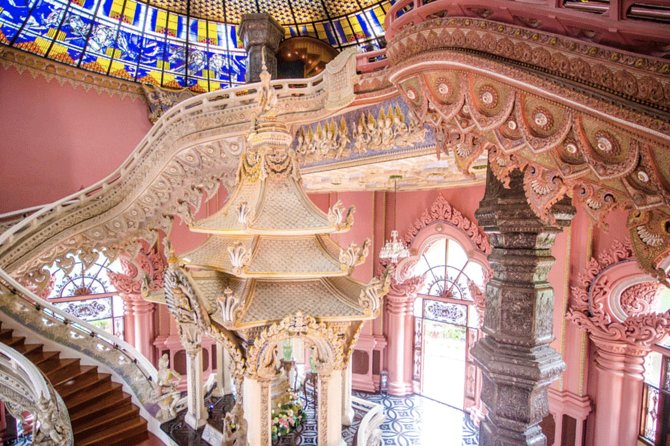
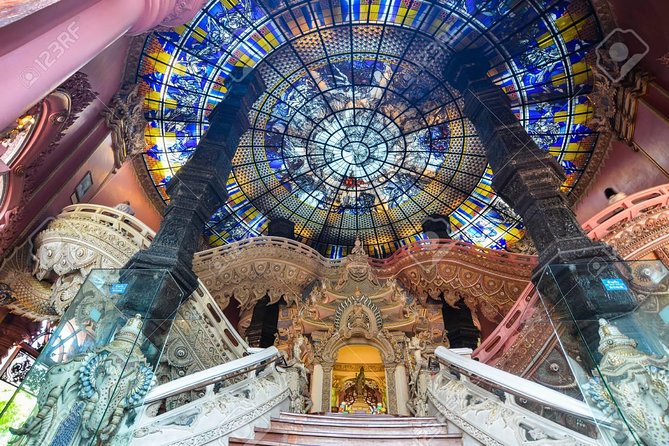
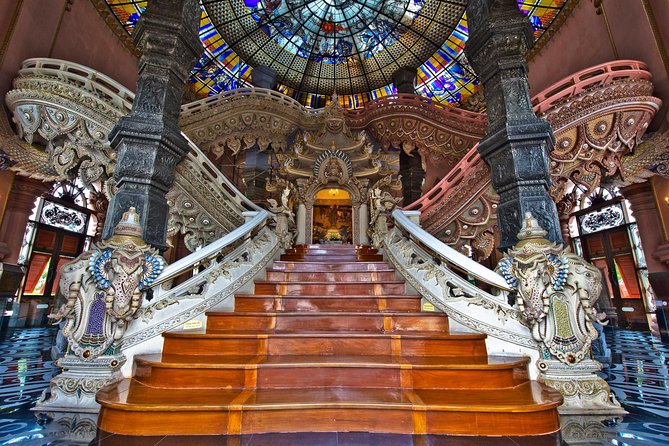
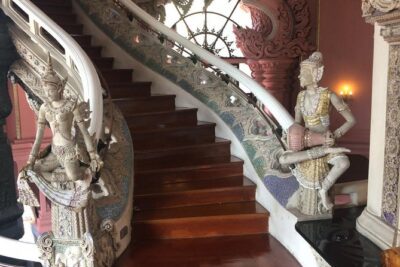
The grand staircase is another highlight. It gives the entrance a ceremonial feel and leads you into a museum that is unlike a standard gallery in Bangkok. The decorative details are part of the attraction, so do not rush straight to the display cases.
More Ancient City and Erawan Museum trips:
- The Ultimate Ancient city of Ayutthaya Private Day Trip
★ 5.0 · 139 reviews - Samut Prakan: The Erawan Museum Admission Ticket (NON THAI)
★ 4.8 · 89 reviews - Bangkok: Samut Prakan Ancient City and Erawan Museum Ticket
★ 4.4 · 73 reviews
Three levels, three views of the universe
The museum’s interior is organized around three symbolic realms. This makes the visit easy to follow, even if you are not familiar with Thai religious ideas.
The lower level represents the underworld. It contains pottery and historical material, with information about legends and earlier periods. This section has a darker, more enclosed feel. The low ceiling and dim atmosphere may not appeal to everyone, especially if you are visiting alone or prefer bright, open galleries.
Still, this lower room helps explain the museum’s larger concept. You are not simply moving from one collection to another. You are moving through a carefully designed picture of the universe, from the world below to the human world and then upward.
The middle level represents earth. Here you can see Thai antiques, fine art, and religious objects connected to the country’s cultural traditions. This is likely to be the most straightforward section for visitors who want historical and artistic context without spending a long time reading.
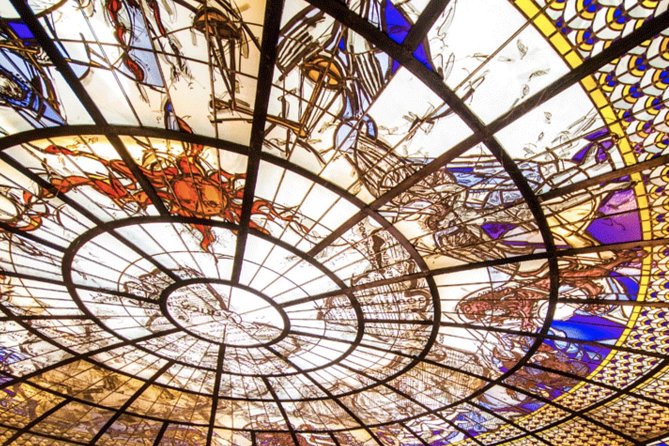
The upper level represents heaven. It is the most atmospheric part of the building, with religious imagery and a sense of height that contrasts with the enclosed lower room. The interior details reward a slow look. Patterned surfaces, carved decoration, and sacred figures matter as much here as the individual objects.
The museum is not arranged like a large national collection with room after room of labels. Its strength is the relationship between the objects, the building, and the spiritual theme. If you want a short cultural visit with a strong visual setting, that works well. If you want hours of detailed historical interpretation, the museum may feel limited.
What the audio guide adds
An audio guide is included in English and Chinese, with the experience information also identifying Russian, Thai, and Korean options. This is useful because the museum’s design can be striking without being immediately clear.
Use the guide to understand why the levels are arranged as they are and how the religious objects fit the building’s overall idea. Without explanation, you may spend most of your time looking at the elephant, staircase, and decorations. With the audio, you can connect those features to Thai culture and the museum’s purpose.
The suggested visit is about 30 minutes. That is a reasonable minimum if you move steadily through the three levels and listen selectively. I would allow closer to an hour if you want photographs, time in the gardens, and a less hurried look at the displays.
The advertised duration can range from 30 minutes to 10 hours, but that wide range reflects how the experience may fit into a larger day rather than the time needed inside the museum. There is no need to plan an entire day around the museum unless you want to linger or combine it with other stops in Samut Prakan.
The gardens provide breathing room
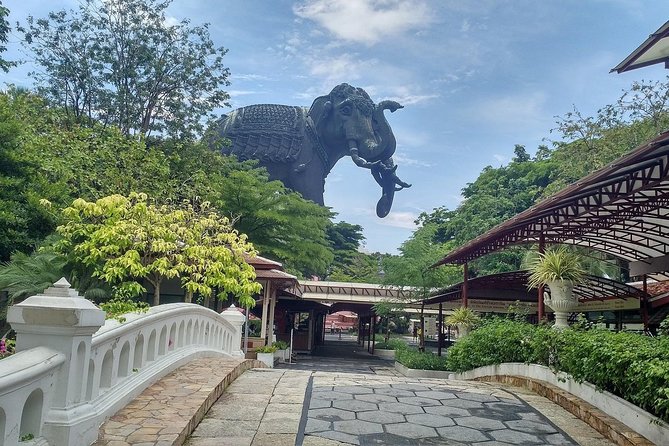
The museum grounds are more than a path to the entrance. Lush gardens surround the building, with elephant models and places to pause. After the darker lower level, the outdoor space gives you a welcome change of pace.
I especially like the contrast between the massive central elephant and the smaller figures scattered around the property. It makes the museum feel playful as well as serious. Families and photographers will find more to do outside than the short indoor route might suggest.
The gardens also help you understand the building’s proportions. From one spot, the elephant seems attached to the museum. From another, it appears to hover above the roof. Move around rather than taking one photograph and leaving.
A flower, incense sticks, and lotus are included with admission for floating in water. These items add a small ceremonial element to the visit. They are not a substitute for a guided religious experience, but they connect the visit with the museum’s spiritual setting.
More museums and galleries in Bangkok:
- Skip the Line: Patpong Museum Guided Tour
★ 5.0 · 80 reviews - Private Guided Day Tour to Erawan Museum & Ancient City
★ 4.5 · 25 reviews - Samut Prakan: Erawan Museum Discounted Admission Ticket
★ 4.8 · 20 reviews - Jim Thompson House Museum Entrance Ticket & Hotel Pick up
★ 4.0 · 9 reviews
Getting there from Bangkok by BTS
The museum is in Samut Prakan Province, which sounds farther from central Bangkok than it really is. The simplest stated route is the BTS Skytrain to Chang Erawan Station, followed by a walk of about five to ten minutes.
This is a strong reason to choose public transport. Bangkok traffic can turn a short road journey into a slow one, while the BTS gives you a more predictable arrival. The museum is near public transportation, and most people can participate without special arrangements.
Transportation to and from the museum is not included in the $16.21 ticket. You will need to pay separately for the BTS, taxi, or other local transport. The ticket is therefore best viewed as admission to the museum, not as a packaged sightseeing tour.
Plan the return journey before you arrive if you are visiting late in the day. The museum is listed as open daily from 9:00 a.m. to 7:00 p.m. An afternoon visit can work well, particularly if you want to see the building in daylight and still have time afterward. Avoid leaving your arrival until the last moment, since the museum’s short suggested visit time does not account for transport delays.
Is the $16.21 ticket good value?
The price is $16.21 per person, and the ticket is specified for foreign visitors. It includes entry, the audio guide service, and the flower, incense sticks, and lotus offering.
Value depends on what you want from a museum. If the three-headed elephant, unusual architecture, gardens, and symbolic interior appeal to you, the ticket buys a distinctive experience that you will not get at a conventional gallery. The audio guide also helps justify the cost by giving structure to a short visit.
If your priority is a large collection with many rooms and extensive displays, the price may feel less comfortable. One part of the museum can be dark, gloomy, musty, and low-ceilinged, and the indoor route itself may take only about 30 minutes. You are paying as much for the building and grounds as for the objects inside.
The attraction can also become crowded when buses arrive, with photography becoming harder in the central areas. You may find the best value by visiting at a quieter time and making full use of the gardens rather than treating the stop as a fast indoor walk.
When to visit and how long to stay
The museum is open every day from 9:00 a.m. to 7:00 p.m., according to the provided schedule. Morning visits may give you a calmer start, while a late afternoon visit lets you use the extended closing time.
I would set aside one to two hours in a sensible Bangkok itinerary. Thirty minutes is enough for the basic route. An hour gives you time to hear more of the audio guide and study the objects. Longer visits make sense only if you enjoy photographing the architecture, sitting in the gardens, or taking a very slow look at the decoration.
Crowds matter more here than they would in a broad city museum. The interior is compact, and a large group can fill a staircase or make it hard to frame the elephant. If you arrive behind a coach group, slow down outside and enter after the main flow has moved on.
Wear clothing suitable for a cultural and religious setting. The supplied information does not specify a formal dress code, so I would choose respectful, comfortable clothing rather than treating this as only an outdoor photo stop.
Who will enjoy Erawan Museum most?
I would recommend the museum to anyone interested in Thai religious art, unusual buildings, photography, or short cultural outings from Bangkok. It also suits you if you prefer a place with a clear theme instead of a huge collection that demands half a day.
Families may like the elephant design and outdoor sculptures, though the darker lower room and religious displays will appeal more to older children. Art and architecture enthusiasts should allow extra time for the staircase, ceiling details, and the building’s exterior views.
The museum is less suitable if you want a full-day historical museum, a formal docent-led tour, or transport included from your hotel. It is also not ideal if you dislike enclosed rooms or become frustrated by crowds around major photo points.
The experience provider is I Asia Thailand. No individual guide is named for this experience, so you should expect to explore with the audio guide rather than follow a personal guide through the museum.
Practical booking advice
Confirmation is provided at the time of booking, and the ticket is mobile, which makes it easy to keep with your Bangkok transport information. The experience is non-refundable and cannot be changed after purchase, so check your date and plans before paying.
The ticket information says foreign visitors are eligible for the included admission. Bring the mobile ticket ready for use and remember that transport, donations, and personal expenses are separate.
A donation is optional. You do not need to budget for one, but you may choose to contribute if you find the religious setting meaningful.
The biggest practical tip is to think of Erawan Museum as a focused architectural and cultural stop, not as a major all-day institution. The experience works best when combined with other plans in Bangkok or Samut Prakan.
Should you book the Erawan Museum?
Book it if you want to see one of Bangkok’s most unusual buildings, enjoy a short museum visit, and appreciate the connection between Thai art, religious symbolism, and architecture. The giant elephant, grand staircase, gardens, and multilingual audio guide give the $16.21 ticket a reasonable case.
Skip it if you expect a large collection, included transportation, or a long guided tour. The indoor section is compact, one room may feel gloomy, and crowd levels can affect your photographs.
For many visitors, the best plan is simple: take the BTS to Chang Erawan Station, spend about an hour exploring the building and grounds, and continue with the rest of your Bangkok day. That keeps the visit focused and lets the elephant, rather than an overlong schedule, remain the star.
FAQ
Where is the Erawan Museum located?
The Erawan Museum is in Samut Prakan Province, near Bangkok. It is accessible by taking the BTS Skytrain to Chang Erawan Station and walking about five to ten minutes.
How much does the experience cost?
The listed price is $16.21 per person. The ticket is specified for foreign visitors.
What does the ticket include?
Admission to the Erawan Museum, an audio guide service, a flower, incense sticks, and a lotus for floating in water are included. Transportation, optional donations, and personal expenses are not included.
What languages are available for the audio guide?
The audio guide is identified as available in English, Chinese, Russian, Thai, and Korean.
How long should I spend at the museum?
The suggested visit is about 30 minutes. You can stay longer for the gardens, photographs, and additional time with the audio guide. The listed experience duration ranges from 30 minutes to 10 hours.
What are the opening hours?
The museum is listed as open daily from 9:00 a.m. to 7:00 p.m.
Just added around Bangkok
- Bangkok: Fallabella River Front Iconsiam★ 4.7 · 3 reviews
- Private Grand Palace Bangkok City Tour & Klong Longtail Boat Trip★ 4.5 · 3 reviews
- Bangkok: Divana Scentuara Spa Chidlom Branch E-Voucher★ 5.0 · 3 reviews
- Bangkok: Flower Market & Sunset Walking Tour★ 3.7 · 3 reviews
- Private Shore Excursion: Best of Bangkok in a day★ 3.5 · 3 reviews
- From Bangkok: Kanchanaburi, River Kwai and Erawan Waterfall Tour★ 3.0 · 3 reviews
- Private Damnoen Saduak and Maeklong Railway Market Tour(min 2pax)★ 5.0 · 3 reviews
- Bangkok Full Day Ayutthaya landmark Guided Tour★ 5.0 · 3 reviews
Ancient City & Erawan Museum Trips, compared.

The Ultimate Ancient city of Ayutthaya Private Day Trip
Read our review →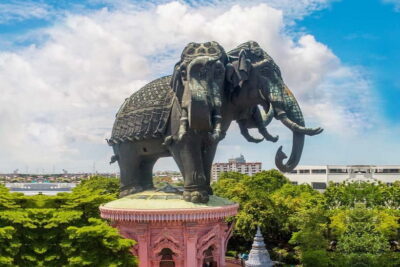
Samut Prakan Ancient City and Erawan Museum Ticket
Read our review →
Private Guided Day Tour to Erawan Museum & Ancient City
Read our review →
Ancient City (Mueang Boran) Entrance Tickets With Hotel Transfer
Read our review →Browse the lists this tour appears in