
Reviewed · ANCIENT CITY & ERAWAN MUSEUM TRIPS
Samut Prakan: Erawan Museum Discounted Admission Ticket
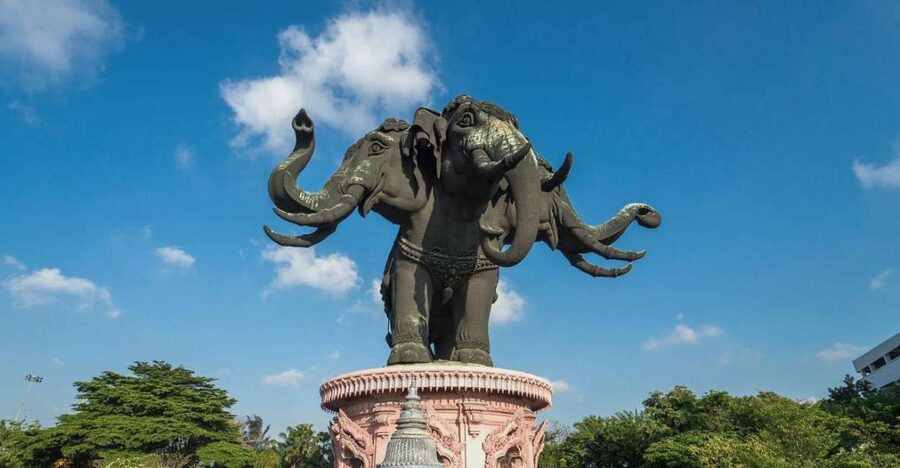
The first thing you notice is the massive three-headed bronze elephant, perched above a museum built to represent the universe. Inside, three symbolic levels take you from the Underworld through Earth and up into Heaven, making this more than a quick photo stop.
I like the blend of Thai religious ideas and international art, and I like that the $12 ticket includes the museum grounds, flowers, incense, and a lotus flower. The main drawback is the timed entry: you must arrive on the date and at the time you book, so this is not a flexible stop to squeeze in whenever you happen to be nearby.
In This Review
- Key points to know before you go
- Why the three-headed elephant matters
- Getting to Erawan Museum from Bangkok
- Starting below the elephant at Suvarnabhumi Level
- Looking up in the Earth Section
- Following the passageways into Cosmo Level
- Making time for the garden
- What the $12 ticket includes
- Timing, clothing, and practical rules
- How this visit compares with a standard Bangkok attraction
- Who should book the Erawan Museum?
- Final verdict: a memorable Samut Prakan side trip
- FAQ
- Where is Erawan Museum located?
- How can I reach the museum by public transport?
- What does the discounted ticket include?
- Is an audio guide included?
- Can I choose any visit time after booking?
- What clothing is required?
- Can I take photographs inside?
Key points to know before you go
- The elephant is the main event: The huge three-headed sculpture forms the roof and exterior of the museum.
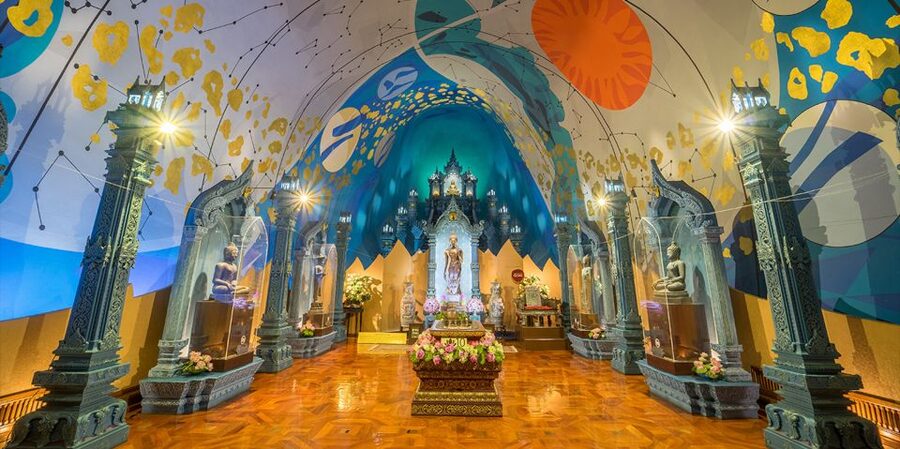
- Three levels tell one symbolic story: The underground Suvarnabhumi Level represents the past and the Underworld, the Earth Section represents the present, and the Cosmo Level represents Heaven.
- The interior is as important as the exterior: Look for Benjarong ceramics, Naga imagery, stained glass, and paintings of gods and goddesses.
- The BTS makes the trip manageable: Exit at Chang Erawan Station, E17, Exit 2, then use the free shuttle tuk-tuk.
- Modest clothing is required: Shorts, short skirts, and sleeveless shirts are not allowed.
- The audio guide covers five languages: English, Thai, Chinese, Korean, and Russian are available.
Why the three-headed elephant matters
The Erawan Museum is not simply a museum placed beneath a large statue. The building itself is the exhibit. Its three-headed elephant represents a powerful symbol from Thai and wider Asian religious thought, while the structure below it presents ideas about the universe, time, faith, and humanity.
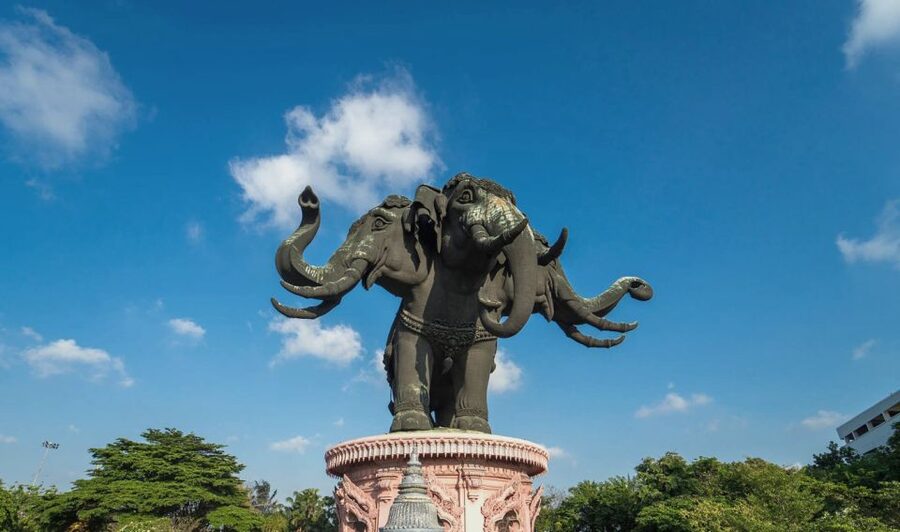
The elephant is made of bronze and is described as the first and largest hand-carved sculpture of its kind. At ground level, its scale is difficult to judge in one glance. You will want to walk around the exterior before entering, since each angle gives you a different view of the legs, decorative details, and curved body above.
This is an excellent place for photographs, but try not to treat the elephant as only a backdrop. The sculpture sets up the meaning of the whole museum. The building is intended as a symbol of peace and humanity, with Thai traditions placed beside artistic and philosophical ideas from other parts of Asia and the West.
The setting also helps. The museum grounds include a garden with rare tree species from across Thailand. Some have a place in Thai literature, so the outside area adds a cultural layer that a standard indoor gallery would not provide. You can take a quiet walk after seeing the main building rather than rushing straight back to the station.
More Ancient City and Erawan Museum trips:
- The Ultimate Ancient city of Ayutthaya Private Day Trip
★ 5.0 · 139 reviews - Samut Prakan: The Erawan Museum Admission Ticket (NON THAI)
★ 4.8 · 89 reviews - Bangkok: Samut Prakan Ancient City and Erawan Museum Ticket
★ 4.4 · 73 reviews
Getting to Erawan Museum from Bangkok
The simplest public transport route is the BTS Skytrain Green Line. Ride to Chang Erawan Station, listed as E17, and leave through Exit 2. A free shuttle tuk-tuk runs from there to the museum every day.
That shuttle matters because the museum is in Samut Prakan province, just outside Bangkok. The journey is still straightforward, but this is not a central Bangkok attraction you can reach with a short walk from the Grand Palace or Siam. Allow enough time for the BTS ride, the shuttle, and your booked entry window.
The meeting point is Erawan Museum, 99 Tambon Bang Muang Mai, Amphoe Mueang Samut Prakan, Samut Prakan 10270. Transfers are not included in the ticket, so you pay for your own BTS journey. In return, the free tuk-tuk from the station keeps the last part of the trip simple.
Your ticket is valid for one day, but the booking is tied to a specified date and time. Check your plans before paying. You cannot casually move the visit to another afternoon if your Bangkok schedule changes.
Starting below the elephant at Suvarnabhumi Level
The visit begins at the Suvarnabhumi Level, the underground part of the museum. This section represents the Underworld and the past, giving you a darker and more enclosed opening than the airy galleries above.
Here you will see ancient artifacts and porcelain from the owner’s collection. Benjarong ceramic ware is one of the details worth looking for. This Thai-style porcelain is known for its careful decoration and strong color patterns, and it gives the lower gallery a direct connection to Thai craft traditions.
You will also see a figure of Naga, the snake-like god associated with the Underworld and the giving of water in Buddhist belief. Naga figures appear often in Southeast Asian religious art, so this is a useful symbol to understand before you continue upward.
This level is not huge, but it rewards a slower pace. I would use the audio guide here if you want context rather than simply admiring the objects. English, Thai, Chinese, Korean, and Russian audio options are included, which helps you understand why the objects were selected and how they connect to the museum’s larger theme.
The underground setting can feel more intimate than the bright upper areas. If your main interest is architecture, you may find the lower collection less immediately dramatic than the elephant and stained glass. Still, it supplies the background for the journey from past to present to Heaven.
Looking up in the Earth Section
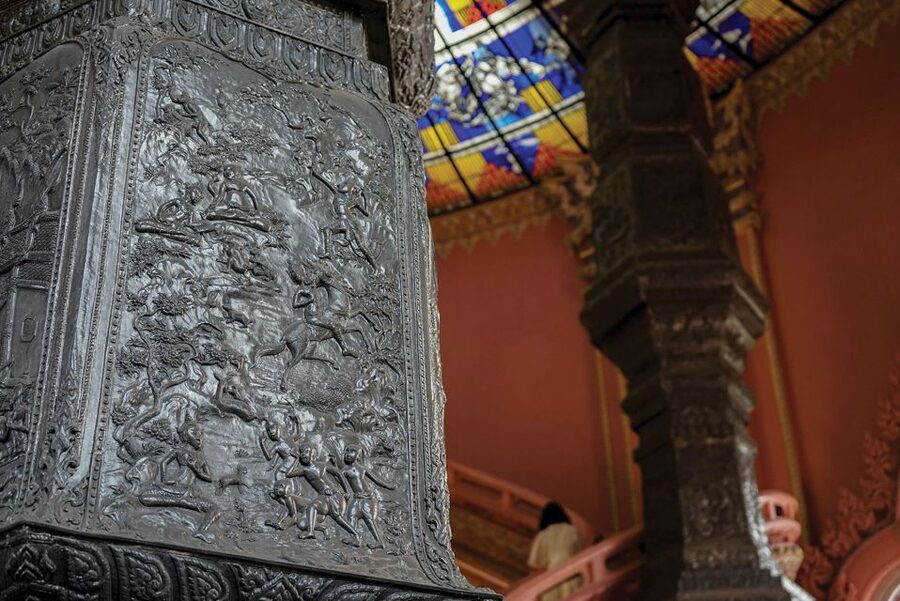
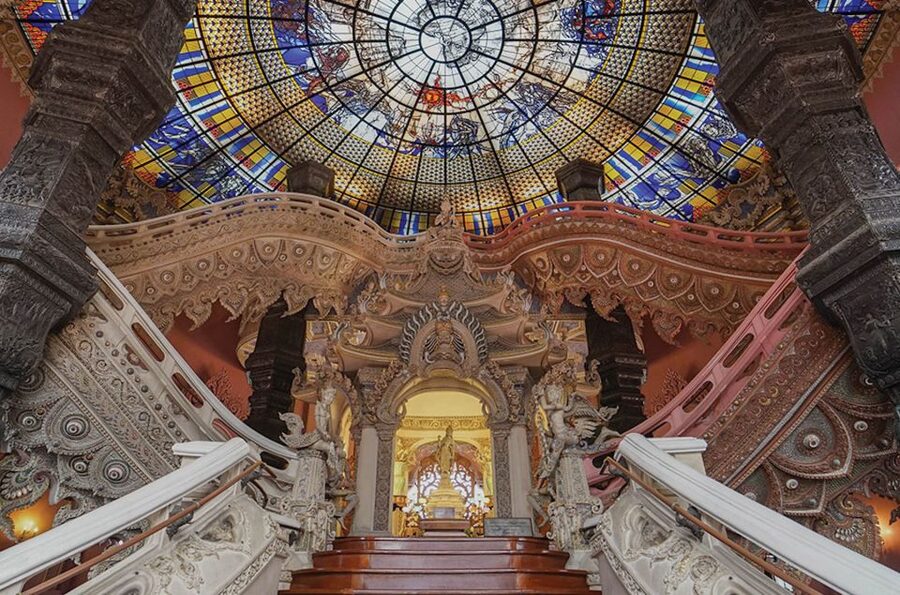
The Earth Section occupies the circular base that supports the elephant. It represents the human world and the present, and it is the point where the museum’s international artistic influences become most obvious.
The interior combines Eastern and Western styles in one unusual design. You may find the effect striking, though it can also feel visually busy. There is a lot to look at, so resist the temptation to photograph the first decorated surface and move on.
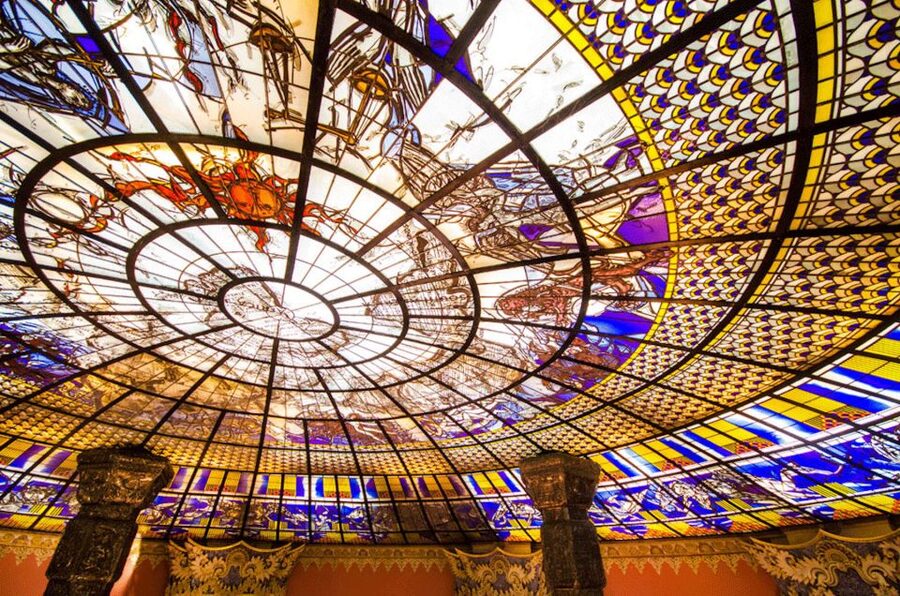
Pay attention to the ceiling near the entrance. Its design is intended to resemble the Earth, while stained glass forms a pattern connected to the planet. Light passing through the glass changes the mood of the space and gives you one of the best interior photo opportunities.
This section is also where the museum’s idea of cultural unity comes through most clearly. Thai forms are not isolated from the rest of the world. They appear alongside broader artistic references, creating a building that feels personal, symbolic, and deliberately eclectic.
You do not need an art background to appreciate it. I would simply look for the way the building uses shape, color, and light to express an idea of Earth. The attraction works best when you pause and look upward, not just when you follow the route from one display to the next.
More attraction tickets and passes in Bangkok:
- Bangkok: Mahanakhon SkyWalk Entry Ticket with Options
★ 4.6 · 4,094 reviews - Bangkok: Chao Phraya River Hop-on Hop-off Boat
★ 4.5 · 2,990 reviews - Bangkok: Hop-On Hop-Off Bus with 24, 48 or 72-Hour Validity
★ 4.0 · 1,998 reviews - Bangkok: Grand Palace Skip-the-Line Entry Ticket
★ 4.2 · 720 reviews
Following the passageways into Cosmo Level
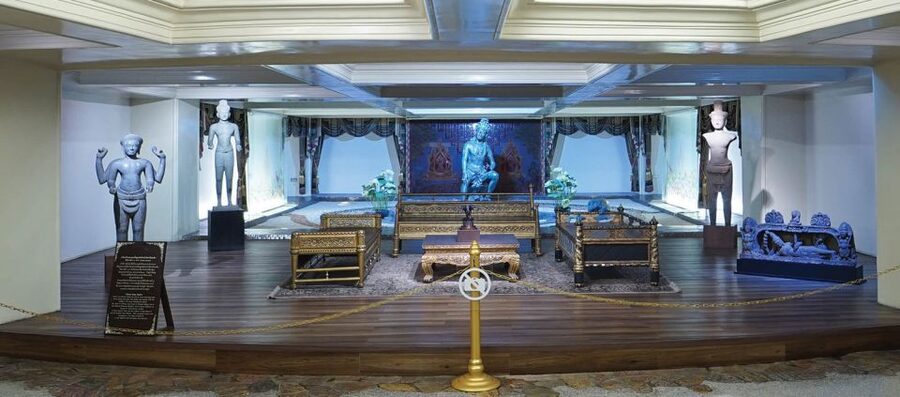
The Cosmo Level is inside the body of the elephant, making it the most unusual part of the visit. You reach it through two passageways leading from the right and left feet of the elephant.
The route itself is memorable. You are moving through the structure that you first saw from outside, so the giant sculpture stops feeling like a separate monument and becomes the roof and shell of the museum around you.
At the top, paintings show gods and goddesses floating in Heaven. This is the most openly celestial part of the building, and it completes the upward movement that began in the underground gallery.
The Cosmo Level may be the highlight for anyone who enjoys symbolic architecture, religious imagery, or unusual interiors. It is also likely to be the place where you take the most photographs. Commercial photography and video are not permitted inside, though ordinary personal pictures are allowed under the stated rules.
Keep your voice low and behave respectfully. This is a museum with religious and sacred references, not just an entertainment venue. Food and drink are not permitted inside, and pets are not allowed.
Making time for the garden
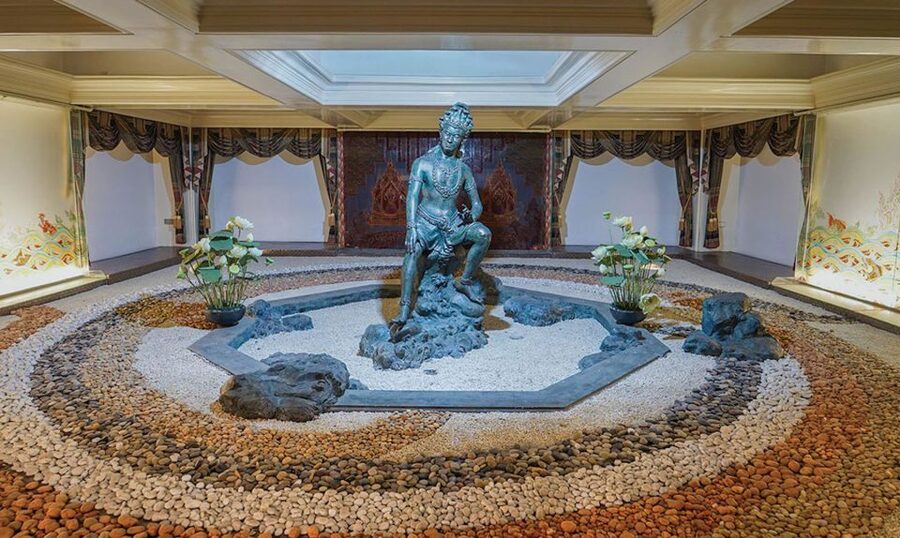
After the indoor galleries, continue outside into the museum garden. This is not an optional extra if you want the full experience. The garden gives you room to step back from the elephant and see how the building sits within its grounds.
Rare tree species from many parts of Thailand are planted here, including trees connected with Thai literature. The information provided does not promise a guided garden tour, so you may need to take the plants at your own pace rather than expect detailed explanations for every species.
I like this outdoor portion because it slows the visit down. The interior can be visually intense, with sculpture, stained glass, porcelain, and painted religious scenes competing for your attention. A walk among the trees gives you time to absorb the building without another display demanding your focus.
It also improves your photographs. Inside, you will be working with dimmer spaces and strong decorative details. Outside, you can frame the whole elephant, the museum base, and the surrounding garden in one view.
What the $12 ticket includes
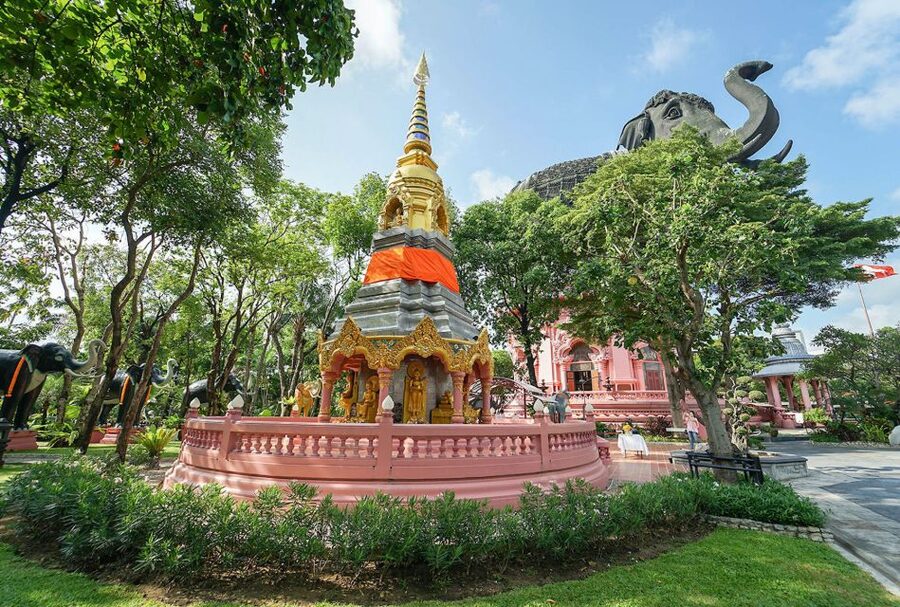
At $12 per person, the discounted ticket is good value if you plan to see all three levels and spend time in the garden. You are not paying only for an entry hall and a statue. The ticket covers the Erawan Museum, the surrounding areas, all taxes and fees, and flowers, incense, and a lotus flower.
The flowers and incense add a small ceremonial element to the visit. They are not a substitute for a guided religious experience, but they fit the museum’s atmosphere and help explain why visitors are expected to act quietly and respectfully.
The audio guide also adds value. Since it is available in five languages, you can get more from the symbols and objects without hiring a separate guide. No individual guide name is provided for this experience, and it is best understood as a self-guided museum visit with audio support.
A visit can take less than a full day, but the ticket is valid for one day. That gives you room to plan the museum as part of a wider Samut Prakan outing if your timing works. The key limitation is not the length of the ticket, but the fixed entry date and time.
Timing, clothing, and practical rules
Dress modestly before leaving Bangkok. Shorts, short skirts, and sleeveless shirts are not allowed. This rule applies even if the weather is hot, so choose longer, respectful clothing from the start rather than hoping to borrow something at the entrance.
Bring a quiet attitude. The museum asks you to be respectful, and that matters here because the displays include religious figures and sacred themes. Food and drink are forbidden, so finish snacks before entering.
Personal photographs and videos are part of the appeal, especially in the elephant and stained-glass interiors. Commercial photography and video are not permitted inside. If you are creating professional promotional material, this ticket does not provide permission to do so.
The attraction is suitable for people who enjoy architecture, cultural symbolism, photography, Thai art, and unusual museums. It may be less satisfying if you want a conventional collection arranged by historical period, or if you prefer a quick attraction with no interpretation.
One useful point from the booking experience is that confirmation may take some patience. A visitor from Japan had trouble getting the ticket issued and confirmed by the travel company, but the matter was eventually resolved with helpful assistance and entry was granted. I would keep your booking confirmation available and allow time for any ticket check at the entrance.
How this visit compares with a standard Bangkok attraction
Erawan Museum offers a very different experience from Bangkok’s major palace and temple sites. Its focus is one privately assembled vision of Asian culture, expressed through a huge building, collected objects, religious imagery, and garden design.
That personal quality is both its strength and its limitation. You get a place with a clear artistic identity, but not a broad survey of Thai history. The three levels are arranged around symbolic ideas rather than a simple timeline.
The result is best for a curious half-day plan outside central Bangkok. It gives you something unusual to photograph and enough cultural detail to make the trip worthwhile, without requiring a full day of museum-going.
The attraction can also be peaceful when group traffic is light. One visitor specifically noted being able to look around slowly because there were few group parties at the time. Conditions can change, but the timed entry may help you avoid the most chaotic periods.
Who should book the Erawan Museum?
I would recommend this ticket to you if you want an easy-to-reach cultural stop with a strong visual centerpiece. It suits photographers, architecture fans, families with an interest in unusual buildings, and anyone who wants to see a different side of Samut Prakan.
It is also a good choice if you value clear planning. The BTS station, Exit 2, and free shuttle tuk-tuk make the final approach manageable, while the audio guide gives you a way to explore without arranging a private guide.
I would think twice if you dislike fixed schedules, modest dress rules, or symbolic religious art. The museum is not a fast photo booth, even though the elephant will tempt you to treat it that way. You get more value by visiting all three levels, listening to at least some of the audio guide, and leaving time for the garden.
The ticket allows free cancellation up to 24 hours before the visit for a full refund, and you can reserve now and pay later. Those terms help if your Bangkok plans are still moving, but they do not remove the need to choose the correct date and time.
Final verdict: a memorable Samut Prakan side trip
Book this experience if the idea of walking through a museum inside a giant three-headed elephant appeals to you. That alone makes Erawan Museum unusual, but the real value comes from the full sequence: artifacts and Naga below, stained glass and Earth imagery in the middle, then celestial paintings inside the elephant.
The $12 price is reasonable for the architecture, collection, garden access, audio guide, and included ceremonial items. Plan the BTS route carefully, dress modestly, arrive for your booked time, and give yourself enough room to look up. This is a focused attraction, not a general introduction to Thailand, but it offers an original and thoughtful stop just beyond Bangkok.
FAQ
Where is Erawan Museum located?
Erawan Museum is at 99 Tambon Bang Muang Mai, Amphoe Mueang Samut Prakan, Chang Wat Samut Prakan 10270, Thailand, just outside Bangkok in Samut Prakan province.
How can I reach the museum by public transport?
Take the BTS Skytrain Green Line to Chang Erawan Station, E17. Exit at Exit 2, where a free shuttle tuk-tuk operates to the museum every day.
What does the discounted ticket include?
The ticket includes admission to Erawan Museum, access to the surrounding areas, flowers, incense, a lotus flower, and all taxes and fees.
Is an audio guide included?
Yes. Audio guides are available in English, Thai, Chinese, Korean, and Russian.
Can I choose any visit time after booking?
No. You can visit only on the specified date and time selected when you book.
What clothing is required?
You must dress modestly. Shorts, short skirts, and sleeveless shirts are not permitted.
Can I take photographs inside?
Personal photographs and videos are allowed, but commercial photography and video are not permitted inside the museum. Food, drinks, and pets are also not allowed.
More Museums and Galleries in Bangkok
- Skip the Line: Patpong Museum Guided Tour
★ 5.0 · 80 reviews - Private Guided Day Tour to Erawan Museum & Ancient City
★ 4.5 · 25 reviews - Jim Thompson’s House and National Museum Bangkok (Phranakorn)
★ 4.0 · 9 reviews - Jim Thompson House Museum Entrance Ticket & Hotel Pick up
★ 4.0 · 9 reviews
Just added around Bangkok
- Yoga in the Park Thailand★ 5.0 · 12 reviews
- Bangkok and Ayutthaya 3 Days★ 4.5 · 12 reviews
- Private Tour: Damnoen Saduak Floating Market and Bangkok City Temples★ 5.0 · 12 reviews
- Chinatown (Yaowarat Road) Neon Photoshoot★ 5.0 · 12 reviews
- Ayutthaya Day Tour By Coach and Cruise★ 4.0 · 12 reviews
- Bangkok Suvarnabhumi Airport: VIP Meet & Greet Service (Fasttrack)★ 3.5 · 12 reviews
- Bangkok: Wow Park Interactive Amusement & Science Park★ 4.5 · 12 reviews
- Afternoon Ayutthaya & Ancient Temples at UNESCO site By Road★ 4.5 · 12 reviews
Ancient City & Erawan Museum Trips, compared.
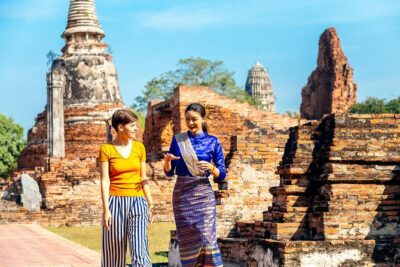
The Ultimate Ancient city of Ayutthaya Private Day Trip
Read our review →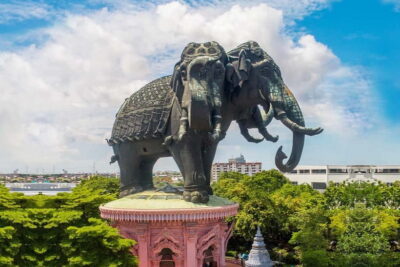
Samut Prakan Ancient City and Erawan Museum Ticket
Read our review →
Private Guided Day Tour to Erawan Museum & Ancient City
Read our review →
Ancient City (Mueang Boran) Entrance Tickets With Hotel Transfer
Read our review →Browse the lists this tour appears in