
Reviewed · WORKSHOPS
Thai Dance Class
Thai dance is less about athletic footwork than careful hands, graceful poses, and knowing why each movement matters. At Thai Glam Studio, you begin with a welcome drink and Thai dessert, then learn to put on a traditional costume before your teacher explains the art form and its place in Thai culture.
I like the small group limit of seven, which gives the instructor room to correct your hands and posture. I also like the mix of culture and practice: you are not simply copying movements for a photo, you hear the meaning behind them and work through three songs. The main consideration is that this is a gentle cultural class, not a high-energy dance workout, and the studio is not suitable for children under 10 or wheelchair users.
In This Review
- Key points to know before you book
- Starting with Thai dessert at Thai Glam Studio
- Learning to wear the full Thai dance costume
- Hearing the story behind the hand gestures
- Warming up before the three songs
- Patient correction in a group of seven or fewer
- Photos without turning the class into a costume stop
- What $70 means for the value
- Who should book this Thai dance class
- A practical way to fit it into your day
- Should you book it?
- FAQ
- Where does the Thai dance class take place?
- How long does the class last?
- What is included in the price?
- How many people can join the class?
- Which languages are available?
- Can I take photos or videos?
- Who cannot join the class?
Key points to know before you book
- Three songs, three sets of poses: You learn a short sequence for each song rather than spending two hours on one routine.
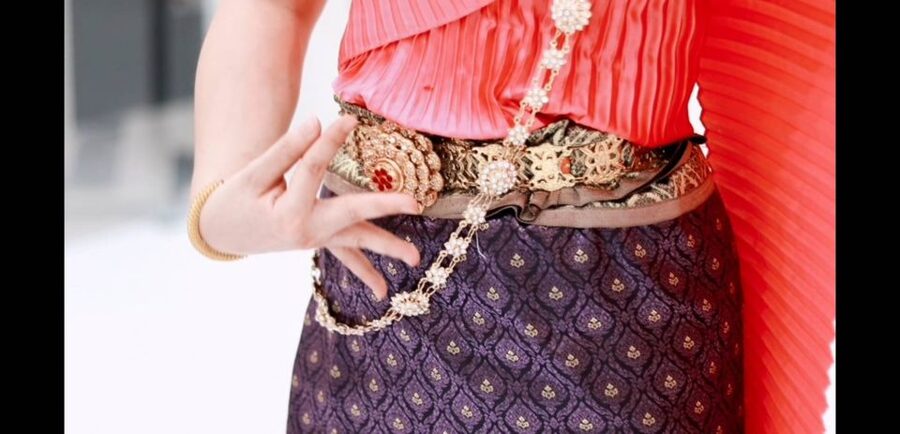
- Traditional clothing is part of the lesson: The class includes a Thai dance outfit and full accessories, with guidance on how to wear them.
- Culture comes before choreography: Your teacher explains Thai dance history and the meaning of movements before the warm-up.
- Private-class potential: Solo bookings may sometimes become one-on-one lessons when no one else has booked that session.
- Small groups keep corrections personal: The maximum group size is seven, useful when hand positions and posture need close attention.
- A polished cultural souvenir: You can take photos and short clips during some parts of the class, subject to the instructor’s guidance.
Starting with Thai dessert at Thai Glam Studio
The class begins at Thai Glam Studio, the stated meeting place for the experience. Pickup service is provided from the meeting point at Wat Arun Pier, so check your booking details carefully to understand where you should go first. The studio name is useful to have ready, especially if you are arranging your route around the temples along the Chao Phraya River.
A welcome drink and Thai dessert set a relaxed tone before the lesson begins. This opening matters because it gives you time to settle in, meet the teacher, and get ready for the costume without rushing straight into choreography.
The refreshment is also a small cultural touch rather than a major meal. If you are booking this as your only afternoon activity, do not treat the dessert as lunch. The experience is built around a two-hour class, not a full food tour.
The room itself is not described in detail, so I would keep your expectations practical. You are coming for instruction, costume, and cultural context, not a grand performance venue. The strongest value lies in the personal teaching and the chance to learn movements in a setting made for participation.
More workshops and classes in Bangkok:
- Bangkok: Hands-on Thai Cooking Class and Market Tour
★ 4.9 · 1,614 reviews - Bangkok: Tingly Thai Cooking School Half-Day Cooking Class
★ 4.9 · 1,191 reviews - Bangkok: Maliwan Thai Cooking Class with Market Tour
★ 4.9 · 1,133 reviews
Learning to wear the full Thai dance costume
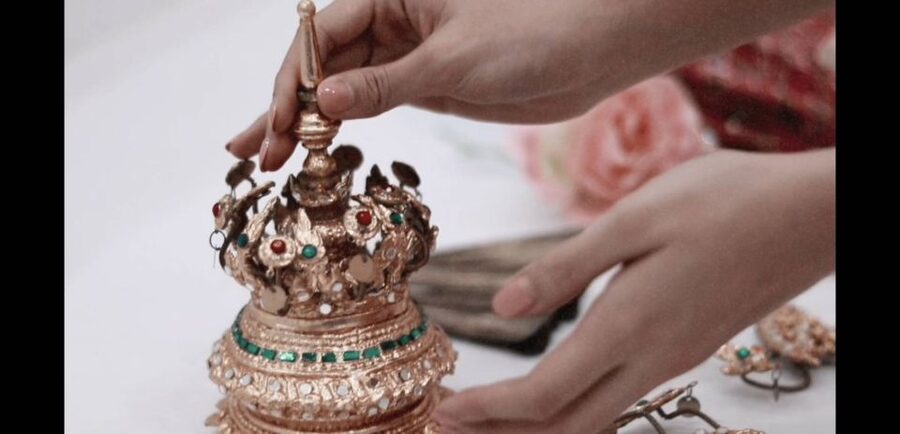
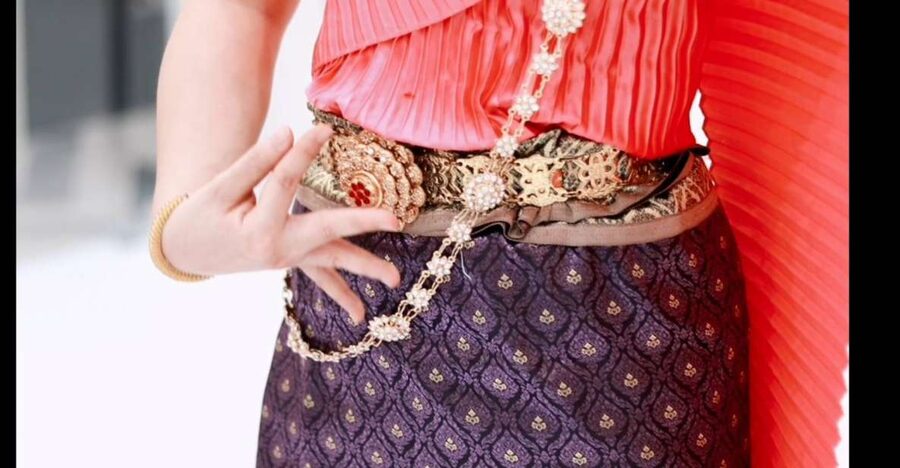
Before dancing, you learn how to wear traditional Thai clothes, including the accessories. This is one of the more useful parts of the class because costume is not just decoration in Thai dance. It changes how you hold yourself, move your arms, and present each pose.
Expect the teacher to guide you through the process rather than handing you an outfit and sending you off to figure it out. That help is especially useful if you have never worn Thai ceremonial clothing before. The class is designed to make the clothing part of the experience, not an optional photo prop.
The complete outfit also adds value to the $70 price. A standard beginner dance lesson might teach steps, but this one gives you a visual and cultural frame for those steps. You leave with a better sense of how the dancer’s posture, costume, and gestures work together.
There is a practical trade-off. Traditional clothing can make movement feel more careful and formal, and accessories may require attention while you dance. If you want loose, fast movement, this may feel restrained. If you enjoy detail and presentation, it is exactly the point.
Hearing the story behind the hand gestures
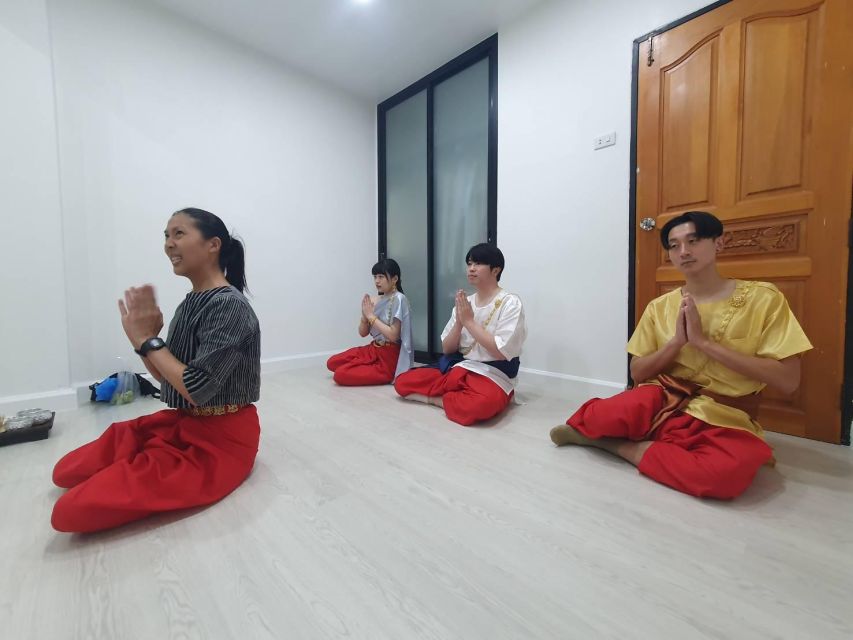
The history talk comes before the warm-up. That order is smart. Thai dance uses precise hand shapes, curved fingers, controlled wrists, and held poses, and the movements make more sense when you know they carry meaning.
The teacher explains Thai dance and its cultural background in accessible terms. Instruction is available in English, Chinese, and Korean, which makes the class easier to follow for a broad range of visitors. The teaching style described by the experience is patient and careful, with gentle corrections rather than a sink-or-swim approach.
This cultural section is more than a short speech to fill time. It gives you a way to look at the choreography. Instead of thinking only about getting your fingers into the right position, you can pay attention to what the gesture is meant to express.
The class may be a good match if you attended a Thai dance performance during your stay and want to understand what you saw. One student who had watched a play the night before found it especially interesting to recognize some of the movements during the lesson. That is a useful tip: schedule this class after a dance show if your plans allow it, or at least before you forget what you saw.
Warming up before the three songs
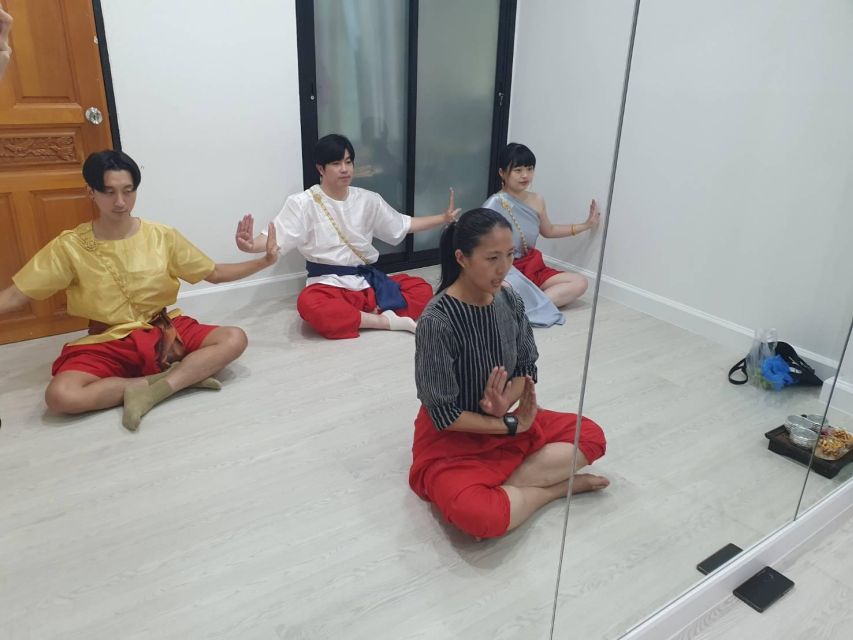
After the introduction, the teacher leads a warm-up. This prepares you for the controlled movements ahead, though you should not expect a gym-style exercise session. Thai dance asks for focus, balance, and flexibility in the hands and upper body more than speed or endurance.
Then the class moves through three different songs and pose sets. Working with three pieces gives the lesson variety and lets you see how the same basic ideas can change from one sequence to another.
You are likely to spend time learning a pose, repeating it, and linking it to the music. The teacher watches your form and gives corrections. That personal feedback is important because Thai dance can look simple from a distance while feeling surprisingly precise when you try it yourself.
Pay close attention to your hands. A casual arm position may look close enough to you, but the teacher can help refine the angle, curve, and timing. The same goes for posture. The class is not about racing through a long routine. It is about making a small number of movements look deliberate.
The three-song format also helps beginners avoid fatigue or frustration. You do not need to memorize a full stage production. You learn manageable sections and get a taste of several styles of movement within the two-hour session.
Same city, a completely different afternoon:
- Bangkok: Damnoen Saduak Market and Maeklong Railway Market
★ 4.5 · 26,723 reviews - The Old Siam: Damnoen Saduak and Maeklong Railway Market
★ 4.5 · 10,992 reviews - From Bangkok: Ayutthaya Temples Guided Tour with Lunch
★ 4.7 · 10,535 reviews - Bangkok: Train Market & Floating Market with Boat Ride
★ 4.7 · 9,547 reviews
Patient correction in a group of seven or fewer
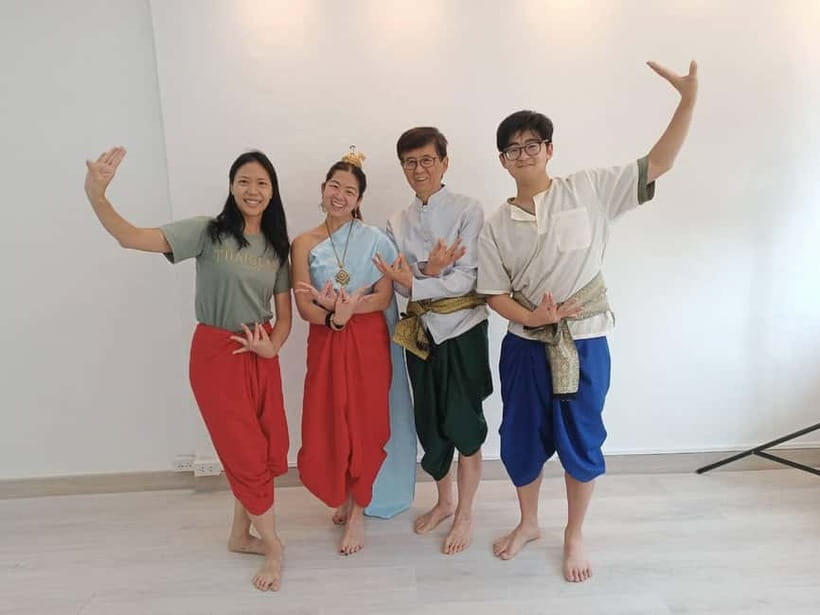
The group size is one of the clearest practical strengths. With no more than seven participants, the teacher can see what each person is doing. That matters in a dance form where small details count.
The class may become private if you are the only person booked for your time. A solo visitor received a one-on-one lesson, with patient instruction and gentle corrections. You should not assume every session will be private, but a small group still offers a more personal setting than a large workshop.
Solo visitors may find this especially appealing. Many activities require a minimum number of people or feel awkward when you arrive alone. This class accepts individual bookings, and the possibility of a private session makes it easier to fit into an independent trip.
Couples and friends can also benefit from the limited size. You can learn together without disappearing into a crowd. Still, keep in mind that the teaching pace may be shaped by the whole group. If one person needs more time with a movement, the class may slow down briefly.
The available host languages are English, Chinese, and Korean. If you need another language, the supplied information does not confirm support, so check before reserving. Clear communication matters here because the lesson depends on verbal explanations as well as demonstration.
Photos without turning the class into a costume stop
Photos and short video clips are allowed during some parts of the lesson. This lets you record the costume and a few poses, but the wording matters: filming is not necessarily open throughout every exercise.
Follow the teacher’s timing. During instruction, put the phone away and watch the hands and posture. During approved moments, you can take photos or short clips that show the costume and the movements you worked on.
This arrangement is a good compromise. You get a keepsake without making the class feel like a nonstop photo session. It also respects the teacher’s need to keep everyone focused and moving together.
If photographs are important to you, ask at the start when they are allowed. The supplied details do not promise a formal photo shoot or a set number of edited images. You should expect personal photos and clips taken during permitted parts of the class.
What $70 means for the value
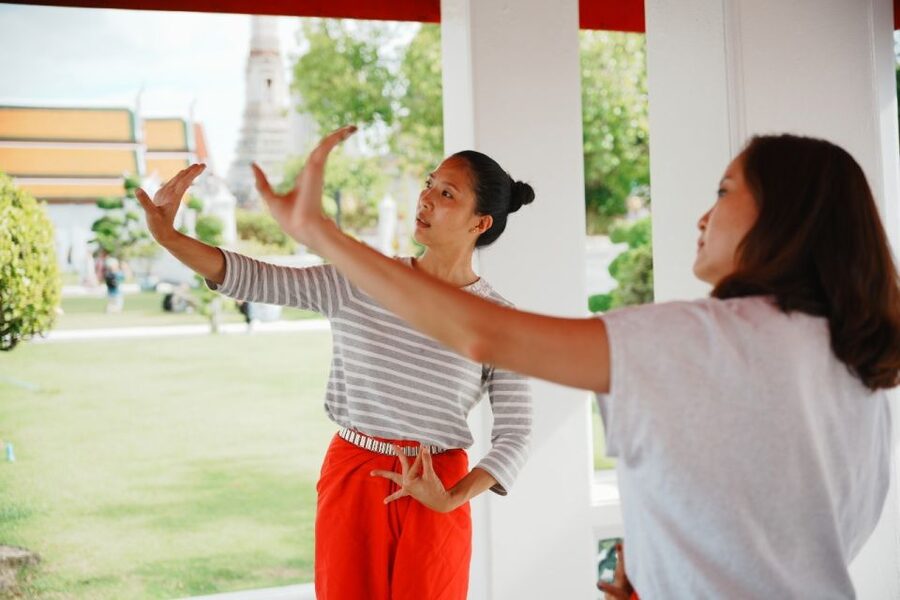
The listed price is $70 per person for two hours. That is not the cheapest way to spend an afternoon in Thailand, but the price covers more than a basic dance demonstration.
You receive the lesson, a welcome drink, Thai desserts, traditional clothing with full accessories, and the cultural explanation. The small group limit is also part of the value. You are paying for guided attention, not simply admission to a room where someone performs.
The costume makes the price easier to justify for visitors who want a hands-on cultural activity. You try the clothing, learn how it is worn, and move in it. The history section adds context that you would not get from a quick photo stop.
Value depends on what you want. If you mainly want to watch Thai dance, a performance may be a better choice. If you want to participate, receive corrections, and leave with a stronger sense of how Thai dance works, this class offers more.
A private lesson would make the value particularly strong, but it is not guaranteed. The regular format remains small, and the class is suitable for people who want careful instruction rather than a large entertainment show.
Who should book this Thai dance class
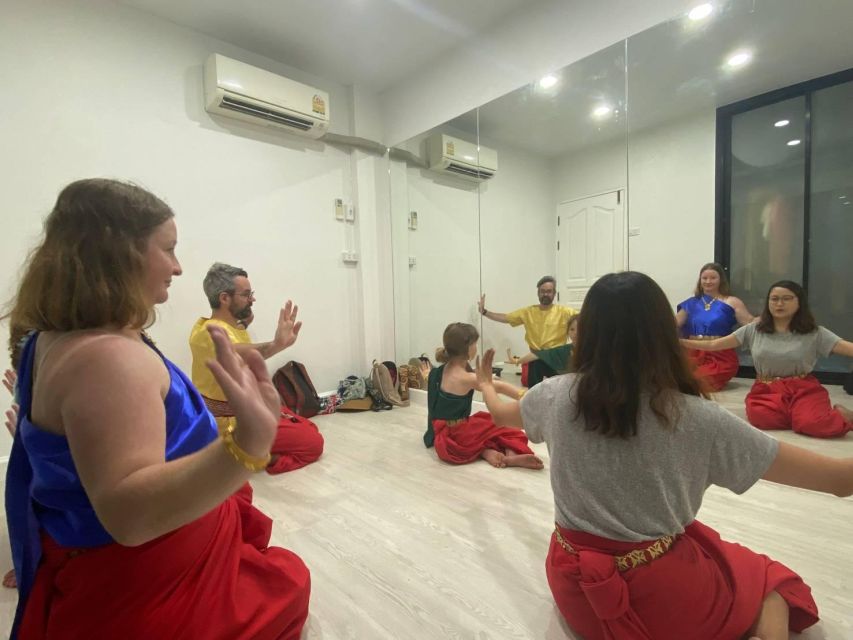
I would choose this experience for a solo visitor, a couple, or a small group of friends who want a calm cultural activity near Bangkok’s major riverside sights. It also suits people who enjoy trying traditional clothing and learning the background behind an art form.
It is a good fit for beginners. The class includes a warm-up, teaches three song sections, and uses an instructor who provides corrections. You do not need to arrive as a dancer.
It may also appeal to anyone who has already watched Thai dance and wants to recognize the gestures more clearly. The connection between performance and practice can make both experiences more rewarding.
This is not suitable for children under 10, wheelchair users, or people over 95. Alcohol and drugs are not allowed. Those limits are worth checking before you reserve, particularly if you are planning a family activity or need step-free access.
The two-hour length fits well between sightseeing plans. You get enough time for explanation, dressing, practice, and photos without committing half a day. Since starting times vary, check availability and plan around your meeting point at Wat Arun Pier and the studio instructions.
A practical way to fit it into your day
Because the activity includes a costume change and a warm-up, arrive ready to pay attention rather than treating it as a quick stop between temple visits. Keep your schedule flexible enough to reach the meeting point and studio without arriving breathless.
The exact transportation arrangement should be confirmed when you book. The experience includes pickup service at Wat Arun Pier, while the studio itself is called Thai Glam Studio. Those two details should be clear in your confirmation so you know where to meet the host.
A session after seeing a Thai dance performance could be especially rewarding. You may recognize gestures from the stage and then learn how much control goes into each one. If you have not seen a performance, the introductory history still gives the lesson a useful frame.
The strongest part of the class is the teacher’s attention. The instructor is described as patient, kind, and able to explain the meaning of each movement. One instructor was also praised for explaining Southeast Asian history, which suggests the lesson can reach beyond dance technique.
Should you book it?
Book this class if you want to participate in Thai culture rather than simply look at it. The costume, dessert, history lesson, three songs, and small group make it a well-rounded two-hour activity, and solo visitors have a real chance of receiving very personal instruction.
Skip it if you want a vigorous workout, a full stage performance, or a guaranteed professional photo session. The pace is careful, the movements are controlled, and photos are allowed only during some parts.
At $70, I see the best value in the combination of costume, teaching, and cultural explanation. For a first introduction to Thai dance, especially after watching a performance, this is a thoughtful choice with enough hands-on practice to make the experience memorable.
FAQ
Where does the Thai dance class take place?
The class takes place at Thai Glam Studio. Pickup service is provided at the meeting point at Wat Arun Pier, so check your booking information for the exact meeting instructions.
How long does the class last?
The class lasts two hours. Starting times vary, so you need to check availability for your chosen date.
What is included in the price?
The price includes the Thai dance lesson, Thai desserts, a welcome drink, and a traditional Thai dance outfit with full accessories.
How many people can join the class?
The activity is limited to seven participants, making it a small-group class. If you are the only person booked for a particular session, it may become a private lesson.
Which languages are available?
The host or greeter can provide the experience in English, Chinese, or Korean.
Can I take photos or videos?
You can take photos and short video clips during some parts of the class. Follow the teacher’s instructions about when filming is allowed.
Who cannot join the class?
The class is not suitable for children under 10, wheelchair users, or people over 95. Alcohol and drugs are also not allowed.
Just added around Bangkok
- Yoga in the Park Thailand★ 5.0 · 12 reviews
- Bangkok and Ayutthaya 3 Days★ 4.5 · 12 reviews
- Private Tour: Damnoen Saduak Floating Market and Bangkok City Temples★ 5.0 · 12 reviews
- Chinatown (Yaowarat Road) Neon Photoshoot★ 5.0 · 12 reviews
- Ayutthaya Day Tour By Coach and Cruise★ 4.0 · 12 reviews
- Bangkok Suvarnabhumi Airport: VIP Meet & Greet Service (Fasttrack)★ 3.5 · 12 reviews
- Bangkok: Wow Park Interactive Amusement & Science Park★ 4.5 · 12 reviews
- Afternoon Ayutthaya & Ancient Temples at UNESCO site By Road★ 4.5 · 12 reviews
Workshops, compared.
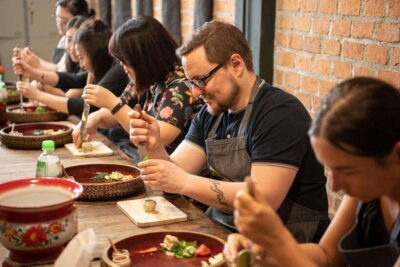

Tingly Thai Cooking School Half-Day Cooking Class
Read our review →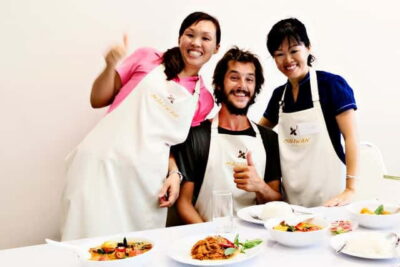
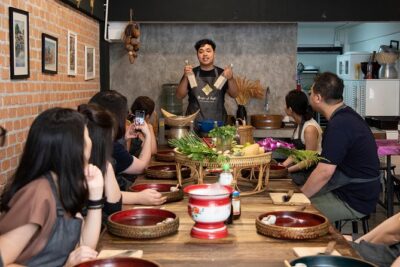
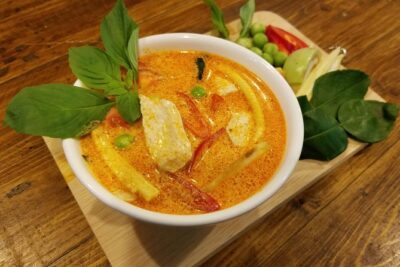
Tingly Thai Cooking Class with Morning Market Tour
Read our review →
Hands-on Thai Cooking Class & Market Tour in Sukhumvit
Read our review →
Pink Chili – Thai Cooking Class and Market Tour in Bangkok
Read our review →
Muay Thai Boxing Introduction Class for Beginners
Read our review →Browse the lists this tour appears in