
Reviewed · BANGKOK THAI COOKING CLASSES
Bangkok: Hands-on Thai Cooking Class and Market Tour
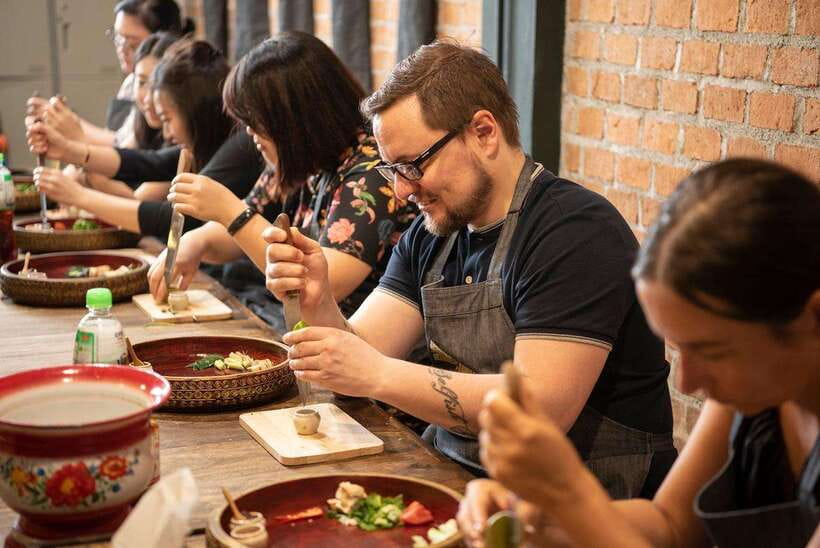
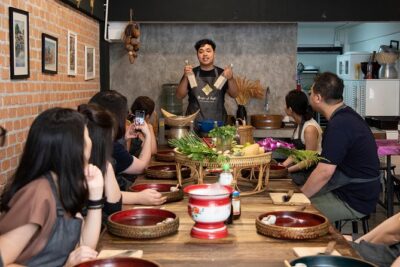
The best part of this Bangkok experience is simple: you cook every dish yourself, then eat it hot. You make curry paste from scratch, learn what goes into coconut milk, and work through four traditional dishes with an instructor nearby to keep things moving.
I like the useful mix of food and local context. The morning market stop gives you a look at Thai ingredients before you cook, while the afternoon and evening sessions offer mango carving instead. I also like the practical recipes sent by email, including dishes from other class days. The main consideration is the market visit itself: it may be a short stop at a few nearby stalls rather than the large wet-market outing some people picture.
In This Review
- Key points to know
- What you actually cook during the three-and-a-half-hour class
- The morning begins with Thai ingredients near Asoke
- Afternoon and evening classes trade the market for mango carving
- Curry paste is the most useful lesson
- Pad Thai, Tom Yum, and the dishes between
- Mango sticky rice makes a proper finish
- Small-group teaching and the pace of the room
- Dietary needs and ingredient substitutions
- What the $45 price includes
- Who will enjoy this Bangkok cooking class
- Booking tips for choosing the right session
- Should you book it?
- FAQ
- How long does the Thai cooking class last?
- What dishes are included?
- Does every class include a market tour?
- Where does the morning class meet?
- Where do afternoon and evening classes meet?
- Is the market tour included in the price?
- Can dietary requirements be accommodated?
- Is alcohol included?
- What language is the class taught in?
Key points to know
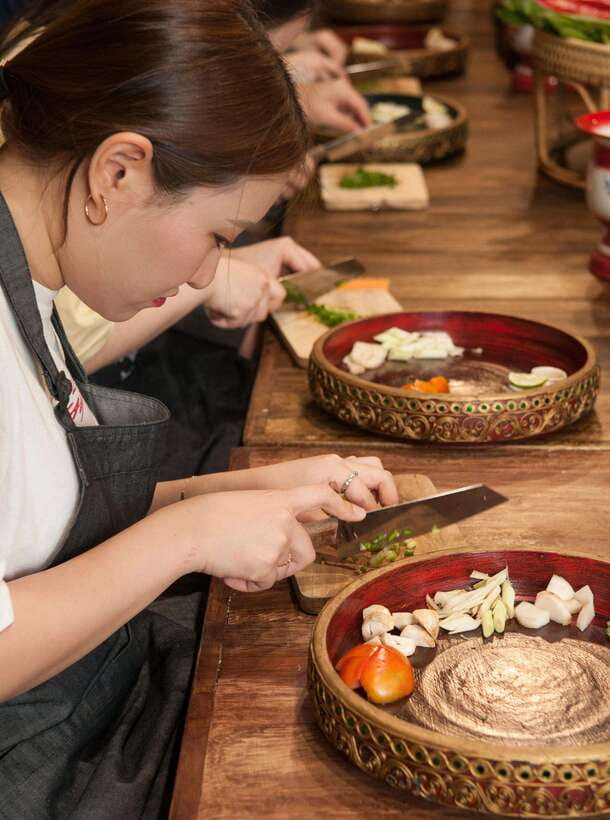
- Four dishes in 210 minutes: You prepare a soup or salad, a noodle or stir-fried dish, a curry, and mango sticky rice, with the exact menu changing by day.
- Curry paste made from scratch: You handle the herbs and spices rather than relying only on a ready-made packet.
- Morning market option: The 8:30 AM class begins near BTS Asoke and MRT Sukhumvit, with a guided ingredient visit.
- Mango carving later in the day: Afternoon and evening classes replace the market tour with a hands-on carving activity.
- Friendly, attentive teaching: Instructors including Jay, Pitch, April, Jen, Jane, and Tony have been praised for clear explanations and patient help.
- Dietary changes are possible: Vegetarian, halal, kosher, and allergy-friendly substitutions can be arranged with advance notice.
What you actually cook during the three-and-a-half-hour class
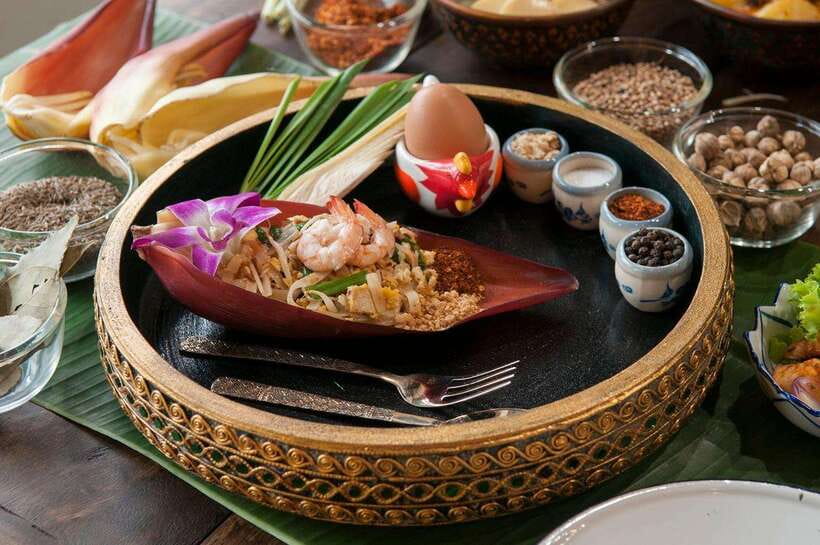
The menu changes with the day, so your class is not identical to every other session. Each schedule includes four dishes, usually one fresh salad or soup, one stir-fry or noodle dish, one curry, and mango sticky rice for dessert.
Here is the weekly rotation:
- Monday: Som Tum, Pad Thai with shrimp, green curry with chicken, and mango sticky rice
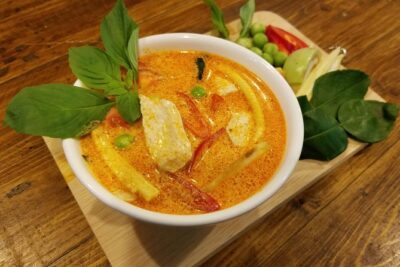
- Tuesday: Tom Kha Gai, Pad Krapow Gai, red curry with chicken, and mango sticky rice
- Wednesday: Tom Yum Goong, Pad See Ew with chicken, green curry with chicken, and mango sticky rice
- Thursday: Larb Gai, Pad Thai with shrimp, Panang curry with chicken, and mango sticky rice
- Friday: Som Tum, Pad Krapow Gai, red curry with chicken, and mango sticky rice
- Saturday: Tom Kha Gai, Pad Thai with shrimp, green curry with chicken, and mango sticky rice
- Sunday: Tom Yum Goong, Pad See Ew with chicken, Panang curry with chicken, and mango sticky rice
This is a generous amount of food. You do not simply watch a chef prepare one demonstration meal and receive a small taste. You chop, mix, pound, stir, and cook your own portions. The class serves each dish while it is still fresh, so you can taste the result before moving on.
The order may vary according to the class, but the pace is built around making food and eating it along the way. Bring an empty stomach. By the time mango sticky rice arrives, you will have eaten a full meal.
More Thai cooking classes in Bangkok:
- Bangkok: Tingly Thai Cooking School Half-Day Cooking Class
★ 4.9 · 1,191 reviews - Bangkok: Maliwan Thai Cooking Class with Market Tour
★ 4.9 · 1,133 reviews - Hands on Thai Cooking Class and Market Tour
★ 5.0 · 660 reviews
The morning begins with Thai ingredients near Asoke
For the morning class, meet at street level by BTS Asoke Exit 3 and MRT Sukhumvit Exit 3. You can also use Hey! Coffee MRT Sukhumvit as the meeting point reference.
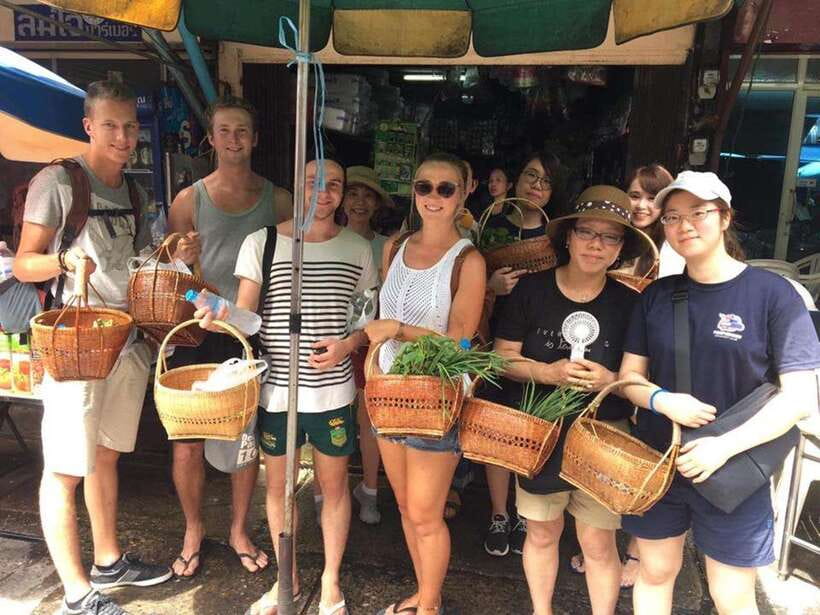
The market walk is a useful introduction because Thai cooking depends on ingredients that can look unfamiliar when separated from the finished dish. You learn about vegetables, rice, herbs, spices, curry ingredients, and coconut milk before using them in the kitchen. That small bit of context makes the later cooking easier to follow.
Do keep your expectations sensible. The market section is near the transit stations, and the stop can be limited to a few stalls and a dry-ingredient shop. Some people will enjoy the efficient look at everyday ingredients, while others may hope for a much larger wet market with more noise, produce, and activity.
I would choose the morning session if the market matters to you. It also gives you a pleasant food-first start to the day. Wear comfortable shoes, since you will walk between the meeting point and the school, then remain active during the cooking class.
Afternoon and evening classes trade the market for mango carving
The later sessions meet at House of Taste Thai Cooking School in Sukhumvit 4. Instead of visiting a market, you receive the ingredient introduction at the school and finish with mango carving.
That change matters when you book. The activity title may suggest that every class includes both a market and cooking, but only the 8:30 AM class has the market tour. The afternoon and evening options are not lesser versions, but they offer a different extra activity.
Mango carving gives the final part of the class a creative turn. You work with mango rather than only eating it, and the activity provides a lighter finish after several savory dishes. If you care most about seeing a local market, book the morning. If you prefer a later start or like hands-on crafts, the afternoon or evening class may suit you better.
Curry paste is the most useful lesson
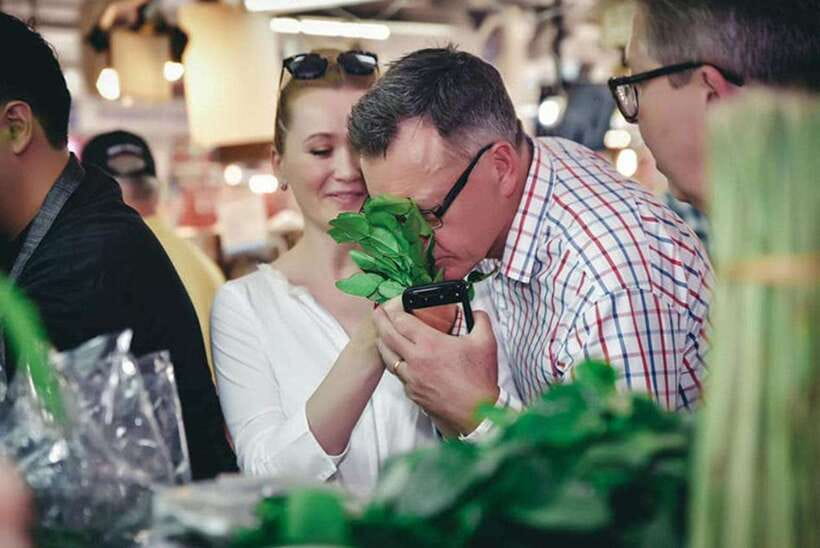
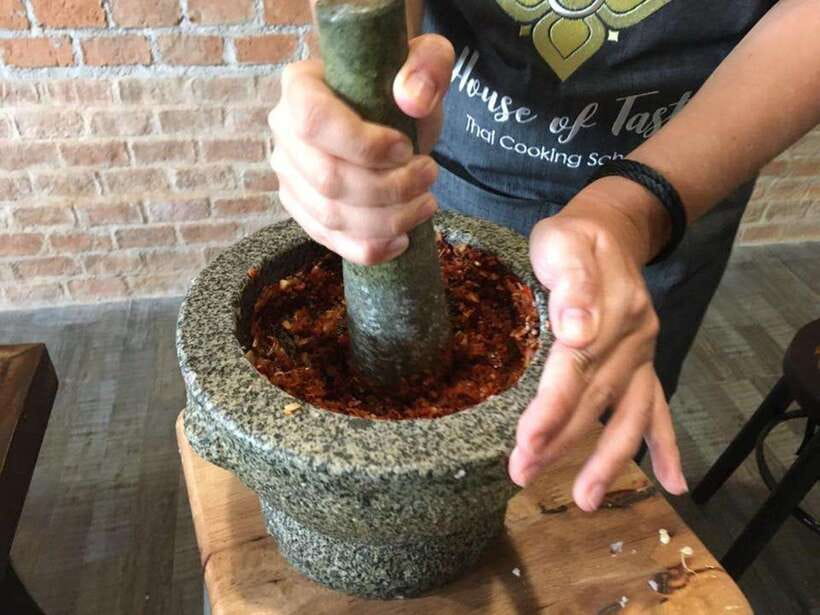
The curry portion is more than a quick stir of sauce and meat. You make curry paste from scratch, which shows how herbs and spices build the flavor of Thai food.
This is where the class earns its place beyond an ordinary meal. You learn that curry is not just one bottled flavor. Green, red, and Panang curries appear across the weekly menu, and each class gives you a chance to see how the paste shapes the finished dish.
The school also explains the preparation of coconut milk and the role of other ingredients. You do not need advanced cooking skills. The instructor demonstrates each stage, then lets you work through it with help close by.
The class is conducted in English and Thai. English-speaking instructors such as Jay, Pitch, April, Jen, Jane, and Tony have been praised for clear directions, humor, and patience. The named instructor can vary, so you should not book expecting one particular person unless the provider confirms it.
More cooking classes in Bangkok:
- Tingly Thai Cooking Class with Morning Market Tour
★ 5.0 · 589 reviews - Hands-on Thai Cooking Class & Market Tour in Sukhumvit
★ 5.0 · 571 reviews - Pink Chili – Thai Cooking Class and Market Tour in Bangkok
★ 5.0 · 416 reviews - Authentic Thai Cooking with the Largest market visit &TukTuk ride
★ 5.0 · 350 reviews
Pad Thai, Tom Yum, and the dishes between
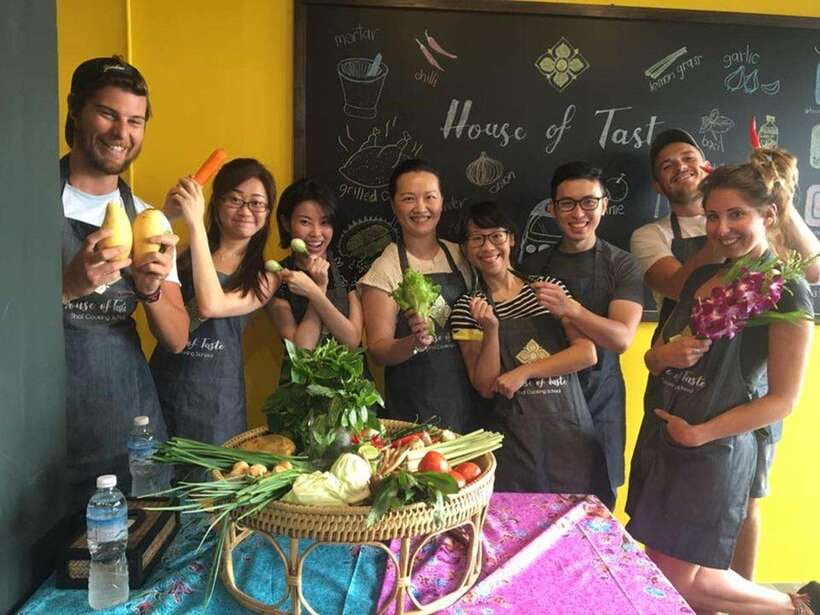
The noodle dishes make the class feel familiar to many first-time cooks, but the process still teaches useful Thai techniques. Depending on the day, you may prepare Pad Thai with shrimp or Pad See Ew with chicken.
The soup options show another side of Thai cooking. Tom Yum Goong brings hot and sour flavors with shrimp, while Tom Kha Gai uses coconut and chicken for a softer, creamy profile. You may also make Som Tum, the crisp and spicy papaya salad, or Larb Gai, a spicy minced chicken salad.
Pad Krapow Gai gives you stir-fried chicken with Thai basil, while the three curry options bring different levels and styles of spice. The menu is thoughtfully arranged, since you get contrast rather than four dishes that taste alike.
You also eat what you make. That sounds obvious, but it changes the class. You can adjust your understanding of salty, sweet, sour, spicy, and creamy flavors as you go. If a dish is new to you, the instructor can explain its ingredients and preparation before you decide how adventurous to be.
Mango sticky rice makes a proper finish
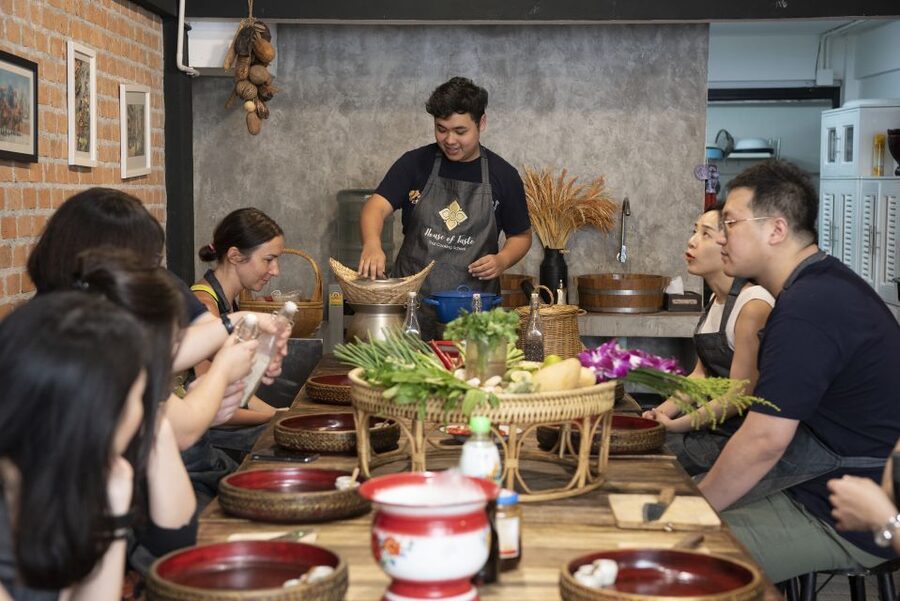
Every daily menu ends with mango sticky rice. You prepare the coconut cream element and serve the dessert after the savory dishes.
It is a familiar Thai favorite, but making it yourself gives the final course more meaning. The soft rice, coconut flavor, and fruit provide a gentle finish after spicy soup, curry, or stir-fried food. Some classes may use colorful mango varieties, and one participant particularly enjoyed pink mango sticky rice.
Do not mistake dessert for a small extra. The portions across the class are substantial, and the full meal is one reason the $45 price feels fair. You leave with both a full stomach and recipes you can use later.
Small-group teaching and the pace of the room
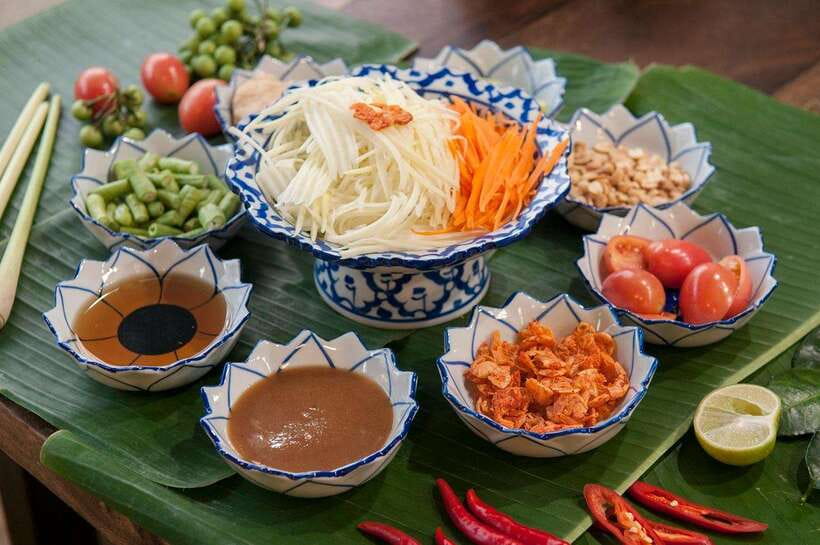
The class is designed as a small, hands-on session, with an instructor and helpers available to assist. That setup is important for beginners. You can ask about chopping, spice levels, ingredient swaps, or the order of cooking without having to shout across a large demonstration kitchen.
The teaching style appears to be one of the strongest parts of the experience. Jay, Pitch, April, Jen, Jane, and Tony are all named by participants as friendly and effective instructors, but the key practical point is that the school provides close guidance rather than leaving you to guess.
Most people find the instructions easy to follow, even without much cooking experience. Still, the schedule is active. One person found the class slightly rushed at times, though there was still time for photos and an extra stop. You are not signing up for a slow, leisurely workshop where every step takes as long as you like.
To get the most from it, listen during the demonstration, keep your work area organized, and ask questions early. Comfortable shoes help, and you should avoid arriving after a large breakfast.
Dietary needs and ingredient substitutions
Vegetarian, halal, kosher, and allergy-related substitutions can be provided with advance notice. A low FODMAP substitution was also handled successfully for one participant, which is encouraging if you have a specific food restriction.
You should still tell the school clearly before the class. Do not wait until the cooking begins, since the kitchen needs time to prepare alternative ingredients.
The standard menus include shrimp and chicken, but the listed substitution policy means you do not have to skip the experience simply because those ingredients do not suit you. Ask what can be changed when you book, especially if you have a serious allergy.
No MSG is used in the cooking. That may matter to you if you prefer a class that keeps its seasoning process straightforward and visible.
What the $45 price includes
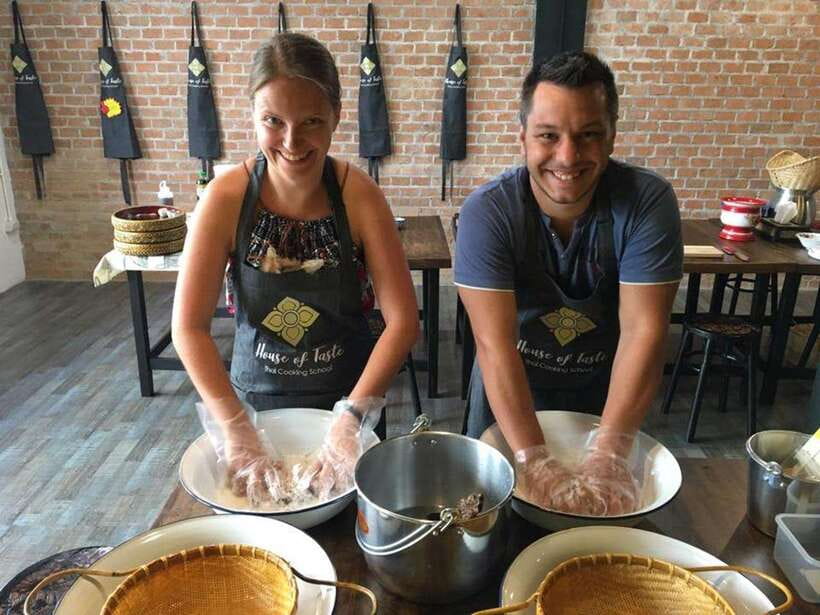
At $45 per person, the price covers the cooking class, instructor, four-course meal, drinking water, ingredients, cooking equipment, a personal locker, recipes by email, and one additional activity. Morning participants receive the market tour, while afternoon and evening participants receive mango carving.
That is strong value for Bangkok, especially because the food is not a token tasting. You make four dishes and eat them as part of the session. The email recipes add value after the class, and the school also provides recipes for dishes prepared on other days, giving you more to try at home.
Alcohol is not included, but it is available for purchase. Since drinking water is included, you do not need to plan for a separate beverage during the class.
The class lasts 210 minutes. That is long enough to cover ingredient basics, preparation, cooking, eating, and the extra market or carving activity without turning the session into an all-day commitment.
Who will enjoy this Bangkok cooking class
I would recommend it most strongly to first-time visitors who want more than restaurant meals. You get a practical look at Thai ingredients and leave with a better sense of how common dishes are built.
It also suits people who do not cook often. The instructors break the work into clear steps, and the hands-on format gives you a result you can taste immediately. Couples, families, and solo participants can all take part, and the class brings together people from different countries.
Food lovers will appreciate the menu rotation. If you are staying in Bangkok for several days, check the schedule and choose the day that includes your favorite dish. Tom Yum fans should look at Wednesday or Sunday, while Pad Thai appears Monday, Thursday, or Saturday.
The class may be less suitable if you want a large traditional market tour, a quiet private lesson, or a highly advanced culinary course. It is practical and social, with a steady pace and a focus on accessible home-style Thai dishes.
Booking tips for choosing the right session
Choose the 8:30 AM class if the market is important to you. Meet at the BTS Asoke and MRT Sukhumvit exits, and wear shoes that are comfortable for walking.
Choose the afternoon or evening class if you prefer a later start or want mango carving. Those sessions meet at the school in Sukhumvit 4, and the ingredient introduction takes place there rather than at a market.
Check the daily menu before booking. The four dishes change by day, and the exact selection may be the deciding factor if you have your heart set on Panang curry, Pad See Ew, Tom Kha Gai, or Som Tum.
The activity offers free cancellation up to 24 hours before the start time, and you can reserve now and pay later. That gives you some flexibility if your Bangkok plans are still shifting.
Should you book it?
Book this class if you want to cook, eat well, and learn enough technique to repeat the dishes at home. The strongest reasons are the four full portions, the made-from-scratch curry paste, the clear instruction, and the recipes sent afterward.
Pick the morning only if you understand that the market tour is a short nearby ingredient visit, not necessarily a grand wet-market expedition. Pick the later sessions if mango carving sounds more appealing or if your schedule does not suit an early start.
At $45, this is a good-value Bangkok activity for beginners, families, couples, and curious eaters. I would book it as a break from sightseeing, with one practical warning: arrive hungry, because the cooking is only half the meal.
FAQ
How long does the Thai cooking class last?
The activity lasts 210 minutes, or three and a half hours.
What dishes are included?
You make four dishes. The menu changes by day and includes combinations of Thai salad or soup, a noodle or stir-fried dish, curry with chicken, and mango sticky rice.
Does every class include a market tour?
No. Only the 8:30 AM morning class includes the market visit. Afternoon and evening classes include mango carving instead.
Where does the morning class meet?
The morning meeting point is at street level by BTS Asoke Exit 3 and MRT Sukhumvit Exit 3. Hey! Coffee MRT Sukhumvit can also be used as the meeting point reference.
Where do afternoon and evening classes meet?
The afternoon and evening classes meet at House of Taste Thai Cooking School in Sukhumvit 4.
Is the market tour included in the price?
Yes, the market tour is included for the morning class. It is not part of the afternoon or evening sessions.
Can dietary requirements be accommodated?
Vegetarian, halal, kosher, and allergy-related substitutions can be arranged with advance notification. You should provide the details before the class.
Is alcohol included?
No. Drinking water is included, while alcoholic drinks are available to purchase separately.
What language is the class taught in?
The class is offered in English and Thai.
More Shopping Tours in Bangkok
- Bangkok: City Highlights Temple and Market Walking Tour
★ 4.5 · 3,990 reviews - Half-Day Railway Market and Floating Market Tour in Thailand
★ 4.5 · 3,924 reviews - Bangkok: Damnoen Saduak, Train Market & Mahanakhon Day Trip
★ 4.7 · 2,162 reviews - From Bangkok: Damnoen Saduak Floating Market Guided Tour
★ 4.4 · 2,020 reviews
More Market Visits in Bangkok
- Bangkok: Damnoen Saduak Market and Maeklong Railway Market
★ 4.5 · 26,723 reviews - The Old Siam: Damnoen Saduak and Maeklong Railway Market
★ 4.5 · 10,992 reviews - Bangkok: Train Market & Floating Market with Boat Ride
★ 4.7 · 9,547 reviews - From Bangkok: Ayutthaya & Ayothaya Floating Market Day Trip
★ 4.7 · 6,084 reviews
Just added around Bangkok
- Yoga in the Park Thailand★ 5.0 · 12 reviews
- Bangkok and Ayutthaya 3 Days★ 4.5 · 12 reviews
- Private Tour: Damnoen Saduak Floating Market and Bangkok City Temples★ 5.0 · 12 reviews
- Chinatown (Yaowarat Road) Neon Photoshoot★ 5.0 · 12 reviews
- Ayutthaya Day Tour By Coach and Cruise★ 4.0 · 12 reviews
- Bangkok Suvarnabhumi Airport: VIP Meet & Greet Service (Fasttrack)★ 3.5 · 12 reviews
- Private Tour: Floating Markets and Suan Sampran Day Trip from Bangkok★ 3.5 · 12 reviews
- Bangkok: Wow Park Interactive Amusement & Science Park★ 4.5 · 12 reviews
Bangkok Thai Cooking Classes, compared.
Tingly Thai Cooking School Half-Day Cooking Class
Read our review →
Tingly Thai Cooking Class with Morning Market Tour
Read our review →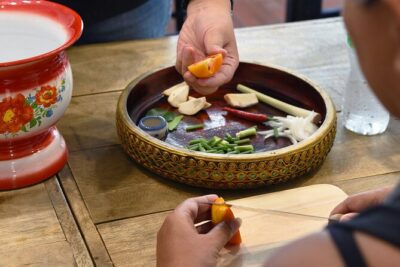
Hands-on Thai Cooking Class & Market Tour in Sukhumvit
Read our review →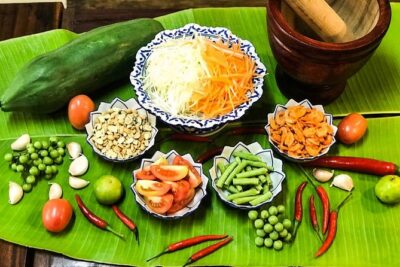
Pink Chili – Thai Cooking Class and Market Tour in Bangkok
Read our review →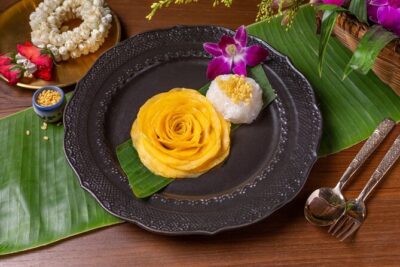
Authentic Thai Cooking with the Largest market visit &TukTuk ride
Read our review →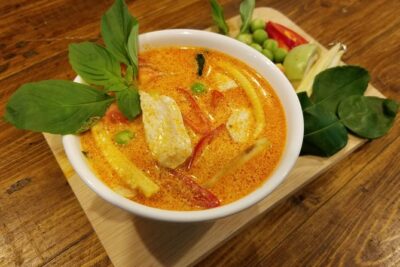
Browse the lists this tour appears in