
Reviewed · KANCHANABURI & RIVER KWAI TRIPS
Private Tour: Thai–Burma Death Railway Bridge on the River Kwai from Bangkok
The most powerful part of this day is the change in mood as you move from Bangkok’s modern streets to Kanchanaburi’s quiet war cemetery, then reach the famous bridge by boat. The railway is not just a scenic train ride. It is a place tied to the deaths of prisoners of war and forced laborers during World War II.
I like the private format, which gives you room to ask questions and set a comfortable pace. I also like the combination of a long-tail boat under the bridge and a train ride along the surviving railway. The main drawback is the distance: this can mean five to six hours on the road, especially in Bangkok traffic.
In This Review
- Key points to know before booking
- Why the River Kwai journey is worth a long day
- Leaving Bangkok at 6:30 am
- Kanchanaburi War Cemetery: a quiet first stop
- JEATH War Museum and the story of the railway
- Approaching the bridge by long-tail boat
- Walking across the River Kwai Bridge
- Riding the Death Railway through the countryside
- Lunch after the train
- How the private setup changes the day
- Guide quality and the English commentary
- The main drawbacks to weigh
- Who should book this private day trip?
- Practical details before you reserve
- Should you book it?
- FAQ
- What time does the tour start?
- How long does the tour last?
- Is hotel pickup included?
- Is this a private tour?
- What transport is used?
- Is lunch included?
- Are entrance fees included?
- Can most people participate?
- What is the cancellation policy?
Key points to know before booking
- A full day beyond Bangkok: Plan on about nine hours, with roughly 2.5 to 3 hours going to Kanchanaburi and as much as 3.5 hours returning.
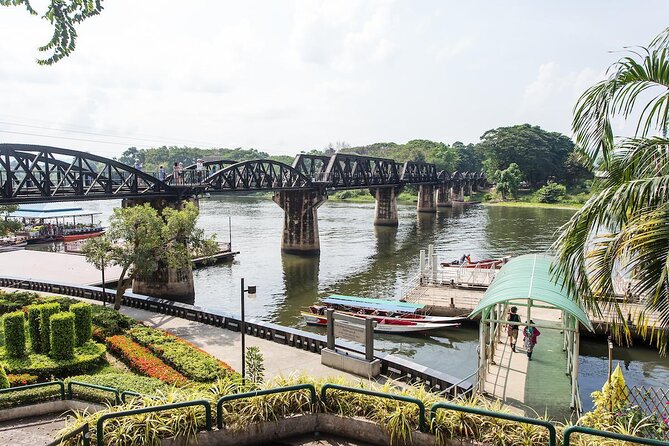
- The boat gives the best approach: You reach the River Kwai Bridge by long-tail boat, seeing it from below before walking across it.
- The cemetery is the emotional center: The Kanchanaburi War Cemetery offers a quiet place to understand the human cost of the railway.
- The private guide matters: Guides such as Pearl, Betty, Jenny, and Luk have led departures, and the quality of the commentary can shape the whole day.
- Food and admissions are covered: Lunch, bottled water, entrance fees, transport, and the train ride are included in the $168.69 price per person.
- This suits small groups: Only your party takes part, and group discounts may improve the value for families or friends traveling together.
Why the River Kwai journey is worth a long day
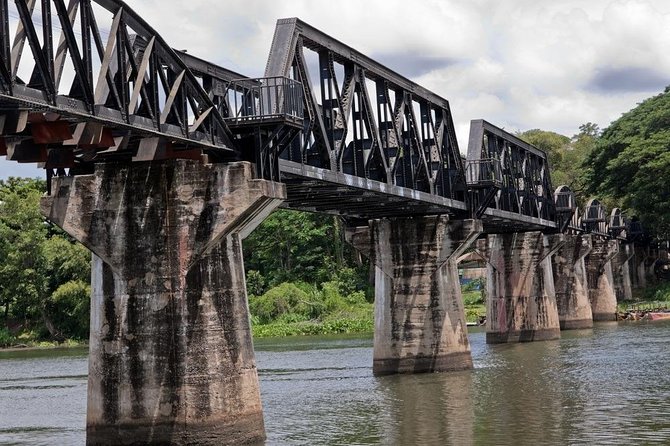
This is a serious history outing with a few memorable travel experiences built around it. The famous bridge is the visual centerpiece, but the cemetery and museum provide the context that makes the bridge more than a photo stop.
The railway was built during World War II under Japanese control, using prisoners of war and forced laborers. Thousands died from disease, exhaustion, hunger, harsh treatment, and the punishing conditions involved in cutting a route through the region. The bridge near Kanchanaburi became a lasting symbol of that suffering.
You should come prepared for a reflective day, not a light sightseeing trip. The boat ride, rural views, and train journey keep the experience varied, but the subject remains sobering.
The price is $168.69 per person. That is not a budget day trip, yet it covers a private air-conditioned vehicle, hotel pickup and drop-off from selected hotels, an English-speaking guide, entrance fees, bottled water, lunch, the boat ride, and the Death Railway train. For a small group, the cost can make more sense than arranging separate transport and admission yourself.
More Kanchanaburi and River Kwai trips:
- From Bangkok: Erawan Park & Kanchanaburi Small-Group Tour
★ 4.5 · 1,582 reviews - From Bangkok: Historical Day Tour to River Kwai
★ 4.6 · 868 reviews - Bridge on the River Kwai and Thailand-Burma Railway Tour
★ 4.5 · 658 reviews
Leaving Bangkok at 6:30 am
The early departure is practical. Bangkok traffic can be punishing, and an early start gives your driver a better chance of getting out of the city before the worst delays. Pickup is offered from selected hotels, so check that your accommodation qualifies before booking.
The drive to Kanchanaburi is a major part of the day. It commonly takes about 2.5 to 3 hours, while the return can stretch to 3.5 hours. That means the advertised nine-hour duration is approximate. With traffic, comfort stops, and the timing of the train, you may spend more than nine hours away from your hotel.
I would not book this on a day when you have an evening flight or another fixed appointment. It is better treated as your main activity for the day.
The reward for the long drive is the view beyond Bangkok. Kanchanaburi Province is agricultural, with rice paddies, sugar cane, and pineapple plantations. The changing scenery helps explain why this is best done as a full-day excursion rather than a rushed city add-on.
Kanchanaburi War Cemetery: a quiet first stop
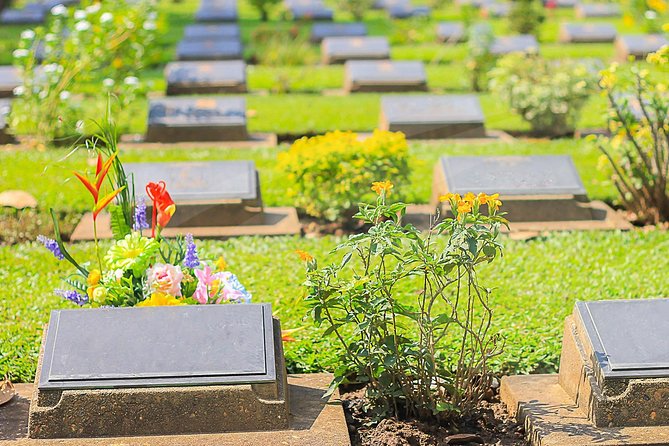
The Kanchanaburi War Cemetery is the main prisoner of war cemetery for those who died during the construction of the Burma Railway. You have about 30 minutes here, with admission included.
This is likely to be the most moving stop. The cemetery is orderly and quiet, and the rows of graves make the scale of the loss easier to grasp than a short explanation alone. Take time to read the inscriptions and notice how young many of the men were.
Thirty minutes is enough for a respectful visit, but it is not enough for a long, unhurried study of every section. If this is the main reason you came, use your time carefully and ask your guide to explain what you are seeing.
The guide can make a real difference here. Strong departures have included guides called Pearl and Betty, both praised for keeping the history clear during the drive and at the sites. Other departures have received less satisfying English commentary, so guide quality may vary.
JEATH War Museum and the story of the railway
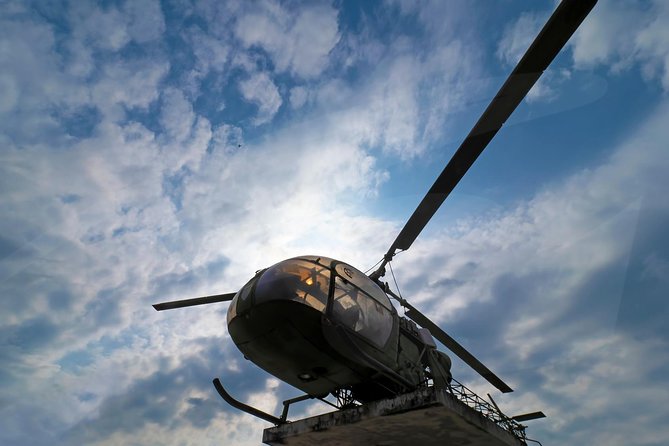
The next stop is the JEATH War Museum, with about 30 minutes inside. The museum focuses on the construction of the Death Railway and the treatment of prisoners of war who were forced to build it.
It is a small museum, so do not expect a huge collection or a polished modern exhibition. Its value comes from the photographs, camp information, and direct connection to the places you are visiting. After the cemetery, it gives you more background before you reach the bridge.
The short visit means you will need to move at a steady pace. I would listen closely to the guide and use the museum to fill in the broad outline rather than expect a complete study of the war in Southeast Asia.
This is one reason the private arrangement can help. You can ask for clarification about the railway, the camps, or the bridge without waiting for a large group. On the other hand, some guides have offered limited commentary, and one weak explanation can make the museum feel more like a quick stop than a meaningful lesson.
A few more Bangkok half-days to weigh up
- Bridge over River Kwai and Hellfire Pass Tour with Train Ride
★ 5.0 · 199 reviews - Bangkok: Floating Market and Train Tour with Guide in Spanish and English
★ 4.5 · 185 reviews - Train & Floating Market Food Adventure + Scenic train ride
★ 5.0 · 102 reviews - Kanchanaburi: Erawan Waterfall & Train Full-Day Tour
★ 4.8 · 57 reviews
Approaching the bridge by long-tail boat
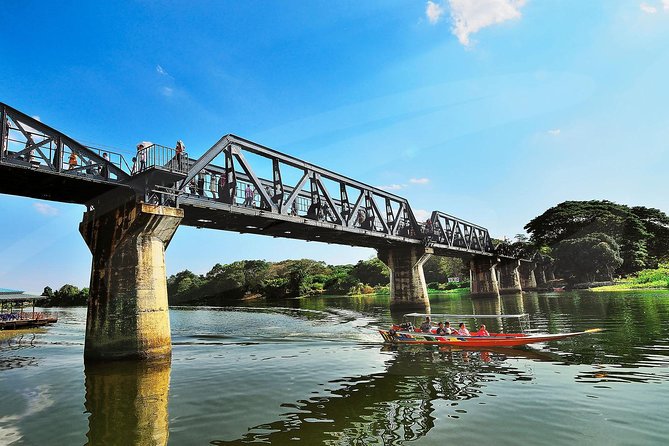
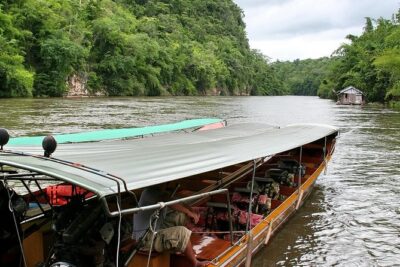
The boat ride is one of the most distinctive parts of the day. You board a traditional long-tail boat and cruise for about 15 minutes beneath the River Kwai Bridge.
Seeing the bridge from the water changes the experience. Instead of arriving beside it in a van, you watch it come into view from the river and pass underneath its steel structure. The ride is short, but it provides a memorable sense of place and gives you a different angle for photographs.
This is also the part many people find most enjoyable. The boat offers a break from the road and museum visits, and the movement of the river keeps the day from feeling like a series of static stops.
Do not expect a long river cruise. Fifteen minutes goes quickly. The point is the approach to the bridge, not a broad tour of the river.
Walking across the River Kwai Bridge
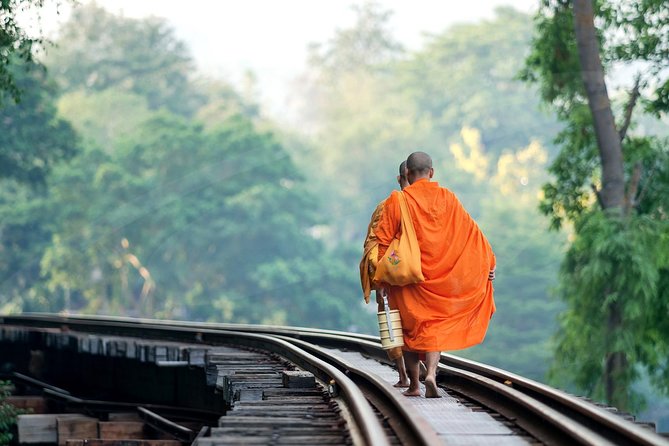
The bridge stop lasts about 20 minutes. You can walk across the structure and look down toward the river and surrounding town.
The bridge has become famous partly through the 1957 film The Bridge on the River Kwai, though the real history is far harsher than the film suggests. For many visitors, walking across it creates the strongest connection between the places discussed at the cemetery and museum and the railway still used today.
The bridge itself is not a preserved wartime scene in the sense of being untouched. It is an operating piece of railway infrastructure and a popular sightseeing point. You should expect other people, trains, and a practical working environment rather than a silent memorial.
That contrast is useful. The bridge is both a historic symbol and a living railway crossing. Your guide can help connect the present-day structure with the wartime construction and the human cost behind it.
Riding the Death Railway through the countryside
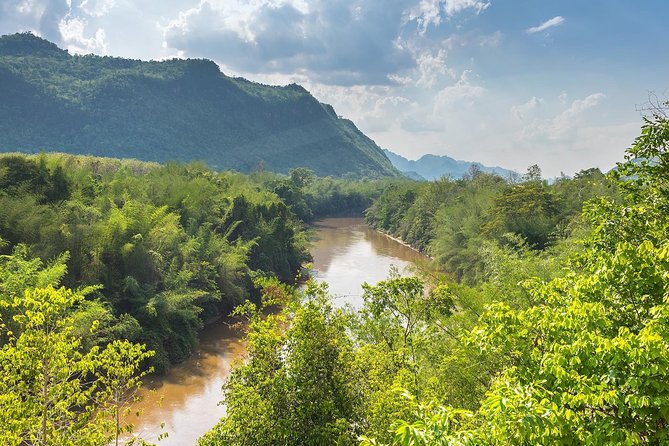
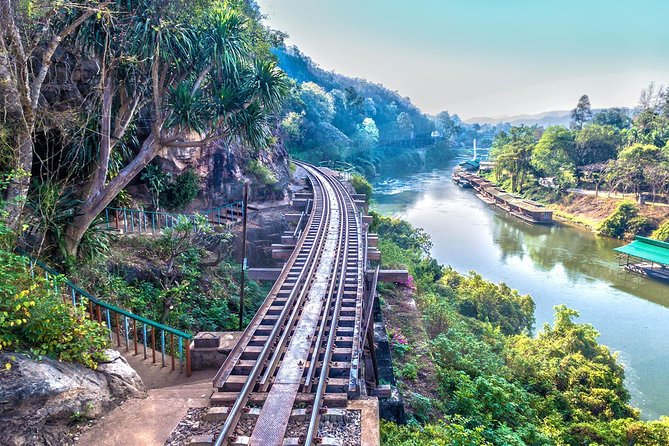
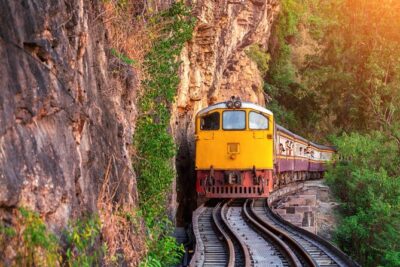
The train ride lasts about 1 hour and 30 minutes, making it the longest activity of the day. You board the train and travel along the Death Railway through the jungle and countryside before stopping for lunch.
This is not a luxury rail journey. It is a working local train experience, and the appeal lies in the route, the history, and the feeling of traveling along a surviving section of the line. The countryside provides a welcome change after the cemetery and museum.
The train ride is also the most divisive part of the schedule. If you enjoy railways and history, it may be the highlight. If you mainly want to see the bridge and memorial sites, 90 minutes can feel like a long time for a relatively simple ride.
Your guide may add useful context along the way. Guides such as Pearl have been praised for pointing out facts and places of interest during the train journey, while less effective departures have offered little explanation. If the commentary is quiet, use the ride to watch the countryside and think about the difficult engineering and labor behind the route.
Lunch after the train
After the train, your guide takes you to a restaurant for lunch. A traditional Thai meal is included, along with bottled water.
The meal has received mixed impressions. Some departures have offered generous portions and plenty of choice, while others have found the food too Westernized and basic for something described as Thai cuisine. I would treat lunch as a convenient included meal rather than the central culinary reason to book the tour.
The setting can still add to the experience. The restaurant stop breaks up the return journey and gives you time to sit down after the cemetery, museum, boat ride, bridge walk, and train.
If you have dietary needs, tell the operator when booking. One guide made sure a gluten-free request was handled, but it is wise to confirm your needs in advance rather than rely on an assumption.
How the private setup changes the day
Only your group takes part in this activity. That gives you a quieter experience than a large coach tour and makes it easier to ask questions at the cemetery, museum, and bridge.
The private vehicle is air-conditioned, which matters in Thailand’s heat and during the long road sections. A safe, experienced driver is especially valuable because the route begins and ends in Bangkok, where traffic can add hours to the day.
The private setup does not remove every limitation. The train timetable, museum opening arrangements, traffic, and fixed stop lengths still shape the outing. You are paying for flexibility, comfort, and personal attention, not complete control over every minute.
For a group of three, four, or several couples, this can be good value. Group discounts may lower the per-person cost, and you avoid collecting or dropping off unrelated people. For one person, the price feels harder to justify unless the private format and subject are priorities.
Guide quality and the English commentary
The guide is responsible for more than showing you where to stand. This subject needs explanation, tact, and clear English.
Several guides have been singled out by name for making the day work well. Pearl kept one guest engaged with facts throughout the long drive and train ride. Betty was praised for explaining the bridge, cemetery, and surrounding area. Jenny helped make the boat ride and lunch enjoyable, while Luk was credited with strong organization and a warm approach.
Still, the standard is not perfectly consistent. Some departures have had guides whose English was difficult to follow, with too little interaction during the long drives. If history is your main interest, this matters greatly. The sites are worthwhile on their own, but the right guide can link them into one clear story.
I would ask questions early in the day. That quickly shows how much historical detail your guide can provide and gives you a chance to request more explanation where needed.
The main drawbacks to weigh
The biggest issue is the road time. You could spend roughly four to six hours in the vehicle, depending on traffic and the timing of the return. One practical solution is to bring water, a phone charger, and something to read, while remembering to keep your attention on the countryside when the traffic eases.
The second issue is the short time at the cemetery, museum, and bridge. You see all the key places, but the schedule does not allow a long independent visit at each one.
The third is variation in guide communication. Most of the positive experiences depend heavily on an excellent guide and driver, yet not every departure has received the same level of English explanation.
Finally, the lunch may not satisfy someone looking for a strong Thai food experience. It is included and convenient, but the quality and style can vary.
Who should book this private day trip?
I would recommend it to you if you are interested in World War II history, military memorials, railway engineering, or the River Kwai story. It also suits small groups that want door-to-door transport and the ability to ask questions without joining a large bus.
It is a good choice if you would not feel comfortable driving in Thailand. The private driver removes the stress of Bangkok traffic and the long intercity route.
I would think twice if you dislike long road journeys, want a slow visit at each museum, or are mainly seeking a relaxed river outing. The boat ride is brief, and the day is built around history rather than leisure.
Practical details before you reserve
The tour starts at 6:30 am and lasts about nine hours, though traffic can make the day longer. Pickup and drop-off are available from selected Bangkok hotels, and confirmation is provided when you book.
The tour includes the air-conditioned vehicle, private English-speaking guide, train ride, lunch, admission fees, and bottled water. Alcoholic drinks are not included.
Most people can take part, and only your own group joins the activity. Free cancellation is available if you cancel at least 24 hours before the local start time. Changes or cancellations made within 24 hours are not accepted for a refund.
Should you book it?
Book this tour if you want the River Kwai Bridge presented as part of a larger story of war, forced labor, and remembrance. The cemetery, museum, boat approach, bridge walk, and train ride create a fuller day than simply hiring a taxi to the bridge.
The decision comes down to your tolerance for the drive. You are paying $168.69 per person for convenience, private transport, included admissions, lunch, and a guide, but you are also accepting a long day on the road. For a small group with limited time in Bangkok, that trade can be worthwhile. For a solo visitor or anyone who dislikes long transfers, an overnight stay in Kanchanaburi may be a more comfortable way to see the area.
FAQ
What time does the tour start?
The tour starts at 6:30 am.
How long does the tour last?
The stated duration is approximately nine hours, although traffic can make the day longer.
Is hotel pickup included?
Hotel pickup and drop-off are included from selected hotels only.
Is this a private tour?
Yes. Only your group takes part in the activity.
What transport is used?
The tour uses an air-conditioned vehicle for the road journey, a long-tail boat on the River Kwai, and a train along the Death Railway.
Is lunch included?
Yes. Lunch and bottled water are included. Alcoholic beverages are not included.
Are entrance fees included?
Yes. Admission fees for the listed attractions are included.
Can most people participate?
The tour information states that most travelers can participate.
What is the cancellation policy?
You can cancel at least 24 hours before the experience starts for a full refund. Cancellations or changes made less than 24 hours before the start time are not accepted for a refund.
Just added around Bangkok
- Yoga in the Park Thailand★ 5.0 · 12 reviews
- Bangkok and Ayutthaya 3 Days★ 4.5 · 12 reviews
- Private Tour: Damnoen Saduak Floating Market and Bangkok City Temples★ 5.0 · 12 reviews
- Chinatown (Yaowarat Road) Neon Photoshoot★ 5.0 · 12 reviews
- Ayutthaya Day Tour By Coach and Cruise★ 4.0 · 12 reviews
- Bangkok Suvarnabhumi Airport: VIP Meet & Greet Service (Fasttrack)★ 3.5 · 12 reviews
- Afternoon Ayutthaya & Ancient Temples at UNESCO site By Road★ 4.5 · 12 reviews
- Private Tour: Floating Markets and Suan Sampran Day Trip from Bangkok★ 3.5 · 12 reviews
Kanchanaburi & River Kwai Trips, compared.

Bridge on the River Kwai and Thailand-Burma Railway Tour
Read our review →
Erawan Waterfalls and Bridge Over River Kwai Tour from Bangkok
Read our review →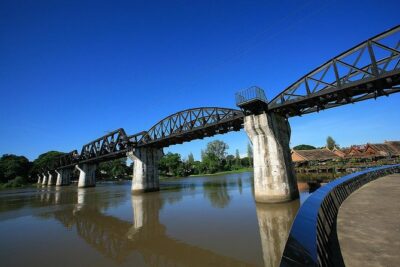
Bridge on the River Kwai and Thailand-Burma Railway Guided Tour
Read our review →
Erawan Waterfall and Elephant Care: Private Tour to Kanchanabur
Read our review →
Kanchanaburi Full Day Tour: River Kwai and Erawan Falls
Read our review →
Floating Markets and Bridge on River Kwai Tour from Bangkok
Read our review →Browse the lists this tour appears in