
Reviewed · KANCHANABURI & RIVER KWAI TRIPS
Bridge on the River Kwai and Thailand-Burma Railway Tour
The most powerful part of this day is not the bridge itself. It is the quiet row of graves at Kanchanaburi War Cemetery, followed by the realization that the train ride ahead follows a railway built through brutal wartime conditions. This is a history tour with scenery, but the history should remain at its center.
I like the long-tail boat approach to the bridge, which gives you a lively view from the water, and I like the final train ride through rural Thailand. Guides such as Betty, Luck, Tiny, Peter, Jenny, and Suki have been praised for explaining the story clearly and helping with photos. The main drawback is the distance: you leave Bangkok early, spend much of the day on the move, and return after roughly 9 to 10 hours.
In This Review
- Key points to know before booking
- Why the River Kwai story matters
- Leaving Bangkok at 6:30 am
- Kanchanaburi War Cemetery: the most moving stop
- JEATH War Museum and the limits of a short visit
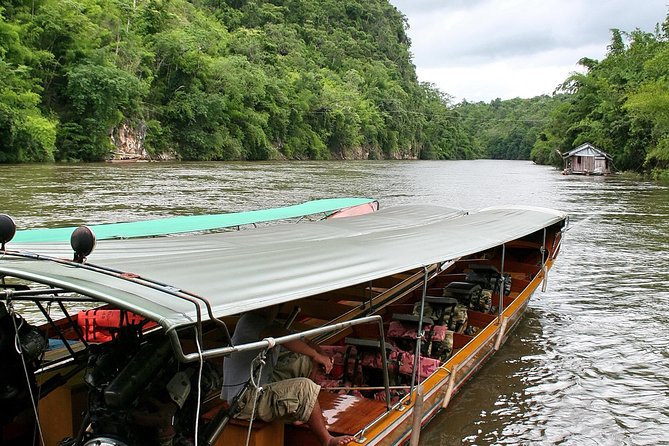
- The long-tail boat to the River Kwai Bridge
- Crossing the bridge and seeing the real railway
- Lunch, comfort, and the long return to Bangkok
- Guide quality can shape the entire day
- Is $108.17 good value?
- Who should book this day trip?
- Practical details before you go
- Should you book the Bridge on the River Kwai tour?
- FAQ
- What time does the tour start?
- How long does the experience last?
- Is hotel pickup included?
- What does the tour price include?
- Are drinks included with lunch?
- Can I reserve a guaranteed train seat?
Key points to know before booking
- A full day from Bangkok: Hotel pickup begins around 6:30 am, and Kanchanaburi is about 130 kilometers west of the capital.
- A serious historical visit: The cemetery and JEATH War Museum focus on POWs and forced laborers who built the railway during World War II.
- A fun change of pace: The long-tail boat ride under the River Kwai Bridge adds movement and good photo angles.
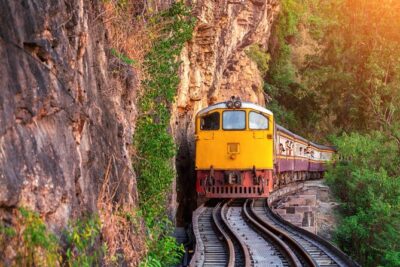
- The train ride is the payoff: You spend about 90 minutes riding the Death Railway through the countryside.
- Lunch and transport are included: You receive an air-conditioned vehicle, guide, boat ride, train ticket, admissions, and lunch. Drinks cost extra.
- A large possible group: The tour can carry up to 99 people, though some departures may be smaller.
Why the River Kwai story matters
The Thailand-Burma Railway was built during World War II to support the Japanese occupation of Burma, now Myanmar. The planned line was meant to connect Bangkok with Rangoon, now Yangon, and shorten the supply route for Japanese forces.
The railway became known as the Death Railway because thousands of Allied POWs and Asian forced laborers died from disease, hunger, exhaustion, violence, and dangerous working conditions. You do not need to be a military-history expert to feel the weight of the subject. The cemetery, museum, bridge, and surviving rail line each show a different part of the story.
That combination is what makes the tour worthwhile. The cemetery gives you a place for remembrance. The museum supplies photographs and background. The bridge provides a physical landmark. The train ride helps you understand the terrain and the sheer effort required to push tracks through it.
I appreciate that the day does not treat the bridge as just a movie prop or photo stop. There is room for photos and sightseeing, but the route also asks you to think about the people who built it and the cost of the project.
More Kanchanaburi and River Kwai trips:
- From Bangkok: Erawan Park & Kanchanaburi Small-Group Tour
★ 4.5 · 1,582 reviews - From Bangkok: Historical Day Tour to River Kwai
★ 4.6 · 868 reviews - Erawan Waterfalls and Bridge Over River Kwai Tour from Bangkok
★ 4.5 · 372 reviews
Leaving Bangkok at 6:30 am
The early start is not optional in spirit. Kanchanaburi is far enough from Bangkok that a late departure would leave little time for the key stops. Pickup is offered from selected Bangkok hotels, so you need to provide your hotel details when booking. If you fail to provide them, the booking may be canceled.
The drive takes you out of the city and into rural Thailand. Sugarcane, rice paddies, and pineapple plantations fill much of the countryside. The air-conditioned coach matters here because this is a long day, and the transfer between Bangkok and Kanchanaburi takes a substantial portion of it.
This is not the right trip if you want a relaxed morning or a quick half-day outing. It is better suited to someone who would rather make one long, organized visit than arrange separate transport, museum admissions, cemetery stops, a boat ride, and a train ticket.
Some departures have received praise for careful timing and smooth transport. Guides including Luck and Peter were singled out for keeping the day moving while still explaining what was happening. That makes a difference on a schedule with several stops.
Kanchanaburi War Cemetery: the most moving stop
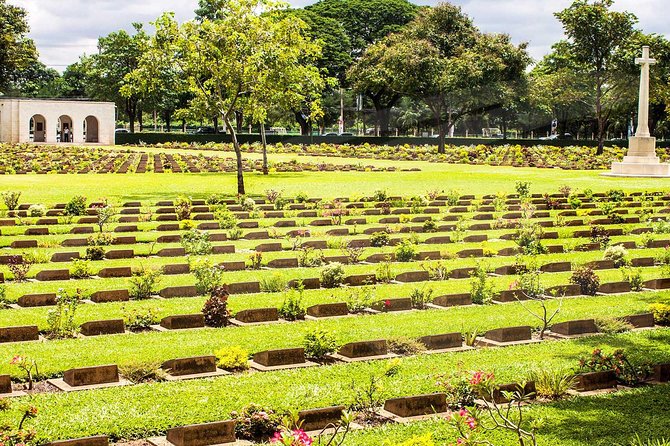
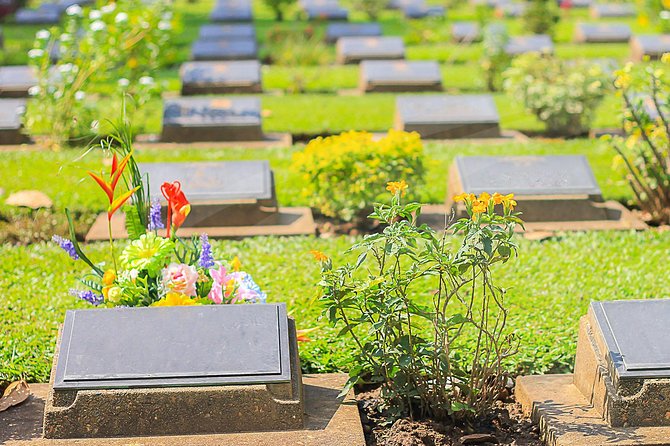
The first major visit is Kanchanaburi War Cemetery, the main POW cemetery for those who died during construction of the Burma Railway. You have about 30 minutes here, with admission included.
This is the point where the day becomes quiet and reflective. The neat rows of graves make the human cost easy to grasp. Names, ages, and dates replace the vague idea of wartime suffering with individual lives cut short.
Thirty minutes is enough to walk through the grounds and pause at the graves, but it is not a long time. If you want to read many inscriptions or spend extended time in reflection, the schedule may feel tight. I suggest using the first few minutes to get oriented, then slowing down rather than trying to cover every row.
A guide can add useful context, but this stop also works through silence. You may find that the most respectful approach is to listen first and take photographs only when appropriate. The cemetery is not simply a sightseeing stop. It sets the tone for everything that follows.
JEATH War Museum and the limits of a short visit
The JEATH War Museum follows the cemetery, with around 20 minutes allotted and admission included. The museum uses historical photographs, paintings, and displays to explain how POWs built the railway during World War II.
The subject is important, but the short visit means you should keep your expectations in check. The museum has been described as fairly basic, particularly in the amount of detailed information available. Some people may find it less polished or less extensive than a major war museum.
Still, it helps connect the cemetery to the construction project. You see the conditions, tools, people, and wartime setting behind the railway. I would not book this day mainly for the museum, but I would not skip it either. Its value comes from the sequence: first the graves, then the historical material, then the bridge and railway itself.
A strong guide can make this brief stop more useful. The best commentary adds facts that are not obvious from the displays and helps you understand what you are looking at without turning the visit into a long lecture.
Same city, a completely different afternoon:
- Bangkok: Damnoen Saduak Market and Maeklong Railway Market
★ 4.5 · 26,723 reviews - The Old Siam: Damnoen Saduak and Maeklong Railway Market
★ 4.5 · 10,992 reviews - From Bangkok: Ayutthaya Temples Guided Tour with Lunch
★ 4.7 · 10,535 reviews - Bangkok: Train Market & Floating Market with Boat Ride
★ 4.7 · 9,547 reviews
The long-tail boat to the River Kwai Bridge
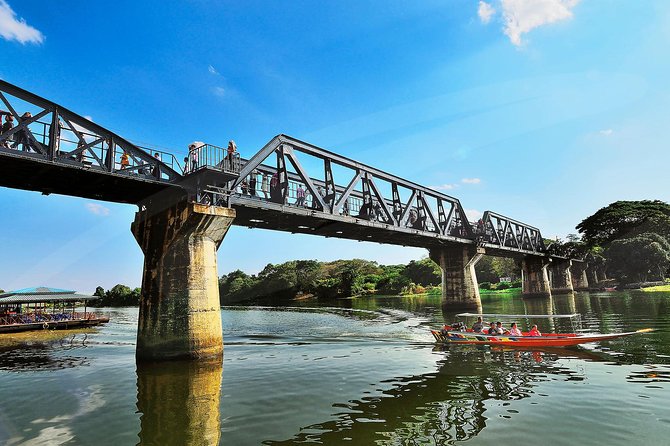
One of the tour’s liveliest moments is the long-tail speedboat ride along the Kwai River. The boat ride takes about 20 minutes and brings you beneath the famous bridge.
This approach is more interesting than arriving only by road. From the river, you get a changing view of the bridge and the waterway around it. The ride also breaks up the serious museum and cemetery visits with something active and distinctly Thai.
The boat is described as a long-tail speedboat, so you should expect an open-air ride rather than a quiet covered cruise. The experience can be exhilarating, and it offers strong photo opportunities. You may also want to protect loose belongings from spray and keep your phone secure, though the supplied information does not specify the boat’s exact seating or weather arrangements.
Once at the bridge, you have time to explore on your own. The stop is about 20 minutes, which is enough to walk across or around the bridge and take photographs, but not enough for a long, unhurried visit.
The bridge itself is visually striking, yet the real value is what it represents. It was part of a railway intended to link Bangkok with Rangoon and support Japan’s wartime campaign. Your guide may explain the bridge’s construction and the way the railway fit into the wider project.
Crossing the bridge and seeing the real railway
The bridge stop can feel brief, especially if you want time for both photos and reflection. The boat ride gives you a memorable arrival, but the schedule soon moves on to the train.
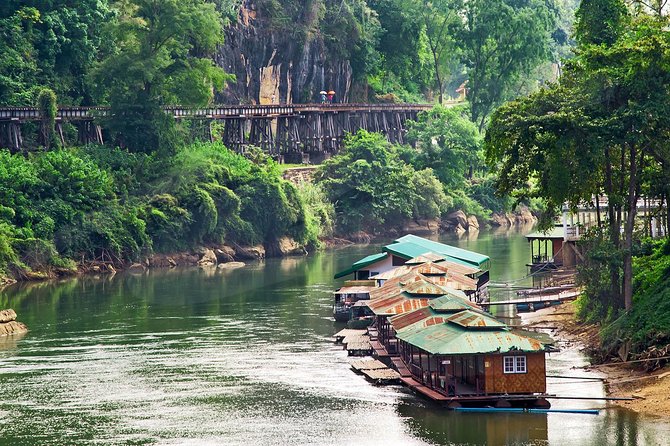
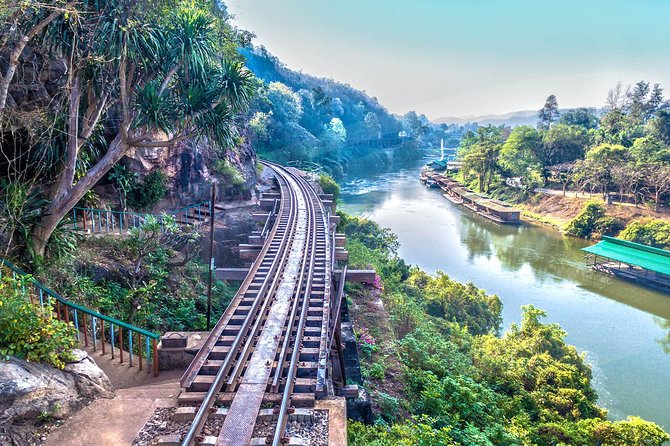
The later rail journey is the part that gives the bridge context. You are not simply looking at a preserved structure. You are riding a surviving section of the railway through the countryside and jungle-covered parts of the region.
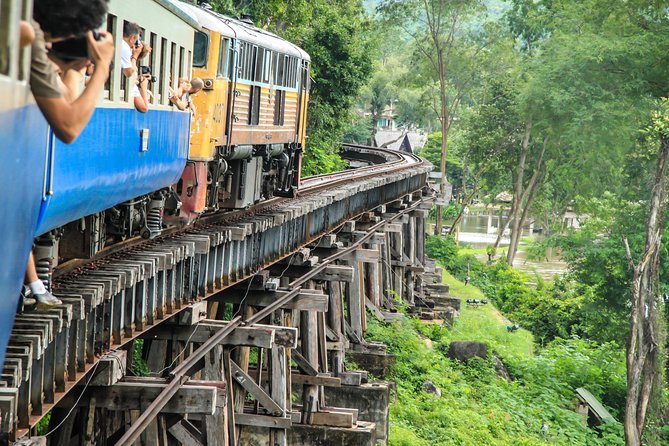
The train ride lasts about 1 hour and 30 minutes. It is scenic, but it is also a useful lesson in engineering. The tracks curve through difficult ground, and the views help you understand why construction was so dangerous and exhausting.
If you enjoy railways, this will likely be your favorite part. If you are mainly interested in the bridge, the train still adds meaning because it shows the line as a working route rather than a stand-alone monument.
There is an optional train upgrade costing about 200 baht. It guarantees a seat and includes a cold towel and drinking water. A roughly 300-baht option adds tea or coffee and a certificate. Without an upgrade, seating is first come, first served. These extras are not necessary, but a guaranteed seat may be useful after a long morning of driving and walking.
Lunch, comfort, and the long return to Bangkok
Lunch is included, which is helpful on a day with an early start and a full schedule. Drinks are not included, so bring money for beverages. Some departures have included lunch at a particularly pleasant restaurant, and dietary needs have been handled well when raised with the guide.
The air-conditioned vehicle is another practical advantage. The road journey is long, and an organized coach saves you from arranging transfers between Bangkok and Kanchanaburi. That convenience is a major part of the tour’s value.
Comfort can vary. One person found the vehicle less comfortable than expected, while other comments praised the transport and driver. With a maximum group size of 99, the experience can be quite large, so do not assume you are booking a small private-style outing.
The physical demands are moderate rather than extreme. You will spend many hours sitting, but you will also walk around the cemetery, museum, bridge, and train areas. The operator recommends a moderate level of fitness. Comfortable shoes, sun protection, and water are sensible choices.
Guide quality can shape the entire day
The best part of an organized history tour is often the person explaining it. Guides named Betty, Luck, Tiny, Peter, Jenny, and Suki have received strong praise for clear information, good timing, friendly care, and help with photos.
That does not mean every departure will feel identical. Guide quality can vary, and one account found the commentary too limited, particularly while passing places along the road. If you want detailed information about every village and viewpoint, this may not satisfy you.
Still, the strongest guide reports describe a day made easier by someone who knows where to be, when to move, and how to explain the history. Jenny was praised for making sure the group saw the main sights and stayed comfortable. Luck was valued for her timing and background knowledge. Peter was described as both entertaining and informative.
You should also feel free to ask questions at the cemetery and museum. The supplied information says local guides lead the tour, but it does not promise a specific guide. Names can help you understand the kind of service reported, not guarantee who will be assigned.
Is $108.17 good value?
At $108.17 per person, the price is reasonable if you want the whole day handled for you. It includes selected-hotel pickup and drop-off, an air-conditioned vehicle, a local guide, lunch, admissions, the long-tail boat, and the train ride.
Adding those pieces independently would take planning and could create transport problems. The tour also removes the need to work out how to reach Kanchanaburi and coordinate the river and railway visits in one day.
The value depends on your priorities. If you dislike long coach rides or prefer slow museum visits, the price may feel less attractive because the schedule is packed and the drive takes time. If you want to see the key sites in one organized day from Bangkok, the bundle is strong.
The train upgrade is optional. I would consider the 200-baht version if a guaranteed seat matters to you. The 300-baht version is aimed at people who enjoy small extras such as tea, a certificate, and a cold towel. Neither changes the core historical experience.
Who should book this day trip?
I would recommend it to you if you have a serious interest in World War II, railway history, memorial sites, or the story behind the River Kwai Bridge. It also suits first-time visitors who want to reach Kanchanaburi without managing several separate connections.
It is a good fit for people who appreciate a guide’s explanations and do not mind moving between several sites. The mix of cemetery, museum, boat, bridge, train, and lunch keeps the day varied.
I would think twice if your main goal is a quiet, unhurried visit. The cemetery and museum are short stops, and the bridge visit is also limited. A large group is possible, and the long return journey can make the day tiring.
The experience works best when you treat it as a historical day trip with scenic extras, not as a leisure cruise or a luxury rail excursion. The fun boat ride and countryside train journey matter, but they support the central story rather than replace it.
Practical details before you go
The tour begins around 6:30 am and lasts approximately 9 to 10 hours. Pickup is available only from selected Bangkok hotels, so confirm that your accommodation qualifies and provide the full details at booking.
Confirmation is issued at the time of booking. Restrooms are available during the experience, and the tour operates near public transportation, though the supplied information does not describe a public-transport route from Bangkok.
The activity requires a minimum number of participants. If that number is not met, the operator may cancel after confirmation and offer another date, another experience, or a full refund.
Free cancellation is available if you cancel at least 24 hours before the local start time. Cancellations or changes made within 24 hours are not accepted for a refund.
Should you book the Bridge on the River Kwai tour?
Book it if you want the most important Kanchanaburi sights combined into one day and you value an informed guide, included transport, and a train ride on the actual Death Railway. The cemetery is the emotional heart, while the boat and train add memorable variety.
Skip it if you need lots of time at museums, dislike early starts, or want a small and flexible group. For most visitors with limited time in Bangkok, though, the $108.17 cost buys a practical route through a difficult and important chapter of Thai and World War II history.
FAQ
What time does the tour start?
The tour starts at approximately 6:30 am.
How long does the experience last?
The full experience lasts approximately 9 to 10 hours, including travel from Bangkok to Kanchanaburi and back.
Is hotel pickup included?
Yes, hotel pickup and drop-off are included from selected Bangkok hotels. You must provide your hotel details when booking.
What does the tour price include?
The price includes an air-conditioned vehicle, local guide, long-tail boat ride, train ride along the Death Railway, lunch, admission fees, and hotel pickup and drop-off from selected hotels.
Are drinks included with lunch?
No. Beverages are not included.
Can I reserve a guaranteed train seat?
Yes. An optional upgrade costs approximately 200 baht and includes a guaranteed seat, cold towel, and drinking water. An approximately 300-baht upgrade also includes tea or coffee and a certificate. Without an upgrade, seating is first come, first served.
Just added around Bangkok
- Yoga in the Park Thailand★ 5.0 · 12 reviews
- Bangkok and Ayutthaya 3 Days★ 4.5 · 12 reviews
- Private Tour: Damnoen Saduak Floating Market and Bangkok City Temples★ 5.0 · 12 reviews
- Chinatown (Yaowarat Road) Neon Photoshoot★ 5.0 · 12 reviews
- Ayutthaya Day Tour By Coach and Cruise★ 4.0 · 12 reviews
- Bangkok Suvarnabhumi Airport: VIP Meet & Greet Service (Fasttrack)★ 3.5 · 12 reviews
- Private Tour: Floating Markets and Suan Sampran Day Trip from Bangkok★ 3.5 · 12 reviews
- Bangkok: Wow Park Interactive Amusement & Science Park★ 4.5 · 12 reviews
Kanchanaburi & River Kwai Trips, compared.


Erawan Waterfalls and Bridge Over River Kwai Tour from Bangkok
Read our review →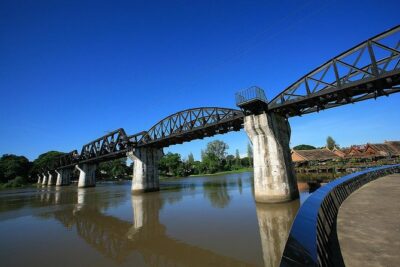
Bridge on the River Kwai and Thailand-Burma Railway Guided Tour
Read our review →
Erawan Waterfall and Elephant Care: Private Tour to Kanchanabur
Read our review →
Kanchanaburi Full Day Tour: River Kwai and Erawan Falls
Read our review →
Floating Markets and Bridge on River Kwai Tour from Bangkok
Read our review →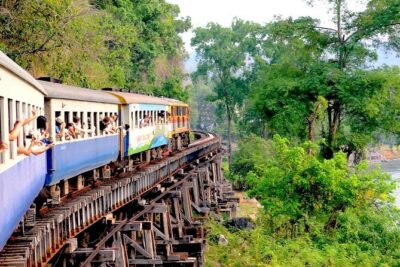
River Kwai Day Tour from Bangkok – History, Scenery & Culture
Read our review →Browse the lists this tour appears in