
Reviewed · GRAND PALACE & TEMPLE TOURS
Private Tour: Damnoen Saduak Floating Market and Bangkok City Temples
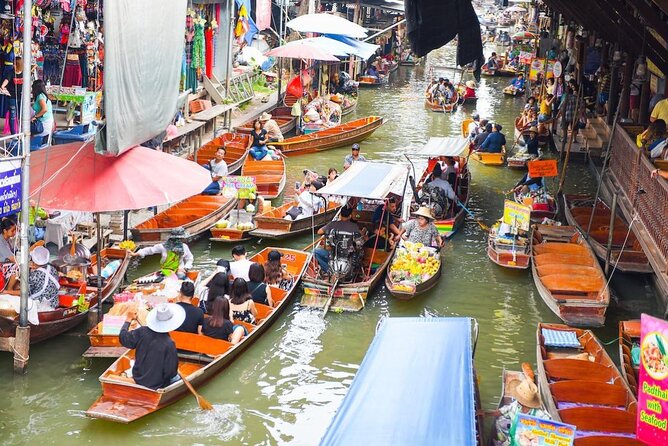
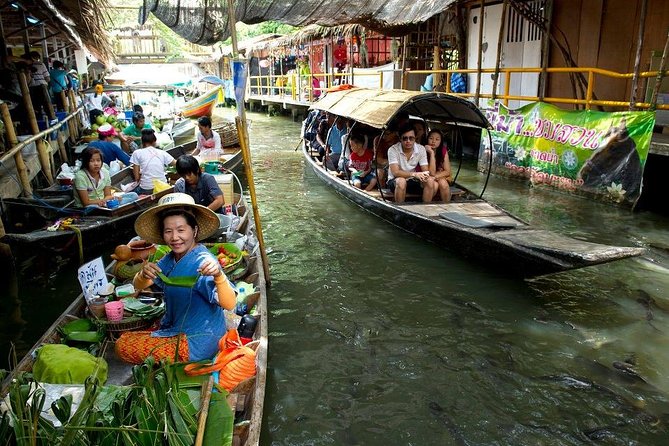
Damnoen Saduak Floating Market is the star here: a colorful canal scene where vendors paddle wooden boats loaded with produce and local goods. Then the tour swings back to Bangkok for three very different temples, giving you a useful mix of rural Thailand, food, craft, religion, and city life in one long day.
I like the private guide and van, which let you ask questions, stay cool between stops, and adjust the day when needed. I also like the visit to a coconut-sugar farmhouse, a small but worthwhile look at how local food is made. The main drawback is pace: eight hours, long road time, a market, lunch, and three temples can leave you worn out by late afternoon.
In This Review
- Key details that shape the day
- A full day that links canal life with Bangkok temples
- Rice paddies, salt fields, and coconut sugar
- Damnoen Saduak Floating Market, the morning centerpiece
- Lunch and a stop for Thai wood carving
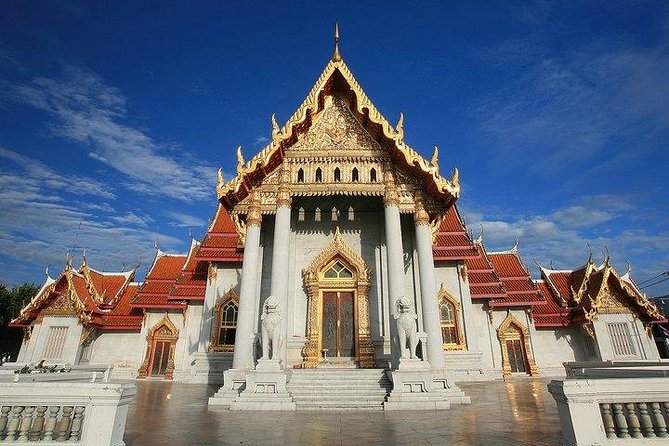
- Wat Benchamabophit and Bangkok’s marble style
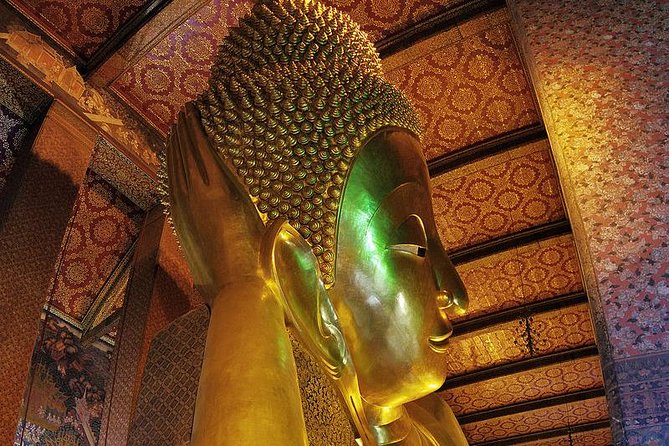
- Wat Pho and the immense reclining Buddha
- Wat Traimit and the 5.5-ton Golden Buddha
- What the private format really adds
- The pace, heat, and practical clothing
- Who should book this Bangkok day tour?
- Final call: a strong choice for a first Bangkok visit
- FAQ
- How long does the tour last?
- What time does the tour start?
- Is hotel pickup included?
- Is this a private tour?
- What transportation is provided?
- Is lunch included?
- Which temples are visited?
- What should I wear to the temples?
- Can I cancel for a full refund?
Key details that shape the day
- The floating market begins with a countryside drive: You leave Bangkok’s suburbs behind for rice paddies, salt fields, and plantations.
- Coconut sugar adds a local stop: At a working farmhouse, you can watch workers extract coconut sugar rather than simply pass through scenic countryside.
- The private format gives you room to adjust: Guides such as Kat, May, Parichat, Mr Moo, and Tony have been praised for adapting the day to personal interests.
- The three temples offer strong variety: Wat Pho has its huge reclining Buddha, Wat Traimit houses a 5.5-ton solid-gold Buddha, and Wat Benchamabophit is known for marble and red-and-gold design.
- Lunch, transport, and hotel transfers are included: That matters on a full day covering roughly 110 kilometers each way to the market area.
- Temple clothing is not optional: Cover your shoulders and knees, and choose smart-casual clothing that works in Bangkok’s heat.
A full day that links canal life with Bangkok temples
This tour works because it joins two sides of Thailand that are often planned separately. In the morning, you see the waterways and farms around Ratchaburi province. In the afternoon, you return to Bangkok for some of the city’s most important religious buildings.
You begin around 7:00 a.m. with hotel pickup in a private, air-conditioned minivan. The early start is practical. Damnoen Saduak is about 110 kilometers west of Bangkok, so the road journey takes a meaningful part of the day. You will see the city thin into suburbs and then into agricultural country.
The private setup is especially useful during these transfers. You can ask your guide about farming, Thai food, Buddhism, or the neighborhoods outside the main tourist zone. The driver also keeps the van cool and provides cold water, details that matter when Bangkok’s heat begins to work on you.
The tradeoff is clear: this is not a slow, single-neighborhood walk. You cover a lot of ground. If you have only two days in Bangkok, that reach can be valuable. If you prefer lingering over one market or temple, the schedule may feel packed.
More floating market runs from Bangkok:
- Bangkok: Damnoen Saduak Market and Maeklong Railway Market
★ 4.5 · 26,723 reviews - The Old Siam: Damnoen Saduak and Maeklong Railway Market
★ 4.5 · 10,992 reviews - Bangkok: Train Market & Floating Market with Boat Ride
★ 4.7 · 9,547 reviews
Rice paddies, salt fields, and coconut sugar
The countryside portion gives the floating market some context. Instead of appearing as an isolated tourist stop, Damnoen Saduak is part of a broader area shaped by canals, farms, plantations, and food production.
You pass rice paddies and salt fields, then stop at a farmhouse where workers extract coconut sugar. This is one of the more useful details in the program because it connects the food you see in Thailand with the work behind it.
The stop is not presented as a major attraction, and it should not be treated like one. Think of it as a short working-agriculture visit that breaks up the road trip and adds meaning to the market. You might find the production process more interesting if you enjoy food traditions and everyday Thai life.
The countryside views also give you a change of rhythm before the market. The city’s roads and buildings give way to open fields and plantations. Your guide can explain the agricultural setting as you travel, though the exact depth of that conversation depends on the guide assigned to your group.
Damnoen Saduak Floating Market, the morning centerpiece
The market stop lasts about three hours, making it the longest part of the tour. Damnoen Saduak is famous for its canal network and for vendors selling produce and specialty goods from traditional wooden boats.
Expect a colorful, active scene rather than a quiet local shopping trip. Boats crowd the historic canals, and sellers call out offers from the water. You can look, photograph, and buy if something catches your eye. Your guide can explain the market’s background and offer tips on bargaining and purchasing.
One point deserves a clear warning: the market is a tourist attraction, so prices and sales pressure can be part of the experience. The private guide helps by giving you context and advice, but you should still decide in advance how much shopping you want to do. You do not need to buy anything to enjoy the setting.
The boat ride is a highlight for many people, but the supplied details do not specify whether a separate boat fee is included in every booking or how the ride is arranged. Confirm that point before you pay if the water portion is essential to your plans. The tour does list the market admission as free, but personal expenses are not included.
The market also brings the day’s most distinctive images: wooden boats, canal traffic, fresh produce, and a glimpse of commerce conducted on water. If you want an authentic, untouched village market, this may feel too organized for that. If you want an easy way to see a famous Thai market without arranging transport yourself, it makes sense.
Lunch and a stop for Thai wood carving
After the market, you return toward Bangkok for a typical Thai lunch. The meal is included, which simplifies the day and keeps you from having to search for food during a tight schedule.
The supplied details do not name the restaurant or specify the menu. You should expect Thai food rather than a choice of international dishes. Tell your guide about dietary needs at the start of the morning, though the tour information does not promise special menus.
The return route also includes a wood-carving factory. This gives you a look at local craft production and adds another working-industry stop to the day. As with the coconut farmhouse, its value comes from seeing how things are made, not from treating it as a headline attraction.
Some organized tours load up on shops. Here, the listed factory visit is tied to Thailand’s crafts industry, but you should still allow time for browsing and possible sales activity. Personal purchases are not included in the tour price.
More Grand Palace and temple tours:
- From Bangkok: Ayutthaya Temples Guided Tour with Lunch
★ 4.7 · 10,535 reviews - Bangkok: City Highlights Temple and Market Walking Tour
★ 4.5 · 3,990 reviews - Bangkok by Night: Temples, Markets and Food Tuk-Tuk Tour
★ 5.0 · 3,752 reviews - Bangkok: Grand Palace, Wat Pho, and Wat Arun Guided Tour
★ 4.8 · 3,632 reviews
Wat Benchamabophit and Bangkok’s marble style
The afternoon temple circuit starts with Wat Benchamabophit, commonly called the Marble Temple. You have about an hour here, enough to take in the main design and hear the religious and historical background from your guide.
The temple is known for its Carrara Italian marble columns and ornate red-and-gold tiered roof. That combination gives it a different look from the older brick, stucco, and gold-heavy buildings elsewhere in Bangkok.
This stop is a good reminder that Bangkok’s temples are not all variations on the same design. Wat Benchamabophit feels more formal and polished, while the roofline adds a strong Thai character. Look closely at the contrast between the pale marble and the bright roof colors.
An hour is useful but not generous if you want to study every detail. You will get an introduction and time for photographs, but not the unhurried pace of a specialist architecture tour.
Wat Pho and the immense reclining Buddha
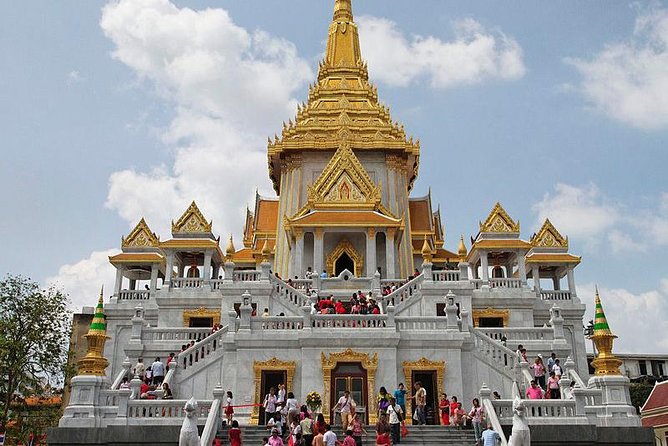
Wat Pho, officially Wat Phra Chetuphon, is described as Bangkok’s oldest and largest temple, with a precinct covering about 80,000 square meters. The main draw on this tour is the enormous reclining Buddha.
The image is listed at 151 feet, or 46 meters, and its scale makes this a memorable stop even if you have already seen several temples. The reclining pose also gives you a different view of Buddhist imagery than the seated figure at Wat Traimit.
Your hour here should cover the main temple experience and some of the surrounding grounds. Listen to the guide’s explanation rather than rushing straight to the statue, since the wider compound is part of what makes Wat Pho important.
Wat Pho can be visually overwhelming. There are roofs, courtyards, images, and decorative details competing for attention. A private guide is helpful because you can ask what deserves your attention first.
The tour description refers to seeing highlights of the Grand Palace complex, but the listed temple itinerary specifically names Wat Pho, Wat Benchamabophit, and Wat Traimit. If entering the Grand Palace itself is a must for you, confirm the exact plan before booking. Do not assume the phrase means a separate Grand Palace visit.
Wat Traimit and the 5.5-ton Golden Buddha
The Temple of the Golden Buddha, Wat Traimit, supplies the afternoon’s biggest surprise in terms of material value. It houses a 5.5-ton Buddha image made of solid gold.
The statue was found when Bangkok’s port area was expanded and dates back more than 200 years, according to the tour information. That story gives the visit an appealing sense of discovery, though the statue itself is the focus.
You have about an hour at Wat Traimit. Compared with Wat Pho, the experience is more concentrated around one remarkable image. That contrast works well in a three-temple day: one temple for marble architecture, one for a reclining Buddha, and one for a massive golden Buddha.
The guide’s role matters here. A short explanation can help you understand why the image is so significant, rather than leaving you with only a photograph and a large number attached to it.
What the private format really adds
The tour costs $174.95 per person. That is not a bargain-basement Bangkok outing, but the price includes a private guide, private air-conditioned minivan, lunch, and hotel pickup and drop-off.
The value depends heavily on your group size. For two people, the per-person price is a serious expense, but you gain a full day without sharing the vehicle with a large group. For a family or small group, the private arrangement can compare more favorably with paying separate fares, arranging several rides, and buying temple admissions on your own.
You also save planning time. Damnoen Saduak is far from central Bangkok, and combining it with three temples would require careful route planning. The driver handles the long transfers while your guide keeps the day moving.
The strongest benefit is flexibility. Kat and May are specifically praised for adjusting the schedule, while other guides named in the feedback include Parichat, Mr Moo, and Tony. One group chose to replace a temple with the railway market, and another skipped the last temple after deciding the day had already delivered enough.
That flexibility cuts both ways. One couple felt pressured when the itinerary was changed to include a railway market instead of a temple. The lesson is simple: tell your guide clearly what you want, and confirm every proposed change before agreeing. Private does not mean every listed stop is guaranteed if you make substitutions.
The pace, heat, and practical clothing
Eight hours is a long day. You leave early, spend much of the morning on the road, walk around a market, eat lunch, and visit three temples in the afternoon. It is normal to feel tired by the end, especially after time outside in heat and humidity.
The air-conditioned van is more than a luxury here. It gives you a cool place to recover between stops, and some people may want to rest during the longer transfers. Wear comfortable shoes and bring water, even though cold water has been supplied on some departures.
Temple dress is important. Shoulders and knees must be covered, and the stated dress code is smart casual. A light shirt with sleeves and longer trousers or a skirt is a safe choice. Dress respectfully from the beginning so you do not need to make changes at the temple entrance.
The tour is suitable for most participants, and service animals are allowed. The information does not provide detailed mobility notes, so anyone needing specific assistance should ask the operator before booking.
Who should book this Bangkok day tour?
I would choose this tour if you have limited time in Bangkok and want to see both the countryside and several major temples without arranging the transport yourself. It is particularly useful for families and small groups that value a private van, a personal guide, and the ability to adjust the day.
It also suits first-time visitors who want a broad introduction. You see agriculture, canal trade, Thai food, crafts, Buddhist art, and city neighborhoods in one outing.
I would think twice if you dislike early starts, long drives, organized shopping stops, or full schedules. The floating market is well known and can feel commercial, while the three temples may blur together if you are already temple-weary.
The tour has a 4.8 rating from 12 reviews, with 92 percent recommending it. The most praised features are the guides’ clear English, strong local explanations, friendly manner with children, flexible planning, and the comfort of the private van. Those strengths are meaningful, but the small number of ratings means you should still judge the format against your own travel style.
Final call: a strong choice for a first Bangkok visit
Book this tour if you want maximum coverage in one day and place a high value on private transport and guide attention. The mix of Damnoen Saduak, coconut sugar, lunch, wood carving, and three contrasting temples gives you far more range than a city-only sightseeing day.
Before booking, confirm whether the Grand Palace itself is included, how the floating boat ride is handled, and whether you want all three temples or prefer to leave room for a possible change. At $174.95 per person, the tour earns its price through convenience, coverage, and personal service, not through a relaxed pace.
For a short Bangkok stay, that is a fair trade. For a longer visit, you may prefer to split the market and temples across separate days.
FAQ
How long does the tour last?
The tour lasts about eight hours.
What time does the tour start?
The stated start time is 7:00 a.m.
Is hotel pickup included?
Yes. Hotel pickup and drop-off in Bangkok are included.
Is this a private tour?
Yes. Only your group participates in the private activity.
What transportation is provided?
Transport is provided in a private, air-conditioned minivan.
Is lunch included?
Yes. Lunch is included in the tour price.
Which temples are visited?
The listed temple stops are Wat Benchamabophit, Wat Phra Chetuphon, also known as Wat Pho, and Wat Traimit, the Temple of the Golden Buddha.
What should I wear to the temples?
You should wear smart-casual clothing with your shoulders and knees covered.
Can I cancel for a full refund?
Yes. You can cancel at least 24 hours before the experience start time for a full refund. Cancellations or changes made less than 24 hours before the start time are not accepted for a refund.
More Shopping Tours in Bangkok
- Bangkok: Hands-on Thai Cooking Class and Market Tour
★ 4.9 · 1,614 reviews - Damnoen Saduak Floating Market and Maeklong Railway Market Tour
★ 4.5 · 1,588 reviews - Day Trip to Bangkok Floating Market & Maeklong Railway
★ 5.0 · 1,528 reviews - Bangkok: Railway and Floating Market Tour with Dragon Temple
★ 4.6 · 1,225 reviews
More Market Visits in Bangkok
- From Bangkok: Ayutthaya & Ayothaya Floating Market Day Trip
★ 4.7 · 6,084 reviews - Half-Day Railway Market and Floating Market Tour in Thailand
★ 4.5 · 3,924 reviews - Bangkok: Damnoen Saduak, Train Market & Mahanakhon Day Trip
★ 4.7 · 2,162 reviews - From Bangkok: Damnoen Saduak Floating Market Guided Tour
★ 4.4 · 2,020 reviews
Just added around Bangkok
- Yoga in the Park Thailand★ 5.0 · 12 reviews
- Bangkok and Ayutthaya 3 Days★ 4.5 · 12 reviews
- Chinatown (Yaowarat Road) Neon Photoshoot★ 5.0 · 12 reviews
- Ayutthaya Day Tour By Coach and Cruise★ 4.0 · 12 reviews
- Bangkok Suvarnabhumi Airport: VIP Meet & Greet Service (Fasttrack)★ 3.5 · 12 reviews
- Bangkok: Wow Park Interactive Amusement & Science Park★ 4.5 · 12 reviews
- Afternoon Ayutthaya & Ancient Temples at UNESCO site By Road★ 4.5 · 12 reviews
- Private Tour: Floating Markets and Suan Sampran Day Trip from Bangkok★ 3.5 · 12 reviews
Grand Palace & Temple Tours, compared.
City Highlights Temple and Market Walking Tour
Read our review →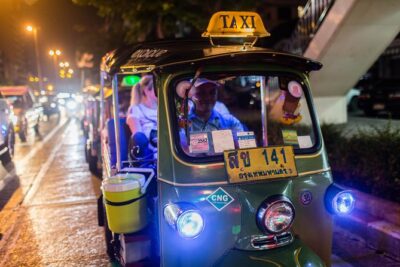
Bangkok by Night: Temples, Markets and Food Tuk-Tuk Tour
Read our review →
Grand Palace, Wat Pho, and Wat Arun Guided Tour
Read our review →
Grand Palace and Wat Phra Kaew Guided Walking Tour
Read our review →
Grand Palace, Wat Pho, Wat Arun Sacred & Local Tour
Read our review →
Browse the lists this tour appears in