
Reviewed · AUDIO TOURS
Bangkok Self-Guided Audio Tour
Bangkok’s biggest sights are spread across a wide patch of the city, from Chinatown and the riverside temples to the Grand Palace, modern art museums, and Lumpini Park. This self-guided audio tour gives you one map and 12 short audio stops, so you can build your own route instead of following a group with a flag.
I like the low $9 price and the freedom to start and stop anywhere. I also like the option to listen offline and split the experience across several days. The main catch is depth: the recordings offer general background rather than the detailed storytelling of a good live guide, and one review called the translation poor. At a listed average rating of 3.3 from four reviews, I would treat this as a useful orientation tool, not a full guided tour.
In This Review
- Key points to know before you book
- What this Bangkok audio tour actually gives you
- Wat Traimit and Chinatown: a strong start in Bangkok’s old Chinese quarter
- Wat Pho and Wat Arun: two riverside temples with different personalities
- The Grand Palace and Wat Phra Kaew: the emotional center of the route
- The National Museum and Golden Mount: history, then city views
- Wat Benchamabophit: Italian marble in a Thai royal setting
- Bangkok Art and Culture Centre: a modern counterpoint
- Lumpini Park: a pause from monuments
- MOCA Bangkok: the route’s furthest-feeling museum stop
- How useful is the audio content?
- The $9 price and the costs it does not cover
- Who will get the most from this tour?
- Should you book the Bangkok Self-Guided Audio Tour?
- FAQ
- How long does the Bangkok Self-Guided Audio Tour take?
- Can I start and end the tour anywhere in Bangkok?
- Can I split the tour across several days?
- What do I receive after booking?
- Are admission fees and transport included?
- Do I need to bring my own phone and earphones?
Key points to know before you book
- Twelve major sights in one map: The route covers temples, palaces, museums, Chinatown, a park, and a modern arts center.
- You set the schedule: Start and finish in Bangkok wherever you like, follow the suggested order, or choose only the stops that interest you.
- The $9 price covers access, not sightseeing costs: Entry fees, transport, food, drinks, earphones, and internet access are extra.
- The audio stops are short: Each listed stop is about 10 minutes, so the tour gives context while you look around rather than replacing a long museum visit.
- Two links do the work: One opens the SoundCloud audio playlist. The other opens a Google My Maps route with each attraction linked to its recording.
- Best for independent planners: You get structure and historical notes without a guide, fixed meeting time, or group pace.
What this Bangkok audio tour actually gives you
The experience is a set of private access links valid for up to six days. One link opens the audio content through SoundCloud. You can play individual stops or listen through the whole playlist before setting out.
The second link opens an interactive Google My Maps route. Each point marks one of the 12 attractions and connects to its matching audio guide. This is handy because you can decide which sights fit your day instead of trying to cram every stop into three hours.
The advertised duration is about three hours, but that number needs a little common sense. Twelve audio stops at roughly 10 minutes each already account for two hours, and you still need time to travel, find entrances, pay admission, walk through the sites, and pause for food or photos.
I would treat three hours as the approximate listening and sightseeing framework, not a strict door-to-door schedule. If you want to visit the Grand Palace, Wat Phra Kaew, the National Museum, and MOCA properly, you may need more time. The tour can be split across several days, which is one of its strongest features.
You receive confirmation at booking, then the access email arrives on your selected travel date before your chosen starting time. You need your own phone and earphones. Internet or Wi-Fi is not supplied, although the audio can be listened to offline once you have access.
A few more Bangkok half-days to weigh up
- Bangkok: Tuk Tuk Day Pass App & Boat Chao Phraya River
★ 4.2 · 593 reviews - Bangkok Combo: Tuk Tuk App Pass, Chao Phraya Boat & E-sim
★ 4.5 · 94 reviews - Private ‘Breeze & Pleased’ Canal Boat Ride – 2hrs (self-guided)
★ 5.0 · 91 reviews
Wat Traimit and Chinatown: a strong start in Bangkok’s old Chinese quarter
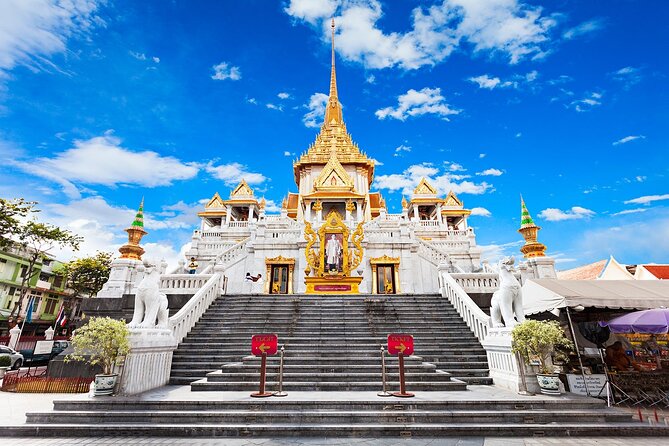
The first stop is Wat Traimit, also called the Temple of the Golden Buddha. Its main story is the enormous solid gold Buddha statue, along with the fact that its true material was discovered by accident.
That is an excellent subject for a short recording. You get a clear introduction to the statue and its place in Thai Buddhist life before moving into Chinatown. The listed audio time is 10 minutes, while admission is not included.
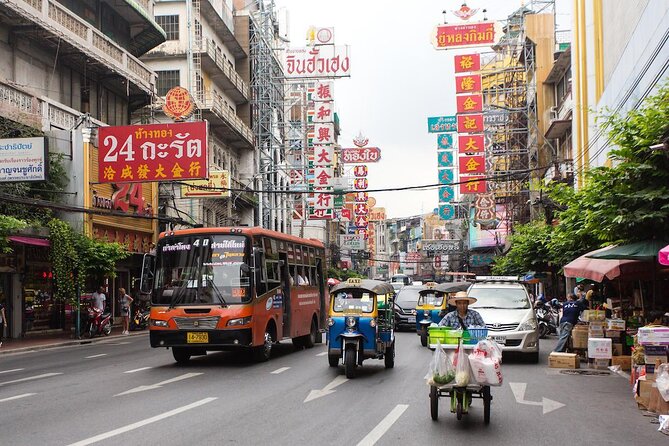
Chinatown gives the tour a different mood. The focus here is Bangkok’s Chinese community, its cultural background, market streets, and street food. The audio cannot give you the full sensory experience of walking through the area, but it can help explain why this part of Bangkok feels different from the royal and temple districts.
I would not rush these two stops. Chinatown is best treated as an area to explore between audio points, not as a single 10-minute attraction. Stop for food only if you have budgeted extra time, since meals and drinks are not included.
Wat Pho and Wat Arun: two riverside temples with different personalities
Wat Phra Chetuphon Wimon Mangkhalaram Rajwaramahawihan is more commonly called Wat Pho. The audio introduces Bangkok’s oldest and largest temple complex, its famous Reclining Buddha, and its links with traditional Thai medicine and massage.
Admission is listed as free for this stop, but the tour information does not say that every part of every site is free. Check current conditions locally before you go. The audio itself is designed as a short primer, so do not expect a full architectural guide to every courtyard and building.
Wat Arun, the Temple of Dawn, follows with a lesson on its porcelain decoration, Buddhist symbolism, and changes through different historical periods. Admission is not included. The two temples make a useful pair: Wat Pho helps you understand Bangkok’s temple traditions, while Wat Arun gives you a strong visual example of Thai religious architecture.
The map is especially useful here because these sights belong to the same general riverside sightseeing zone, but the experience still requires your own transport and route planning. No pickup, drop-off, boat transfer, taxi, or other transport is included.
The Grand Palace and Wat Phra Kaew: the emotional center of the route
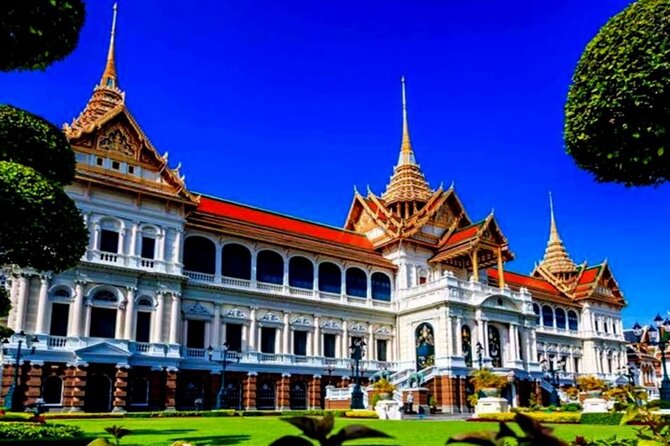
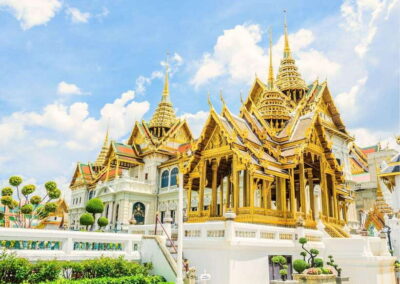
The Grand Palace is the tour’s biggest historical stop. The recording explains its role in Thai royalty, government, and national history. You can use it before entering to understand why the complex matters, then pause the audio while you look closely at the buildings.
The admission charge is not included, and the palace can take much longer than 10 minutes if you explore beyond the basic highlights. The short recording is therefore a starting point, not a substitute for time on site.
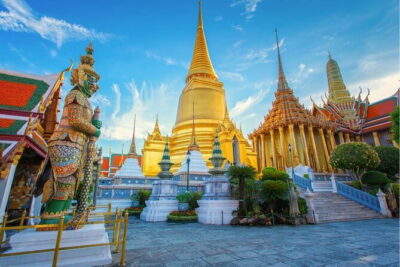
Inside the Grand Palace complex is Wat Phra Kaew, the Temple of the Emerald Buddha. This is presented as Thailand’s most sacred Buddhist temple, with attention to the legend surrounding the Emerald Buddha. Again, admission is not included, and the two attractions should be planned together because they occupy the same complex.
This is where the tour’s short format may feel most limited. The Grand Palace and Wat Phra Kaew contain enough detail to reward a longer explanation, but the audio format gives you only a compact account. I like having a simple introduction ready on my phone, but I would not book this expecting the layered interpretation of a specialist guide.
Dress and conduct requirements are not explained in the supplied details, so check the current rules for the palace and temples before setting out. This is also a place where you should allow extra time for entry and security rather than relying on the listed 10-minute audio duration.
Same city, a completely different afternoon:
- Bangkok: Damnoen Saduak Market and Maeklong Railway Market
★ 4.5 · 26,723 reviews - The Old Siam: Damnoen Saduak and Maeklong Railway Market
★ 4.5 · 10,992 reviews - From Bangkok: Ayutthaya Temples Guided Tour with Lunch
★ 4.7 · 10,535 reviews - Bangkok: Train Market & Floating Market with Boat Ride
★ 4.7 · 9,547 reviews
The National Museum and Golden Mount: history, then city views
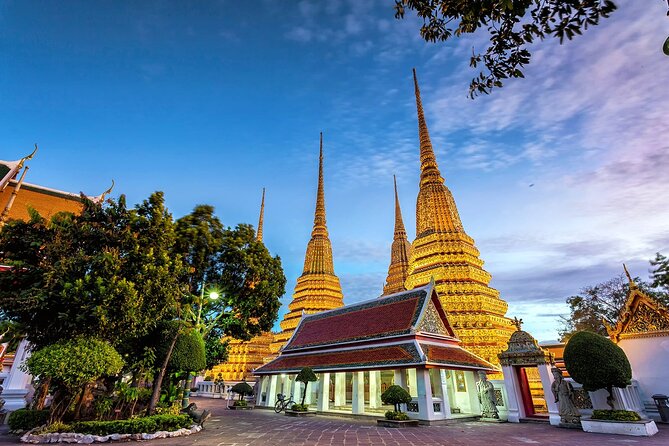
The National Museum Bangkok takes you through Thai history from prehistoric times to the Bangkok period. Its displays contain objects that help tell the story of the country’s art, religion, and political past.
The audio can help you decide what matters most before entering. Admission is not included, and 10 minutes is far too short for a serious museum visit. I would use the recording as a preview, then spend as much time inside as your interests and schedule allow.
The Golden Mount, or Wat Saket, offers a change of pace. You climb an artificial hill for views over Bangkok, while the audio explains its Ayutthaya-era construction and place in Thai Buddhist ideas.
Here, the 10-minute guide may fit the actual visit better than it does at the museums. You still need time for the climb and the view, but the key idea is easy to grasp. Admission is not included. If you are planning a route by distance alone, remember that this stop is not simply a flat street corner. The climb affects your timing and energy.
Wat Benchamabophit: Italian marble in a Thai royal setting
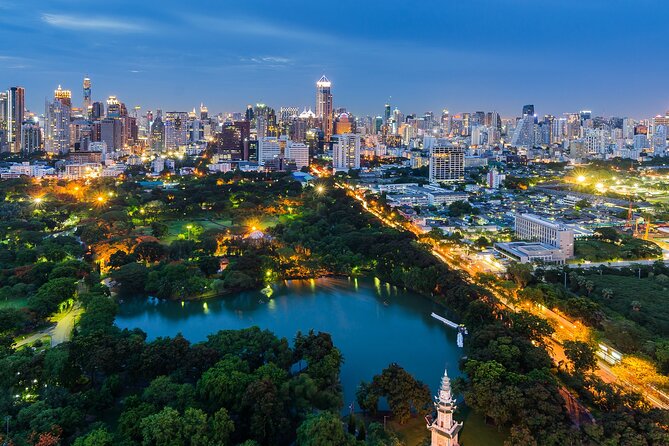
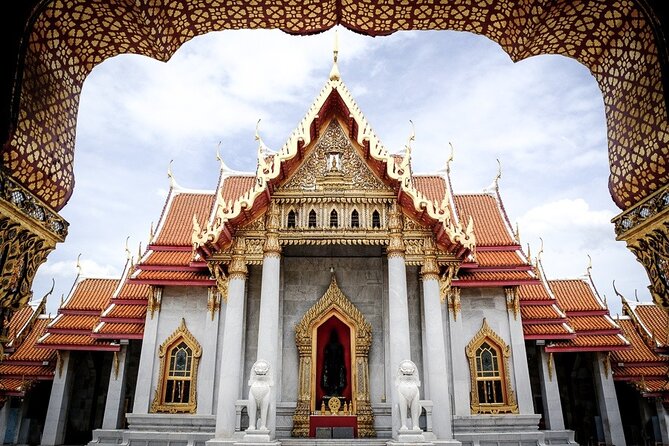
Wat Benchamabophit, known as the Marble Temple, is introduced through its Italian marble construction and its blend of Thai and European design.
This is a useful stop for anyone who wants more than the same temple style repeated all day. The audio points you toward the building’s unusual materials and royal setting, giving you something specific to look for instead of asking you to admire the structure without context.
Admission is not included. The supplied information does not provide opening hours, current entry prices, or transport directions, so you need to confirm those details separately. The map shows the attraction, but it is not a replacement for checking practical conditions before leaving your hotel.
Bangkok Art and Culture Centre: a modern counterpoint
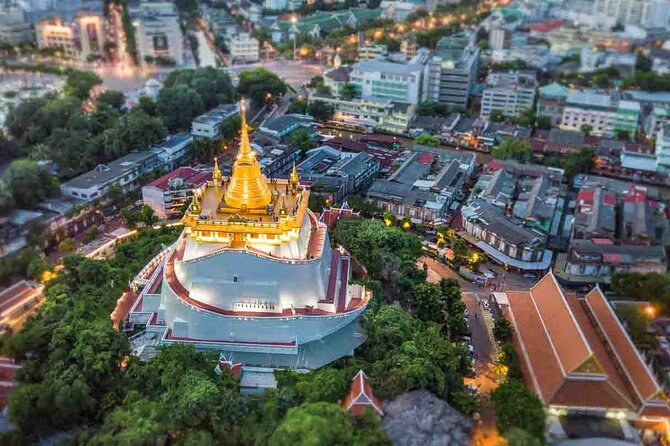
The Bangkok Art & Culture Centre shifts the route from royal and religious history to contemporary Thai art. The audio explains the country’s developing art scene and its place in international contemporary art.
Admission is listed as free, though exhibitions and operating arrangements can change. This stop is easy to value even if you are not an art specialist because it gives the tour a wider view of Bangkok. The city is not only temples, palaces, and old trading streets.
I would place this stop on a separate half-day if you enjoy museums and galleries. Its location also makes it a possible break from the older sights, but the tour does not include transport between locations. Use the map to plan the order rather than assuming the listed sequence is the fastest route.
Lumpini Park: a pause from monuments
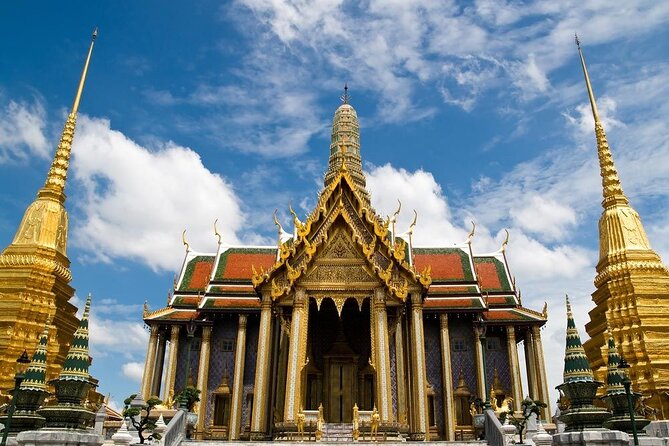
Lumpini Park is the route’s breathing space. The audio covers its origin as a royal gift to the city and its role as a recreation area for Bangkok residents.
Admission is free. You can listen while walking or sit down and pause the recording. That flexibility matters in Bangkok, where a day of temples and museums can become tiring quickly.
This stop is also a reminder that the tour is not only a checklist of famous buildings. You get a little context about ordinary city life and public space. Still, do not expect a guided nature walk or a long account of park features. The listed audio lasts about 10 minutes.
MOCA Bangkok: the route’s furthest-feeling museum stop
The Museum of Contemporary Art, or MOCA, is described as Thailand’s largest private contemporary art museum. The recording introduces modern artistic movements and their cultural meaning.
Admission is not included. The supplied details do not provide the current entry fee, opening hours, or exact transport plan. You should check those points before committing to MOCA, especially if you are trying to fit all 12 stops into one day.
This is another attraction where 10 minutes only gives you an introduction. If contemporary art interests you, the museum itself may deserve much more time than the audio tour’s schedule suggests. If it does not, you can skip it without losing the main temple and palace story.
That is the practical strength of this product. You are not trapped by a fixed group route. You can listen to the MOCA guide in advance, decide it is not for you, and spend that time at Chinatown, Wat Pho, or the Grand Palace instead.
How useful is the audio content?
The audio is built for people who want basic context while looking at a place. That makes the format easy to use, but it also sets a limit. One published assessment described the information as superficial and poorly translated, with general material that could be similar to reading Wikipedia.
I would take that criticism seriously. The tour may help you identify the main historical point at each attraction, but it should not be your only source if you want detailed art history, religious interpretation, or local stories.
The best way to use it is to preview the recordings before you go. Listen to the full playlist, mark your priorities on the map, and download or prepare the audio for offline use. Then play only the relevant stop when you arrive.
This approach also prevents the audio from taking over your visit. At a temple, you may want quiet. At Chinatown, street noise could make listening difficult. Earphones are not supplied, so bring a pair that you can use comfortably for several hours.
The $9 price and the costs it does not cover
At $9 per person, this is inexpensive for access to 12 attraction guides and a route map. The value is strongest if you use the links repeatedly, split the route over several days, and choose only the stops that match your interests.
The price does not include entry fees. That matters because the Grand Palace, Wat Phra Kaew, Wat Arun, Wat Traimit, the National Museum, Wat Saket, Wat Benchamabophit, and MOCA all require you to check or pay separate admission according to the information provided.
You also pay for transport, food, drinks, and your own internet or Wi-Fi. The tour has no pickup or drop-off. Your phone is the audio device, and your earphones are your responsibility.
There is no refund if you cancel or request a change. Since you receive access on your selected date and the links are valid for up to six days, choose the date carefully. Customer support is available for questions about using the links, but the experience remains independent rather than guided.
Who will get the most from this tour?
I would choose this for an independent visitor who wants a little structure without paying for a private guide. It also suits someone planning a flexible Bangkok stay, since you can divide the stops across several days.
It is a good fit if you want to:
- Pick your own starting point and finish point
- Skip museums or temples that do not interest you
- Hear basic background before arriving
- Keep costs down
- Use one map for a broad list of Bangkok sights
I would look elsewhere if you want detailed interpretation, personal answers, local recommendations, or help with transport. The guide does not travel with you, and the audio may feel too general at sites as important as the Grand Palace and Wat Phra Kaew.
The experience is private in the sense that only your group uses it, but there is no live guide accompanying your group. That distinction is important when comparing the $9 price with a more expensive guided visit.
Should you book the Bangkok Self-Guided Audio Tour?
Book it if you see the $9 fee as a planning and orientation aid. The flexible start time, offline listening, six-day link validity, and skip-anything format are genuinely useful. You can make a busy Bangkok list feel more manageable without following someone else’s clock.
Do not book it expecting a deep, polished audio documentary. The short recordings provide broad information, and the translation may not always be smooth. You will also need to arrange every transfer, pay each required admission fee, and bring your own listening equipment.
My call: this is a reasonable low-cost companion for a self-directed Bangkok visit, especially if you preview the audio and use the map selectively. It is not the best choice for a first-time visitor who wants a full explanation of Thailand’s temples, royal history, and art from a live expert.
FAQ
How long does the Bangkok Self-Guided Audio Tour take?
The approximate duration is three hours. Each of the 12 listed stops has an audio segment of about 10 minutes, but your total time will be longer if you enter attractions, travel between them, eat, or take breaks.
Can I start and end the tour anywhere in Bangkok?
Yes. Since it is self-guided, you choose your starting point and ending point in Bangkok. You can also follow the suggested order or create your own route.
Can I split the tour across several days?
Yes. The access links are valid for up to six days, and the tour information specifically allows you to take breaks or divide the experience across multiple days.
What do I receive after booking?
Before your selected starting time on your travel date, you receive two links by email. One opens the audio guides through SoundCloud. The other opens a Google My Maps route showing the 12 attractions and their matching audio guides.
Are admission fees and transport included?
No. Entry fees are not included where required, and you arrange your own transport. Food, drinks, earphones, audio devices, and internet or Wi-Fi are also not included.
Do I need to bring my own phone and earphones?
Yes. The tour uses your own phone to access the links, and earphones are not supplied. Internet or Wi-Fi is not provided, although the audio can be used offline.
Just added around Bangkok
- Bangkok: Fallabella River Front Iconsiam★ 4.7 · 3 reviews
- Private Grand Palace Bangkok City Tour & Klong Longtail Boat Trip★ 4.5 · 3 reviews
- Bangkok: Divana Scentuara Spa Chidlom Branch E-Voucher★ 5.0 · 3 reviews
- Bangkok: Flower Market & Sunset Walking Tour★ 3.7 · 3 reviews
- Private Shore Excursion: Best of Bangkok in a day★ 3.5 · 3 reviews
- From Bangkok: Kanchanaburi, River Kwai and Erawan Waterfall Tour★ 3.0 · 3 reviews
- Private Damnoen Saduak and Maeklong Railway Market Tour(min 2pax)★ 5.0 · 3 reviews
- Damnoen Saduak Famous Floating Market and Mea Klong Railway Tour★ 5.0 · 3 reviews
Audio Tours, compared.
Bangkok Grand Palace & Emerald Buddha Flexible Pass w/ Audio
Read our review →
Bangkok Grand Palace & Emerald Buddha Flexible Entry with Audio
Read our review →Browse the lists this tour appears in