
Reviewed · WORKSHOPS
Bangkok Photography Masterclass – Private Photography Lesson
Bangkok gives you a fine photography problem: there is too much to see, and it all moves at once. This private three-hour lesson helps you slow down and make better choices, with a local instructor guiding you through places such as Chinatown, Ko Ratanakosin, Thonburi, and Bangkok’s night markets.
I like the flexible format, since the lesson can match your skill level and take place during the day or after dark. I also like the personal coaching, especially the practical help with composition that guide Paul has been praised for giving. The main caution is price: at $160 per person, this makes the most sense for a serious photographer or a small private group, not someone seeking a cheap sightseeing walk.
In This Review
- Key points for photographers
- What this Bangkok photography lesson is really about
- Starting near Hua Lamphong
- Chinatown, where the lesson gets lively
- Ko Ratanakosin and the old royal quarter
- Thonburi and Bangkok’s less polished side
- Wat Arun, the Giant Swing, and Erawan Shrine
- Benjasiri Park and the city between landmarks
- Night markets and the Ratchada route
- What the private format is worth at $160
- Who will get the most from this lesson
- My call: book it for coaching, not just sightseeing
- FAQ
- How long is the Bangkok Photography Masterclass?
- How much does the experience cost?
- Is the tour private?
- Can I choose a daytime or nighttime tour?
- Where does the tour start and end?
- What locations may be included?
- What is included, and what is the cancellation policy?
Key points for photographers
- Private instruction: Your group has the guide’s attention, so you can ask for help with camera settings, framing, or creative direction as you go.
- Day or night choice: Daytime routes focus on Bangkok’s temples, neighborhoods, and street scenes, while the night option targets Chinatown and night markets.
- Useful composition coaching: Paul has been singled out for helping with composition and leading participants to unexpected places.
- Strong variety in three hours: Possible stops include Wat Arun, the Giant Swing, Erawan Shrine, Benjasiri Park, Chinatown, and Ratchada Train Night Market.
- Same meeting and return point: The session begins and ends at the Rong Muang area near Hua Lamphong.
- Private price trade-off: Group discounts may improve the value, but the listed rate is still a premium for a short lesson.
What this Bangkok photography lesson is really about
This is not simply a photo walk with a guide pointing out famous sights. The point is to help you make stronger photographs while Bangkok supplies the subject matter.
You can work on framing a temple, finding order in a crowded street, handling difficult night light, or deciding when a scene is worth waiting for. The instructor adjusts the lesson to your level, so you do not need to arrive as an expert. You also do not need to be a complete beginner. A private format is useful here because your questions can shape the session.
The tour lasts about three hours. That is enough time for focused practice, but not enough to cover every named location in detail. Think of the stops as possible areas within a customized route, not a promise that you will make a full sightseeing circuit through all seven places.
The daytime experience covers Ko Ratanakosin, Thonburi, and Chinatown. These areas give you three different sides of Bangkok: royal and religious landmarks, canal-side or river-area city scenes, and dense street life. The night option concentrates on Chinatown and the night markets, where the lesson turns toward low light, movement, color, and personal expression.
More photo sessions in Bangkok:
- Bangkok: Bubble in the Forest Cafe Photography Journey
★ 3.6 · 35 reviews - Chinatown (Yaowarat Road) Neon Photoshoot
★ 5.0 · 12 reviews
Starting near Hua Lamphong
The meeting point is in the Rong Muang area of Pathum Wan, near Hua Lamphong, and the activity returns there at the end. You should allow extra time to reach the start, since arriving calm and ready with a charged camera is better than beginning the lesson while still finding your bearings.
Bring the camera you actually want to use. If you have a phone, mirrorless camera, or DSLR, the most useful lesson is usually the one built around your own equipment and habits. The supplied details do not promise rental gear or a particular camera system, so you should not book expecting equipment to be provided.
Free bottled water is included. Bangkok heat can sap your attention quickly, particularly during a daytime walk, so this small touch matters. Wear comfortable shoes and keep your equipment light enough that you can work with it for three hours.
Because the activity is private, your group alone takes part. That gives you room to stop, repeat an exercise, or ask for a second explanation without holding up a large party. It also means the quality of the experience depends heavily on how clearly you tell the instructor what you want to learn.
Chinatown, where the lesson gets lively
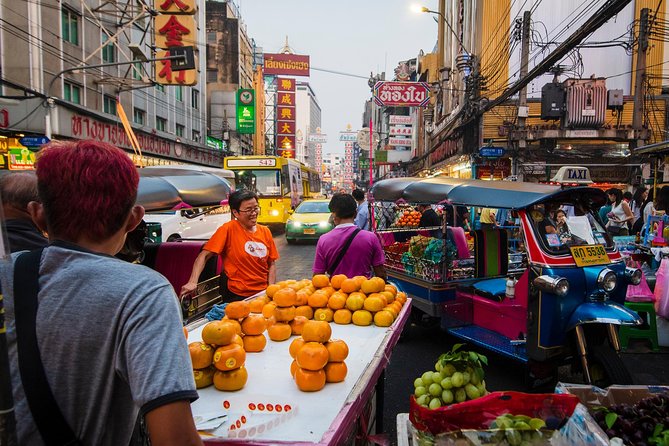
Chinatown is the strongest common thread in the experience. During the day, it offers storefronts, signs, narrow lanes, people at work, and the visual clutter that makes Bangkok such a good place to practice composition. You may find yourself learning to simplify a busy frame, wait for a person to enter the right spot, or use repeated shapes to give order to a crowded scene.
At night, Chinatown becomes the main stage. Artificial light, food stalls, shopfronts, traffic, and shifting crowds give you plenty to work with, but they also make technical mistakes easy. The night session is designed to help you handle those problems while making photographs that feel like your own rather than simple record shots.
This is where the coaching matters most. A guide can help you notice a worthwhile scene before it disappears, then explain why one angle works better than another. Paul has been praised for offering many useful tips and for taking participants to unexpected places. That suggests a lesson with room for discovery rather than a fixed march from one landmark to the next.
The drawback is that Chinatown can be visually overwhelming. If you prefer quiet scenes, clean backgrounds, or carefully controlled subjects, you may need to tell the instructor early. The private format gives you a better chance of shaping the pace.
Ko Ratanakosin and the old royal quarter
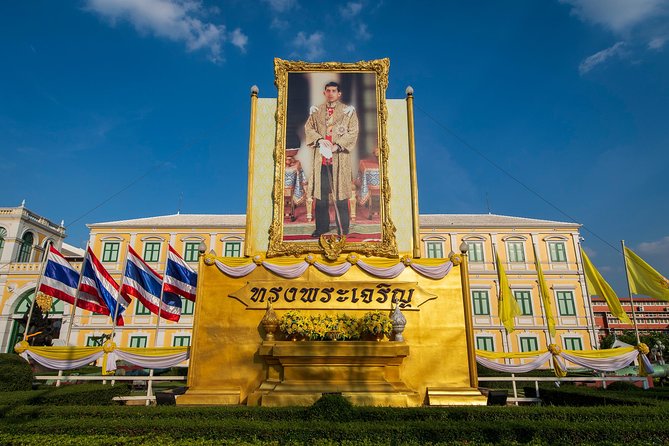
Ko Ratanakosin is one of the daytime areas used for the street photo route. It is a sensible choice for a photography lesson because the area places major architecture and ordinary street activity close together.
Here you can work on scale. A temple or grand civic building can dominate the frame, while nearby daily life gives the picture context. You might practice using a person to show the size of a structure, or look for details instead of photographing the whole landmark in the usual front-facing way.
The value of a local instructor is not just knowing where a famous building is. It is having someone prompt you to look at light, edges, empty space, and timing. Those small choices are what turn a familiar Bangkok view into a more personal image.
Do not expect a long architectural tour from this three-hour format. The purpose is photography first. If you want full historical explanations at each landmark, this may feel too focused on the camera.
More workshops and classes in Bangkok:
- Bangkok: Hands-on Thai Cooking Class and Market Tour
★ 4.9 · 1,614 reviews - Bangkok: Tingly Thai Cooking School Half-Day Cooking Class
★ 4.9 · 1,191 reviews - Bangkok: Maliwan Thai Cooking Class with Market Tour
★ 4.9 · 1,133 reviews - Hands on Thai Cooking Class and Market Tour
★ 5.0 · 660 reviews
Thonburi and Bangkok’s less polished side
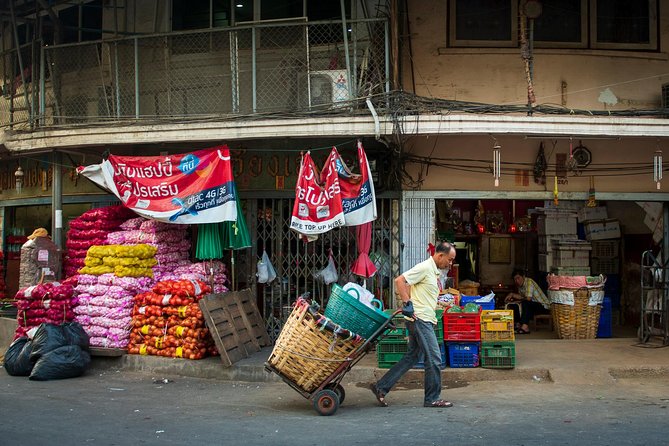
Thonburi adds contrast to the route. Rather than keeping you among only the capital’s best-known sights, the lesson can show you a side of Bangkok that feels less staged for visitors.
That contrast helps your photography. You can compare formal structures with local streets, quiet details with visual disorder, and open views with tight frames. A private instructor can also see what kind of subjects catch your eye and steer you toward more of them.
The supplied information does not specify exact Thonburi stops or transport between areas. That matters because three hours passes quickly in Bangkok. Ask how much time will be spent walking and how the route will connect before you begin, especially if a particular district is your main reason for booking.
Wat Arun, the Giant Swing, and Erawan Shrine
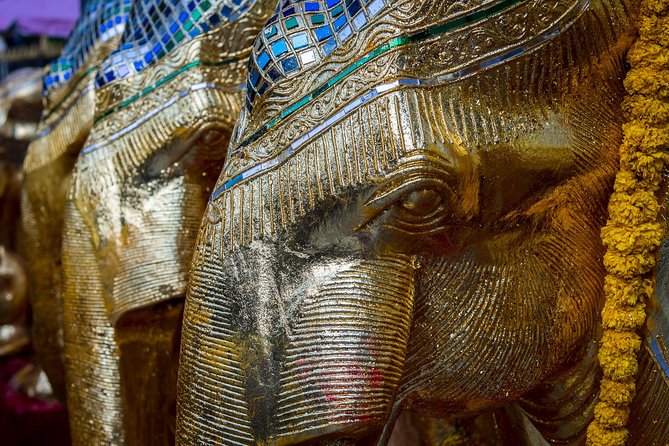
The possible daytime stops include Wat Arun, the Temple of Dawn, the Erawan Shrine, and Sao Chingcha, better known as the Giant Swing. Each offers a different photography exercise.
Wat Arun gives you a strong vertical subject and a chance to work with detail, pattern, and shape. A landmark like this can tempt you into taking only a postcard view. Use the lesson to look for tighter compositions, unusual angles, and ways to place the temple within its surroundings.
The Giant Swing offers a bold architectural form in an urban setting. It can help you practice clean framing and balance, particularly when the surrounding streets add lines and distractions.
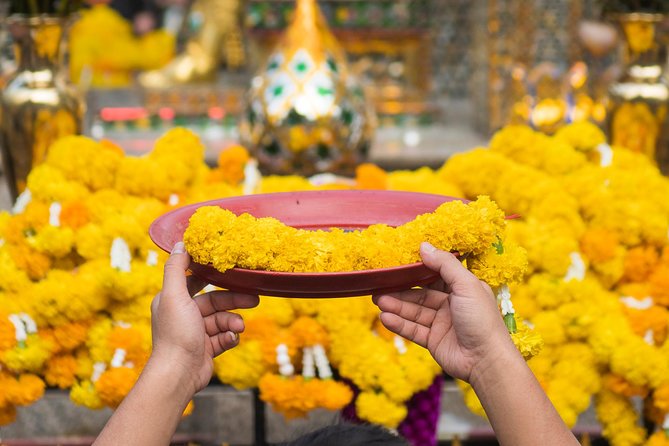
Erawan Shrine is a different kind of subject. It brings people, ritual, movement, and close detail into the frame. You should photograph respectfully and follow the instructor’s lead around active worship. The value here is not merely the shrine itself, but learning how to work around people and movement without treating a living religious place like a stage set.
These stops make the daytime route attractive if you want recognizable Bangkok images. They also create a risk of trying to see too much. Since the tour is only about three hours, ask the guide to prioritize two or three photographic goals rather than chasing every possible landmark.
Benjasiri Park and the city between landmarks
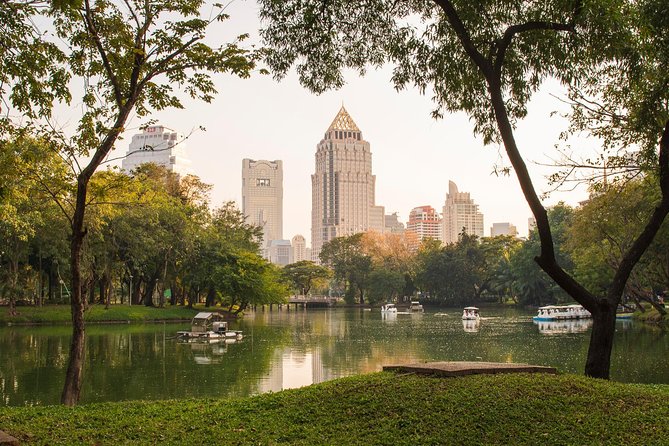
Benjasiri Park is another named stop and gives the route a break from temples and dense commercial streets. A park can offer a different pace, with open space, greenery, paths, and people using the area in ordinary ways.
For you, that means a chance to practice a quieter style. Instead of relying on bright signs or famous architecture, you can work on timing, negative space, layers, and small human moments. The change of setting may also help if you are still getting comfortable with the camera.
As with the other possible locations, the details of the exact stop order are not fixed in the information provided. Treat Benjasiri Park as a possible part of the customized route, not a guaranteed long visit.
Night markets and the Ratchada route
The night photography option circles Chinatown and the night markets, with Train Night Market Ratchada listed among the possible stops. This is the right choice if your main goal is learning how to photograph after sunset.
Night work is not just daytime photography with higher ISO. You have to watch shutter speed, focus, highlights, color casts, and unwanted blur. Bright signs can fool your exposure, while dark areas can swallow detail. A one-on-one coach can help you test settings and then explain the result while the scene is still in front of you.
Ratchada adds market energy and artificial light. You might find strong color, repeated stalls, moving people, and a mix of bright and dark areas. The scene can produce striking images, but it can also become visual noise. The instructor’s job is most useful when they help you decide what to leave out.
The night tour also asks more from you physically and mentally. You are working in changing light while watching your equipment and surroundings. If that sounds exciting, this may be the better choice. If you want relaxed landmark photography, select the daytime session.
What the private format is worth at $160
The listed price is $160 per person. That is not a bargain street walk, but private instruction changes the comparison.
You are paying for a local photography coach, a three-hour session, route flexibility, and the chance to focus on your own needs. If you are trying to improve composition, learn night settings, or build confidence with a new camera, a private lesson can be worth more than a larger group tour where the guide must keep moving.
The value is stronger for two or more people who can use a group discount, though the exact discount is not provided. It is also stronger if you arrive with clear goals. Ask for help with night exposure, portraits, street composition, or photographing architecture, then use the session to practice those skills.
The value is weaker if you mainly want transportation between major sights or a quick list of photo locations. The tour includes bottled water, but no meals, entrance fees, or other inclusions are specified. You should view it as a lesson with sightseeing built around it, not as a full Bangkok attraction package.
The 96 percent recommendation rate and 4.8 rating from 27 reviews suggest a strong overall record, but the one serious complaint is worth noting. A guide became ill and the booking was canceled about two hours before the meeting, with no replacement available. That is an unfortunate risk with a small private operation. Free cancellation is available until 24 hours before the start time, but changes or cancellations inside that window are not refundable.
Who will get the most from this lesson
I would choose this experience if you fit one of these profiles:
- You want direct feedback instead of a general sightseeing tour.
- You are learning street photography and need help spotting compositions.
- You want to improve night photography in a real city rather than through a classroom exercise.
- You prefer a private pace and want to ask plenty of questions.
- You are traveling with a partner or small group that shares an interest in photography.
You may want something else if you have no interest in photography, need a guaranteed visit to every named landmark, or want a full history tour. The instructor’s attention is aimed at helping you make pictures, not delivering long background talks at each stop.
Service animals are allowed, the tour is near public transportation, and most people can participate. Still, Bangkok walking conditions and heat can be tiring, so bring sensible footwear and water beyond the included bottle if you need it.
My call: book it for coaching, not just sightseeing
I recommend the Bangkok Photography Masterclass if you want to return home with better skills, not only more snapshots. The private setup, day or night choice, and range of Bangkok settings give you a useful three-hour workshop in the city itself.
Choose the night version if Chinatown and market photography appeal to you, particularly if you want help with exposure and creative expression. Choose the daytime route if you prefer temples, neighborhoods, and a mix of major sights.
At $160 per person, book it when photography is a central part of your trip and use the private format well. Tell the instructor what you want to improve, ask for specific feedback, and do not try to force every possible stop into one short session. If your main aim is inexpensive sightseeing, spend the money elsewhere.
FAQ
How long is the Bangkok Photography Masterclass?
The private photography lesson lasts approximately three hours.
How much does the experience cost?
The listed price is $160 per person. Group discounts are available, though the exact discount is not stated.
Is the tour private?
Yes. Only your group participates in the activity.
Can I choose a daytime or nighttime tour?
Yes. You can choose a daytime street photography route or a nighttime photography session.
Where does the tour start and end?
The tour starts at the Rong Muang area near Hua Lamphong in Bangkok and ends back at the meeting point.
What locations may be included?
Possible locations include Chinatown, Ko Ratanakosin, Thonburi, Erawan Shrine, Benjasiri Park, Wat Arun, the Giant Swing, Train Night Market Ratchada, and So/ Spa. The route is customizable, so the exact combination is not specified.
What is included, and what is the cancellation policy?
Bottled water is included. You can cancel for a full refund up to 24 hours before the experience starts. Cancellations or changes made less than 24 hours before the start time are not accepted for a refund.
Just added around Bangkok
- Yoga in the Park Thailand★ 5.0 · 12 reviews
- Bangkok and Ayutthaya 3 Days★ 4.5 · 12 reviews
- Private Tour: Damnoen Saduak Floating Market and Bangkok City Temples★ 5.0 · 12 reviews
- Chinatown (Yaowarat Road) Neon Photoshoot★ 5.0 · 12 reviews
- Ayutthaya Day Tour By Coach and Cruise★ 4.0 · 12 reviews
- Bangkok Suvarnabhumi Airport: VIP Meet & Greet Service (Fasttrack)★ 3.5 · 12 reviews
- Bangkok: Wow Park Interactive Amusement & Science Park★ 4.5 · 12 reviews
- Afternoon Ayutthaya & Ancient Temples at UNESCO site By Road★ 4.5 · 12 reviews
Workshops, compared.
Tingly Thai Cooking School Half-Day Cooking Class
Read our review →
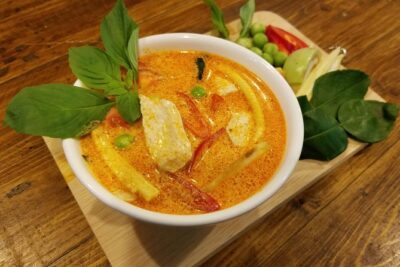
Tingly Thai Cooking Class with Morning Market Tour
Read our review →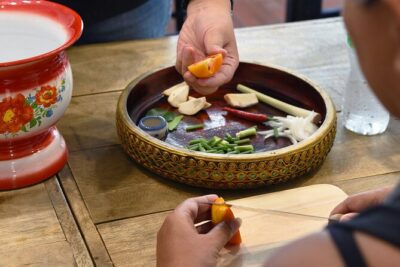
Hands-on Thai Cooking Class & Market Tour in Sukhumvit
Read our review →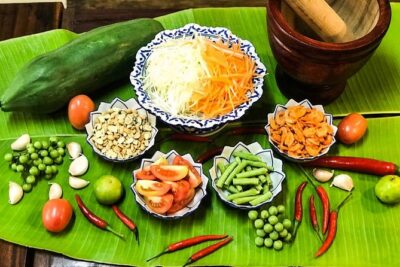
Pink Chili – Thai Cooking Class and Market Tour in Bangkok
Read our review →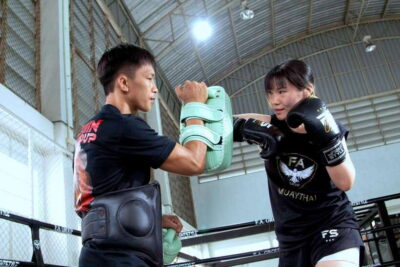
Muay Thai Boxing Introduction Class for Beginners
Read our review →Browse the lists this tour appears in