
Reviewed · BANGKOK THAI COOKING CLASSES
Bangkok: Mango Cooking School Thai Cooking Class
The best part of Mango Cooking School is that you visit a real local market before cooking. Your instructor points out the herbs, chilies, coconut, noodles, and seasonings that give Thai food its character, then you take those lessons into a clean, air-conditioned kitchen near On Nut BTS.
I like the hands-on format and the way you eat each dish after making it, rather than waiting until the end. I also like the practical touches: adjustable spice levels, kid-friendly tools, a small gift, and QR recipes with videos. The main consideration is that the recipes are fairly simple, and shellfish appears in several dishes, so serious cooks or diners with seafood concerns should check the menu before booking.
In This Review
- Key points to know before booking
- Why the On Nut setting works so well
- The market visit: learning Thai ingredients before the heat
- Getting into the kitchen with Serene, PUI, or MC
- Five dishes, from green papaya salad to mango sticky rice
- Som Tum, the fresh opener
- Pad Thai, Bangkok’s familiar classic
- Tom Yum Goong, the flavor lesson
- Stir-fried morning glory, a quick side dish
- Mango sticky rice, the sweet finish
- You eat as you go, not after a long wait
- A clean, calm place to learn
- Bringing children: useful rules to know
- Is $27 good value for three hours?
- Who should book this cooking class?
- Should you book Mango Cooking School?
- FAQ
- Where is Mango Cooking School located?
- How long does the cooking class last?
- Is the market tour offered in both morning and afternoon?
- What language is the class taught in?
- Which Thai dishes will I cook?
- Is food included in the price?
- Are cooking equipment and ingredients provided?
- Can children join the class?
- Can parents watch without joining?
- Can I cancel the booking?
Key points to know before booking
- A market walk comes first: Visit the local market near the school in both morning and afternoon classes.
- Five Thai recipes fill the class: Prepare Som Tum, Pad Thai, Tom Yum Goong, stir-fried morning glory, and mango sticky rice.
- English-speaking instruction: Chefs including Serene, PUI, and MC explain each step and help you adjust spice levels.
- Easy BTS access: The school is near On Nut Station, across from BIG-C On Nut Market.
- Comfortable for families: Children from ages 5 to 11 need a booked guardian, and child-friendly cooking tools are provided.
- Strong value at $27: You receive ingredients, equipment, a five-course meal, video recipes by QR code, and a special gift.
Why the On Nut setting works so well
Mango Cooking School sits in a useful part of Bangkok for this kind of class. You are not sent far out of town or asked to spend half the morning in a taxi. From BTS On Nut Station, allow about 5 to 10 minutes on foot to reach the meeting point across from BIG-C On Nut Market. The school is also only about two minutes from the local market used during the class.
That location matters. You can combine the cooking class with time at BIG-C, shopping in the On Nut area, or a simple BTS ride to another part of Bangkok. The neighborhood gives you a look at everyday food shopping instead of a staged market built only for sightseeing.
The school’s new facility is fully air-conditioned on every floor. That is not a minor luxury in Bangkok, especially when you are chopping chilies and standing near cooking burners. Air purifiers, clean equipment, and organized work areas also make the three-hour session more comfortable than a cramped kitchen can be.
More Thai cooking classes in Bangkok:
- Bangkok: Hands-on Thai Cooking Class and Market Tour
★ 4.9 · 1,614 reviews - Bangkok: Tingly Thai Cooking School Half-Day Cooking Class
★ 4.9 · 1,191 reviews - Bangkok: Maliwan Thai Cooking Class with Market Tour
★ 4.9 · 1,133 reviews
The market visit: learning Thai ingredients before the heat
The class begins with a short walk to a nearby local market. Your instructor uses the stalls as a lesson in Thai cooking, introducing the herbs, spices, vegetables, coconut products, noodles, and other ingredients that will appear later in the kitchen.
This is where the class gains much of its cultural value. A recipe card can tell you to use lime, fish sauce, chili, or green papaya. A market visit shows you what those ingredients look like in daily life and how Thai cooks shop for them. You also learn why fresh herbs and carefully balanced seasonings matter so much.
The market stop is not a long sightseeing tour, and that is probably for the best. It is short enough to keep the class moving, but useful enough to give context to the meal. You might also taste a traditional Thai dessert selected by the Mango chef before returning to the school.
Bring comfortable shoes. The market walk is easy to fit into the morning or afternoon schedule, but Bangkok heat and uneven walking surfaces are still worth keeping in mind. A camera is welcome, too.
Getting into the kitchen with Serene, PUI, or MC
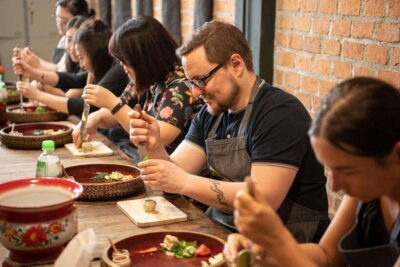
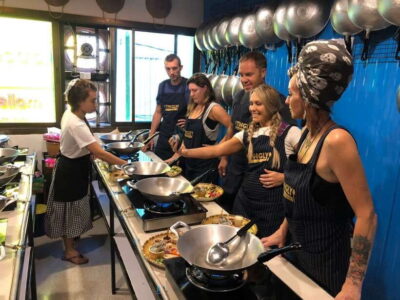
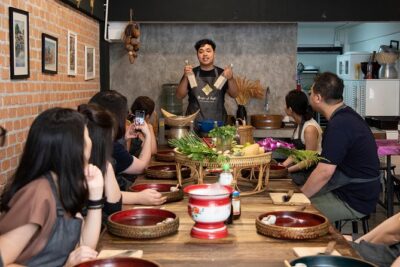
Back at the school, the chefs demonstrate the dishes and then guide you through your own preparation. The teaching style is practical rather than formal. You chop, mix, stir, taste, and adjust under supervision.
Several instructors are named in the class feedback. Serene is repeatedly praised for her clear English, energy, patience, and ability to keep the group involved. PUI is described as warm and helpful, with a gift for showing that Thai cooking does not have to be difficult. MC is also noted for humor and careful organization.
The exact instructor depends on the class date, so do not book solely because you hope for one particular chef. The more important point is the teaching setup. The class combines demonstrations with individual work, so beginners are not left to guess what to do next.
You also get useful guidance on the four main Thai flavor notes: sweet, sour, salty, and spicy. That lesson is more valuable than memorizing a recipe. Once you understand how those tastes work together, you can adjust a soup or stir-fry to suit your own kitchen and your own tolerance for chili.
Five dishes, from green papaya salad to mango sticky rice
The menu gives you a broad introduction to Thai cooking rather than focusing on one type of dish. The stated program includes five main recipes, with the school describing the complete experience as six dishes in some promotional material. Menus can change according to availability, so confirm the current selection when booking.
More cooking classes in Bangkok:
- Hands on Thai Cooking Class and Market Tour
★ 5.0 · 660 reviews - Tingly Thai Cooking Class with Morning Market Tour
★ 5.0 · 589 reviews - Hands-on Thai Cooking Class & Market Tour in Sukhumvit
★ 5.0 · 571 reviews - Pink Chili – Thai Cooking Class and Market Tour in Bangkok
★ 5.0 · 416 reviews
Som Tum, the fresh opener
Som Tum is a green papaya salad with a fresh, sharp flavor. You learn how the vegetables, lime, chili, and seasoning come together in a dish that is light but far from bland.
This is a good early recipe because it teaches balance without requiring long cooking time. It also gives you a chance to control the heat. If you are cautious with spice, tell the instructor. The class can adjust ingredients to personal taste.
Pad Thai, Bangkok’s familiar classic
Pad Thai is the dish many first-time visitors want to make, and it earns its place here. You work with stir-fried noodles and the sweet, salty, and savory sauce that makes the dish so recognizable.
The class keeps the method approachable. You learn the basic order of preparation and how to combine the ingredients without turning the noodles into a sticky mass. It is simple enough for a first cooking class, but still useful for anyone who has tried to make Pad Thai at home and ended up with a disappointing plate.
Tom Yum Goong, the flavor lesson
Tom Yum Goong brings the sharpest lesson in Thai seasoning. The hot and sour shrimp soup depends on the right mix of herbs, chili, lime, and savory depth.
Some participants single this out as the best dish of the class. I can see why: the soup gives you an immediate sense of how Thai flavors work together. It is also one of the recipes where spice control matters most, so ask for a milder version if needed.
Shellfish is a practical concern. Shrimp is part of the listed Tom Yum recipe, and one class note says the protein used was mainly shellfish. If you have an allergy or avoid seafood, contact the school before paying rather than assuming substitutions are available.
Stir-fried morning glory, a quick side dish
Morning glory cooked with garlic and chili is a fast, savory vegetable dish. It adds a green element to the meal and shows how Thai cooking can make a few fresh ingredients taste bold.
The preparation is not complicated, which makes it a comfortable choice for children and beginners. You still get a useful technique: high-heat stir-frying with enough seasoning to keep the vegetable lively without drowning it in sauce.
Mango sticky rice, the sweet finish
The dessert is mango sticky rice, made with glutinous rice, coconut sauce, and ripe mango. A special part of the class is learning to make coconut cream and coconut milk, rather than simply opening a can and moving on.
That small lesson gives the dessert more meaning. Coconut is not just a topping here; it helps create the texture and gentle sweetness that hold the dish together. You also get the chance to taste another traditional Thai dessert chosen by the chef.
Thai milk tea is included as another pleasant extra. It makes the class feel like a complete meal rather than a string of cooking demonstrations.
You eat as you go, not after a long wait
A thoughtful feature of the class is the timing of the meal. After preparing each recipe, you eat it before moving on. You do not spend three hours cooking while an increasingly cold banquet waits at the end.
The main dishes may be served in a separate dining room while staff reset the kitchen for the next recipe. This keeps the workstations tidy and allows the class to move along without a messy pile of used pans and ingredients.
The result is a five-course meal that feels substantial for the price. You will not simply taste a spoonful of each dish. You prepare the food and then sit down to enjoy it, which makes the eating part a real part of the experience.
A clean, calm place to learn
Cleanliness is one of Mango Cooking School’s strongest practical advantages. The facility is described as spotless, with cooking equipment and appliances kept in very good condition. Air conditioning on every floor helps take the edge off Bangkok’s heat, while air purifiers add another layer of comfort.
The school also appears well organized. Ingredients are prepared for the next recipe while you eat the current one, and the staff keeps the transition between dishes moving. That behind-the-scenes work is easy to overlook, but it makes a large difference in a cooking class.
The setting is family-friendly without being limited to families. Adults, first-time cooks, experienced home cooks, and children can all take part. The recipes are not highly technical, so an expert chef may want more advanced knife work or regional detail than this class offers.
Bringing children: useful rules to know
Children under 5 cannot attend. Children ages 5 to 11 must be accompanied by a guardian, and that adult must also reserve a place. If two children aged 5 or older are booked, one adult reservation is required.
Parents cannot simply wait in the room, watch from the side, or assist without booking. Unregistered people are not permitted to observe or wait during the class. That rule is important for families planning around younger children.
The school provides child-friendly cooking tools, and the hands-on format has worked well for families with children aged 7, 9, 12, 13, 14, and 16. Still, the cooking class requires attention around heat and utensils, so children need to follow the instructor’s directions.
For a family, the class offers something better than a passive activity. You shop for ingredients, learn their names, prepare food together, and sit down to eat it. It gives children a direct way to connect Thai food with the people and markets behind it.
Is $27 good value for three hours?
At $27 per person, Mango Cooking School is priced fairly for Bangkok. The fee includes ingredients, cooking equipment, a five-course meal, QR recipes with video guidance, and a special gift. You also get the market visit, instruction in English, Thai milk tea, and a traditional dessert tasting.
The value improves if you plan to cook the recipes at home. The QR recipes let you revisit the techniques after your trip, and the class focuses on dishes that are realistic for a home kitchen. You are paying for a meal, but also for a usable cooking lesson.
It is less compelling for someone who wants a long market tour, advanced culinary training, or a highly specialized regional menu. The class is designed to be friendly and accessible. That is its strength, but it also means the cooking stays within reach of beginners.
The reservation system allows you to reserve now and pay later, and cancellation is free up to 24 hours before the class for a full refund. Those terms help if your Bangkok schedule is still shifting.
Who should book this cooking class?
I would choose Mango Cooking School if you want a hands-on introduction to Thai food that is easy to reach by public transport. It suits first-time visitors, couples, families, solo participants, and small groups who want to meet people while doing something active.
It is especially good for you if you want to understand ingredients rather than only eat the finished dishes. The local market, coconut milk lesson, spice adjustments, and video recipes give the class more lasting value than a meal alone.
I would think twice if you dislike seafood, cannot eat shellfish, or want complex techniques. The menu includes shrimp, and the overall approach is deliberately simple. Also remember that the menu may change based on ingredient availability.
Should you book Mango Cooking School?
Yes, if you want a practical, affordable Bangkok activity with a strong link to everyday Thai food. The easy On Nut BTS access, clean air-conditioned facility, friendly English instruction, market stop, and generous menu make the $27 fee easy to justify.
Book it early if you are traveling with children, since every participating guardian needs a reservation. If you have dietary restrictions, ask about the current menu first. For everyone else, this is a good way to leave Bangkok with a full stomach, a better understanding of Thai flavors, and recipes you can actually try at home.
FAQ
Where is Mango Cooking School located?
The school is near BTS On Nut Station, across from BIG-C On Nut Market. The walk from the BTS station takes about 5 to 10 minutes, and the local market used during the class is about two minutes from the school.
How long does the cooking class last?
The activity lasts three hours. Starting times vary, so check availability when selecting your class.
Is the market tour offered in both morning and afternoon?
Yes. The local market visit is available with both morning and afternoon classes.
What language is the class taught in?
The class is taught in English.
Which Thai dishes will I cook?
The listed menu includes Som Tum, Pad Thai, Tom Yum Goong, stir-fried morning glory, and mango sticky rice. You also learn to make coconut cream and coconut milk for the dessert. The menu may change based on availability.
Is food included in the price?
Yes. The package includes a five-course meal made during the class. Thai milk tea and a traditional Thai dessert selected by the chef are also part of the stated experience.
Are cooking equipment and ingredients provided?
Yes. Cooking equipment and ingredients are included, so you only need to bring comfortable shoes and a camera.
Can children join the class?
Children under 5 cannot attend. Children ages 5 to 11 must attend with one guardian, and the guardian must reserve a place. Children cannot attend alone.
Can parents watch without joining?
No. Unregistered people cannot observe or wait during the class, and parents cannot simply watch or assist without making a reservation.
Can I cancel the booking?
You can cancel up to 24 hours in advance for a full refund. The school also offers a reserve-now-and-pay-later option.
More Workshops and Classes in Bangkok
- Bangkok: Muay Thai Boxing Introduction Class for Beginners
★ 4.8 · 394 reviews - Tingly Thai Cooking School Evening Class
★ 5.0 · 335 reviews - Tingly Thai Cooking School Afternoon Class
★ 5.0 · 291 reviews - Bangkok: White Lotus Thai Cooking Class with Market Tour
★ 5.0 · 285 reviews
Just added around Bangkok
- Yoga in the Park Thailand★ 5.0 · 12 reviews
- Bangkok and Ayutthaya 3 Days★ 4.5 · 12 reviews
- Private Tour: Damnoen Saduak Floating Market and Bangkok City Temples★ 5.0 · 12 reviews
- Chinatown (Yaowarat Road) Neon Photoshoot★ 5.0 · 12 reviews
- Ayutthaya Day Tour By Coach and Cruise★ 4.0 · 12 reviews
- Bangkok Suvarnabhumi Airport: VIP Meet & Greet Service (Fasttrack)★ 3.5 · 12 reviews
- Bangkok: Wow Park Interactive Amusement & Science Park★ 4.5 · 12 reviews
- Afternoon Ayutthaya & Ancient Temples at UNESCO site By Road★ 4.5 · 12 reviews
Bangkok Thai Cooking Classes, compared.
Tingly Thai Cooking School Half-Day Cooking Class
Read our review →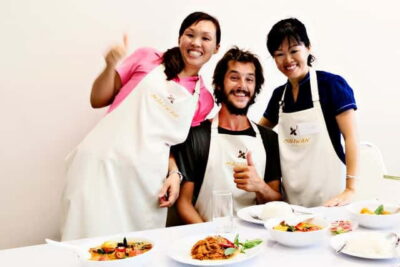
Tingly Thai Cooking Class with Morning Market Tour
Read our review →
Hands-on Thai Cooking Class & Market Tour in Sukhumvit
Read our review →
Pink Chili – Thai Cooking Class and Market Tour in Bangkok
Read our review →
Authentic Thai Cooking with the Largest market visit &TukTuk ride
Read our review →Browse the lists this tour appears in