
Reviewed · BANGKOK THAI COOKING CLASSES
Bangkok: Half-Day Thai Cooking Class in Bangrak District
Bangkok’s flavors make more sense when you see the ingredients before they reach the pan. This four-hour class pairs a morning market visit with hands-on cooking, then puts five Thai dishes on your table. I like the chance to see where local cooks buy tofu, noodles, produce, and seasonings. I also like that chefs including Sarin and Natcha explain the purpose of each ingredient, not just the steps.
The main thing to consider is that the menu changes daily. Pad Thai, curry, mango sticky rice, spring rolls, and Tom Kha may appear, but you cannot count on one particular dish. The class also requires you to be at least 12 years old and 140 centimeters tall, and the school may be hard to reach if you do not check the meeting point carefully.
In This Review
- Key points at a glance
- Why this Bangrak cooking class works so well
- Start with the Bangrak fresh market
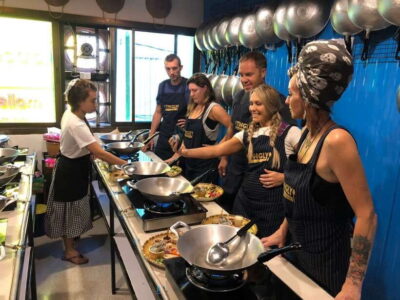
- Five dishes, one working kitchen
- The chef is the heart of the experience
- A menu that can bend to your diet
- Eating your own work
- What you take home
- Price, timing, and practical value
- Who should book this cooking class?
- Should you book it?
- FAQ
- How long does the Bangkok Thai cooking class last?
- Does the class include a market tour?
- How many Thai dishes will I cook?
- Is Pad Thai guaranteed?
- Are vegetarian and halal options available?
- Can I join if I have a food allergy?
- Are recipes provided after the class?
- What are the age and height requirements?
Key points at a glance
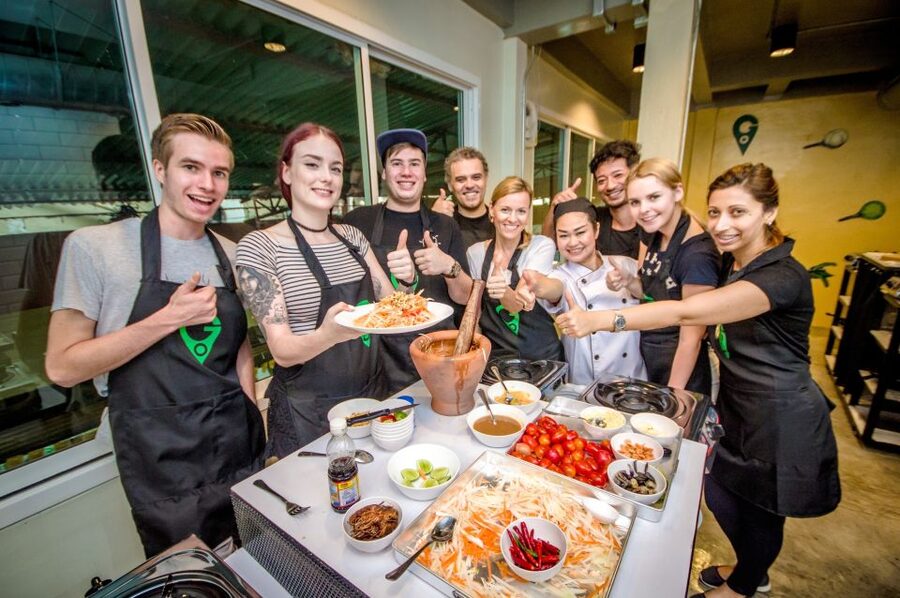
- Five dishes from scratch: You prepare the food, then sit down and eat the full meal you helped make.
- Morning market access: The early session includes a walk through the nearby fresh market, with explanations of local ingredients and food shopping.
- Personal teaching: Small groups can mean close help from the chef, and some sessions have ended up with only one couple.
- Flexible menus: Vegetarian, pescatarian, halal, and seafood-free requests can be accommodated when you tell the operator about them.
- Recipes for home: You receive the full recipe list and class pictures by email after the lesson.
- A filling four hours: Arrive hungry. The food comes steadily, and unfinished dishes may be packed to take away.
Why this Bangrak cooking class works so well
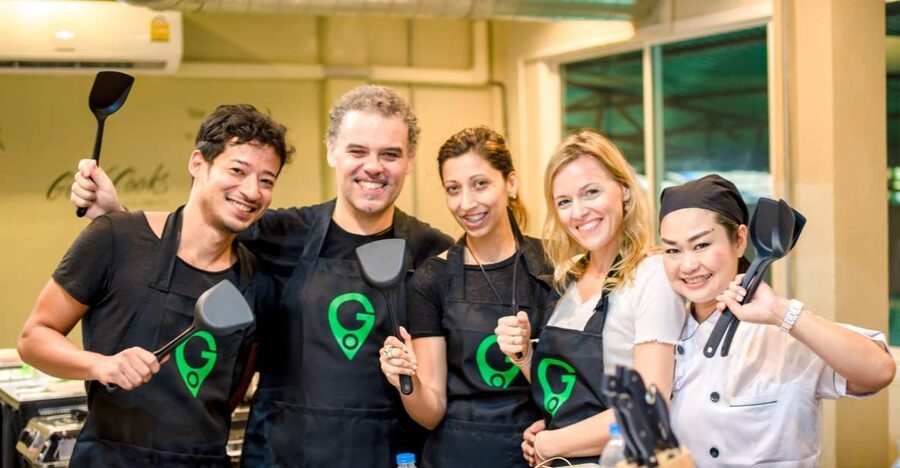
Thai food is often reduced to a few famous names: Pad Thai, green curry, mango sticky rice. A good cooking lesson shows you the structure behind those dishes. You learn how herbs, curry pastes, coconut milk, sweet notes, salty seasoning, and heat are balanced.
That is the useful part of this experience. You are not simply watching a chef cook lunch. You handle ingredients, follow the preparation, cook each dish, and eat the result. The class gives you a practical way to remember Bangkok after you leave: make the food again at home.
The school is in central Bangkok’s Bangrak District, close to a fresh market. That location matters. You begin with ordinary food shopping rather than a staged cultural display. The market visit is short enough to fit the half-day schedule, but it gives the food a real setting. You see the ingredients in the place where local households buy them.
The class has earned a 4.9 rating from 96 reviews, and the praise is remarkably consistent about the teachers, food, and friendly atmosphere. I would put the strongest emphasis on the teaching. Chefs named in the feedback include Sarin, Natcha, Nadcha, Natang, Kimmy, and Satin. The names vary by date, but the pattern is clear: the instructor makes a large difference here.
More Thai cooking classes in Bangkok:
- Bangkok: Hands-on Thai Cooking Class and Market Tour
★ 4.9 · 1,614 reviews - Bangkok: Tingly Thai Cooking School Half-Day Cooking Class
★ 4.9 · 1,191 reviews - Bangkok: Maliwan Thai Cooking Class with Market Tour
★ 4.9 · 1,133 reviews
Start with the Bangrak fresh market
Choose the morning session if you can. It includes the market walk, while the later session does not.
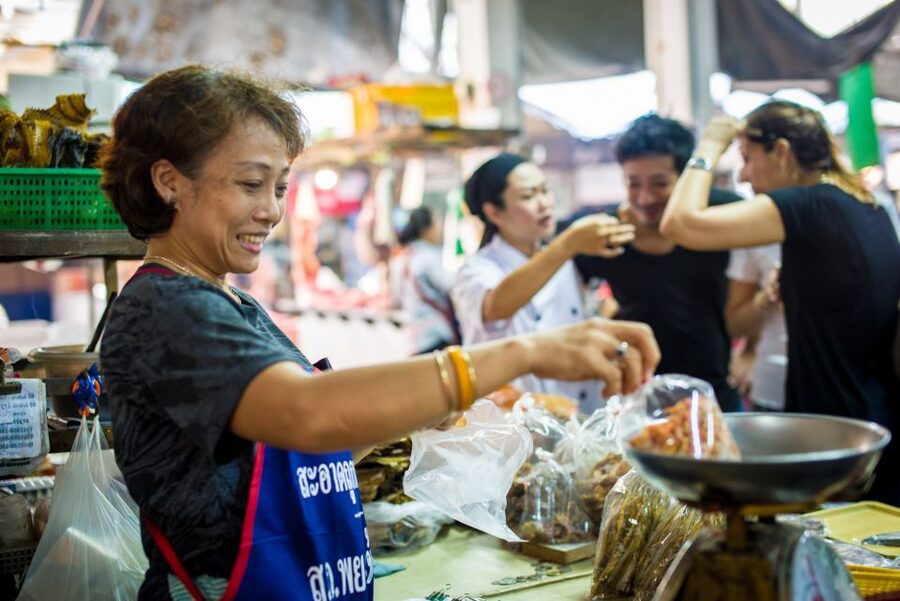
Your chef takes you through the market and points out the fresh ingredients used in Thai kitchens. Past participants have specifically learned about tofu, noodles, vegetables, seasonings, and sweet chili paste. The point is not to fill a shopping bag. It is to understand what these ingredients look like before they are measured, packaged, and placed on a restaurant plate.
The market also gives you a quick lesson in Bangkok food culture. You see the chef interact with local sellers and explain the ingredients in a familiar, useful way. Maria A. appreciated learning how each item affects flavor, texture, or balance. That is a better lesson than memorizing a list of unfamiliar Thai words.
There is one practical warning: the meeting point and directions can vary by booking option. One person arrived at the market and needed help finding the school. Give yourself extra time and read the exact meeting instructions closely. The market is part of the experience, but the first few minutes should not be spent trying to work out where to go.
The market can also be warm, crowded, and full of strong smells. That is part of its value, but it may not suit someone who wants an air-conditioned start to the day. People with mobility problems should note that the activity is not designed for them.
Five dishes, one working kitchen
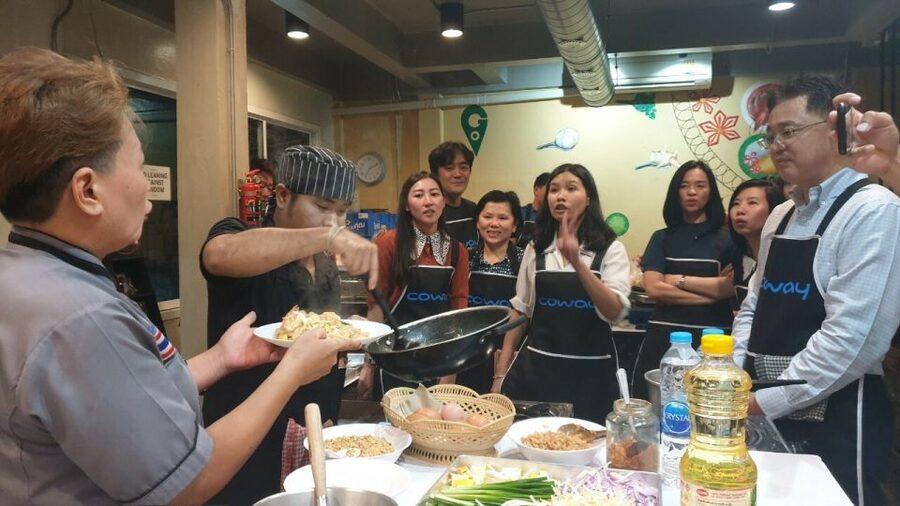
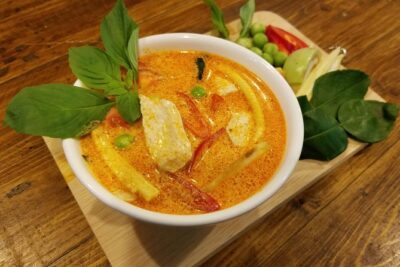
After the market, the chef brings the ingredients into the cooking school and takes you through the day’s menu. The dishes change, so the class does not offer a fixed five-item promise. You might prepare Pad Thai, a fragrant curry, crispy hand-rolled spring rolls, Tom Kha, Masaman curry, or mango sticky rice.
One especially memorable variation has been blue sticky rice with mango. It shows why the changing menu can be a positive feature. You may get a dish you did not expect, along with a fresh look at Thai ingredients and presentation.
The cooking is suitable for beginners. You do not need professional knife skills or previous Thai cooking experience. The chef demonstrates the process, then helps you carry it out. The emphasis is on straightforward techniques and ingredients that can often be adapted at home.
The class is hands-on, but do not expect to cook all five dishes at once. The rhythm is more manageable: prepare one dish, cook it, eat it, then reset for the next. This lets you taste each item while it is fresh and gives the chef time to answer questions.
That format also explains why the four hours pass quickly. A dish may be ready within the first part of the class, and food keeps arriving. Come with an empty stomach. Several people who ate breakfast found themselves uncomfortably full by the end.
The chef is the heart of the experience
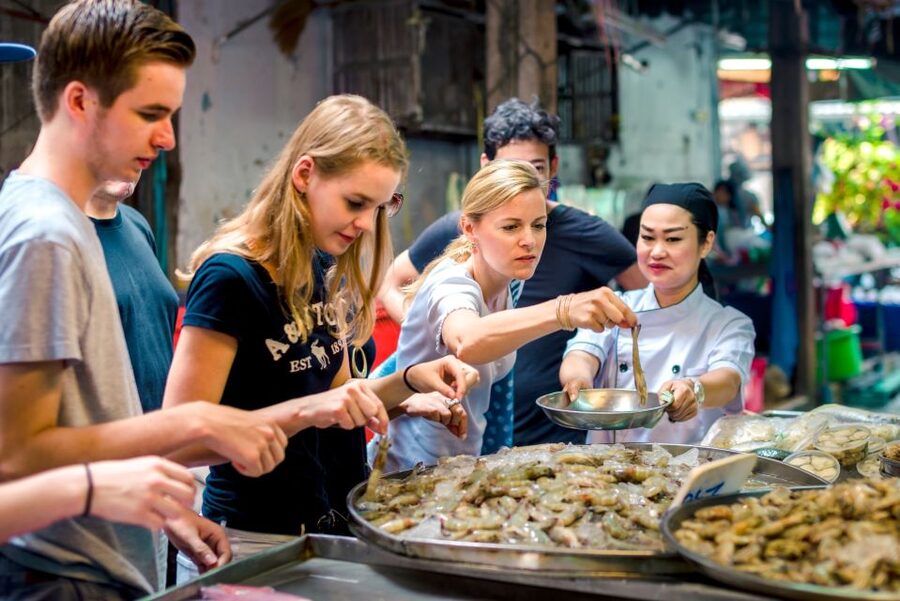
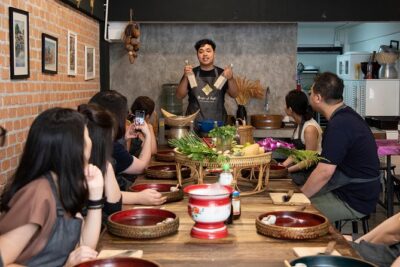
The strongest reason to book this class is the instructor. The chefs do more than read out a recipe. They explain why an ingredient is used and how to adjust the result.
Natcha has been praised for clear explanations, humor, and broad experience with food. She has helped people understand why Thai dishes are prepared in particular ways and has offered substitutions for ingredients that may be difficult to find at home. Sarin has been described as patient and good at adapting the menu. Kimmy has been praised for enthusiasm, kitchen hygiene, and practical help.
Your teacher may also have a personal style that shapes the day. Some instructors tell stories about Thai food and culture. Others focus on cooking tips and technique. The common benefit is direct access to someone who can answer the question that a cookbook cannot: Why does this dish taste right?
Ask questions as you work. If you are unsure how much heat to use, when to add an ingredient, or what to substitute at home, speak up. The class is more useful when you treat it as a working lesson rather than a show.
Small groups make a noticeable difference. Several sessions had only two people, which allowed close attention and menu changes. The exact group size is not stated as a fixed guarantee, so you should not book solely on the assumption that you will have a private class. Still, the setting is described as small and interactive, rather than a large demonstration with everyone watching from a distance.
More cooking classes in Bangkok:
- Hands on Thai Cooking Class and Market Tour
★ 5.0 · 660 reviews - Tingly Thai Cooking Class with Morning Market Tour
★ 5.0 · 589 reviews - Hands-on Thai Cooking Class & Market Tour in Sukhumvit
★ 5.0 · 571 reviews - Pink Chili – Thai Cooking Class and Market Tour in Bangkok
★ 5.0 · 416 reviews
A menu that can bend to your diet
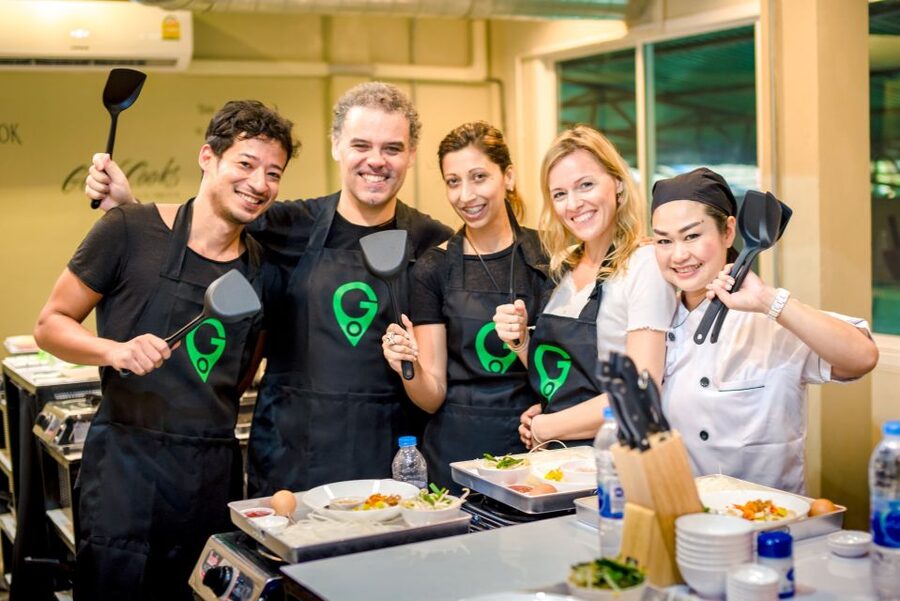
Tell the operator about allergies before you arrive. This is especially important in Thai cooking, where sauces, pastes, seafood, and other ingredients can be mixed into a dish early in the process.
The class is suitable for vegetarian and halal diets, and pescatarian requests have been handled successfully. Seafood-free menus have also been prepared. In one case, the chef changed the dishes because a participant did not like fish. That flexibility is helpful, but it is not a reason to wait until the cooking starts. Give the school clear information in advance.
The daily menu also makes dietary discussion important. If Pad Thai is not on the schedule, the chef may offer another noodle, curry, soup, or dessert dish. You should think of the class as a lesson in Thai cooking rather than a guaranteed chance to make your favorite restaurant order.
Eating your own work
The best part of a cooking class is the meal at the end, and this one gives you plenty of it. You sit down with the group and eat the five dishes prepared during the session.
That meal has more value than a standard restaurant lunch. You have handled the ingredients and watched each dish take shape. You notice the work behind a curry paste, the preparation needed for spring rolls, and the balance required in a sweet dessert.
Mango sticky rice receives special attention for good reason. It is simple in appearance but depends on the right combination of rice, coconut flavor, sweetness, and ripe mango. Tom Kha has also been a favorite for people making it for the first time. The cooking lesson can give you a reference point for judging versions you order elsewhere.
Portions seem generous. Food is served throughout the class, and unfinished dishes may be packed for you to take away. Drinks include unlimited water, coffee, and tea. Beer can be bought, and you may bring your own alcohol without a corkage charge. Keep that option in perspective, though: the main event is a long meal, so you may not need much else.
What you take home
The class continues after you leave because the school sends the recipes and class pictures by email. This is a real advantage over a cooking demonstration that disappears from memory once you walk out.
Five recipes give you a useful starting set for Thai meals at home. You can try to recreate a curry, noodle dish, dessert, soup, or spring roll recipe, depending on the daily menu. The chef may also explain substitutions for ingredients found in your own country.
Do not expect every Bangkok ingredient to behave exactly the same way at home. Local produce, curry pastes, coconut milk, and heat levels can vary. But the class gives you the method and the reasoning, which is more useful than a recipe with no explanation.
The market visit adds another layer. You learn what the original ingredients look like and how the chef selects them. That makes the email recipes easier to understand later.
Price, timing, and practical value
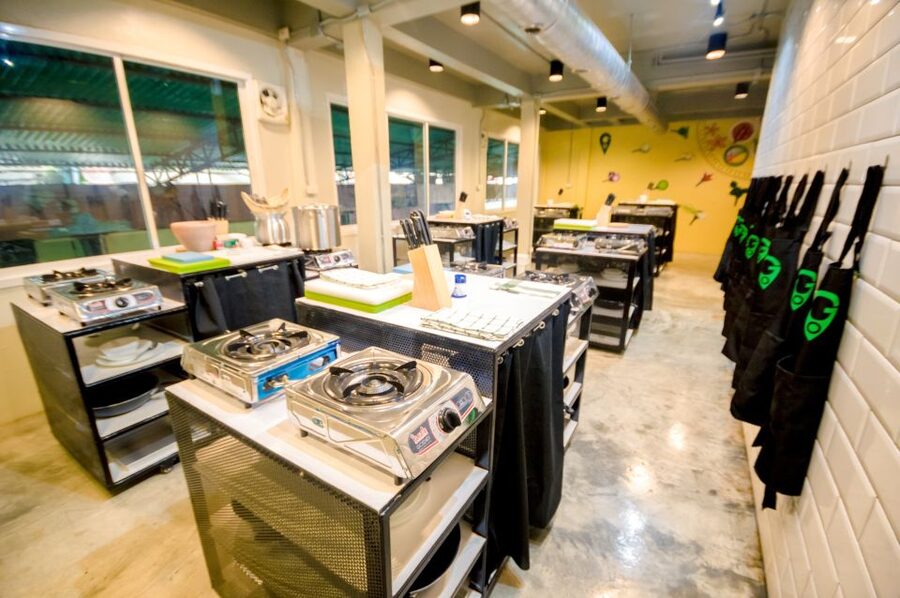
At $45 per person, the four-hour class is priced as a meal, lesson, market visit, and take-home recipe pack in one. If you only want lunch, a restaurant is cheaper and simpler. If you want to learn how Thai food works and plan to cook it again, the price is fair.
The value improves for couples and small groups. You share the meal, but the instruction can feel personal when numbers are low. The class also replaces the cost of a separate market outing and gives you an activity during the hottest part of the day.
The morning session is the better buy for most people because it adds the market walk. Select the afternoon option only if its timing fits your plans better or you mainly want the cooking and meal.
The full activity lasts four hours. There is no hotel transport included, and the meeting point can change with the booking option. Check those details before paying, then plan your route through central Bangkok with time to spare.
You can cancel up to 24 hours before the activity for a full refund, and the reserve-now, pay-later option keeps your plans flexible. These policies are useful in Bangkok, where weather, traffic, and changing schedules can affect a day’s plans.
Who should book this cooking class?
I would recommend it to anyone who enjoys eating Thai food and wants a skill to take home. It is also a strong first-day activity in Bangkok because the market and kitchen introduce you to local food without requiring a full day away from the city.
It suits couples, friends, solo participants, and families with teenagers over 12. Beginners are welcome, and you do not need to arrive with cooking experience. People who enjoy asking questions will get the most from the chef.
I would be more cautious if you have limited mobility, dislike market conditions, or need one particular dish. The class is not suitable for people with mobility impairments, and the changing menu means Pad Thai or mango sticky rice is not guaranteed. Anyone with allergies should contact the operator before booking.
Should you book it?
Book the morning class if you want the fullest experience. The market visit adds context, and the early start gives you a better sense of how Thai ingredients move from local stalls to the cooking pot.
The class is especially good value for people who plan to cook Thai food at home. You receive five recipes, practical substitutions, pictures, and direct instruction from a Thai chef. If you only want a quick meal or a fixed menu, choose a restaurant instead.
For most food-focused visitors in Bangkok, this is a smart half-day choice. Come hungry, wear comfortable clothes, ask plenty of questions, and confirm the meeting point and dietary needs before you go.
FAQ
How long does the Bangkok Thai cooking class last?
The class lasts four hours, including the cooking lesson and meal.
Does the class include a market tour?
The market tour is included with the morning session only. It is not included with the afternoon option.
How many Thai dishes will I cook?
You will prepare five Thai dishes and eat the food you make. The menu changes daily.
Is Pad Thai guaranteed?
No. Pad Thai is a possible menu item, but the dishes vary by day.
Are vegetarian and halal options available?
Yes. The class is vegetarian-friendly and halal-friendly. Pescatarian and seafood-free requests have also been accommodated.
Can I join if I have a food allergy?
You must tell the operator about allergies before the class so the menu and ingredients can be considered.
Are recipes provided after the class?
Yes. The school emails all the recipes from the day, along with class pictures.
What are the age and height requirements?
Participants must be at least 12 years old and at least 140 centimeters tall. Children under 12 cannot join.
More Half-Day in Bangkok
- Half-Day Railway Market and Floating Market Tour in Thailand
★ 4.5 · 3,924 reviews - Royal Grand Palace and Bangkok Temples: Half Day Tour
★ 4.5 · 336 reviews - Choose 5 Dishes: Half-Day Cooking Class in Sukhumvit with Market Tour
★ 5.0 · 281 reviews - Bangkok: Grand Palace and Emerald Buddha Half-Day Tour
★ 4.4 · 267 reviews
More Workshops and Classes in Bangkok
- Bangkok: Muay Thai Boxing Introduction Class for Beginners
★ 4.8 · 394 reviews - Tingly Thai Cooking School Evening Class
★ 5.0 · 335 reviews - Tingly Thai Cooking School Afternoon Class
★ 5.0 · 291 reviews - Bangkok: White Lotus Thai Cooking Class with Market Tour
★ 5.0 · 285 reviews
Just added around Bangkok
- Yoga in the Park Thailand★ 5.0 · 12 reviews
- Bangkok and Ayutthaya 3 Days★ 4.5 · 12 reviews
- Private Tour: Damnoen Saduak Floating Market and Bangkok City Temples★ 5.0 · 12 reviews
- Chinatown (Yaowarat Road) Neon Photoshoot★ 5.0 · 12 reviews
- Ayutthaya Day Tour By Coach and Cruise★ 4.0 · 12 reviews
- Bangkok Suvarnabhumi Airport: VIP Meet & Greet Service (Fasttrack)★ 3.5 · 12 reviews
- Private Tour: Floating Markets and Suan Sampran Day Trip from Bangkok★ 3.5 · 12 reviews
- Bangkok: Wow Park Interactive Amusement & Science Park★ 4.5 · 12 reviews
Bangkok Thai Cooking Classes, compared.
Tingly Thai Cooking School Half-Day Cooking Class
Read our review →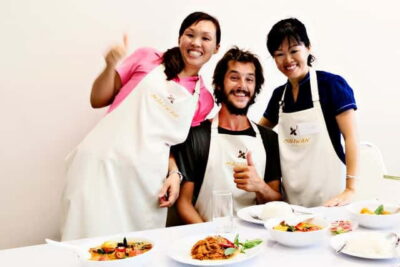
Tingly Thai Cooking Class with Morning Market Tour
Read our review →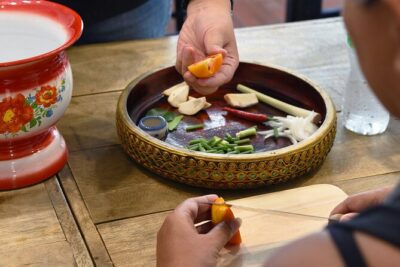
Hands-on Thai Cooking Class & Market Tour in Sukhumvit
Read our review →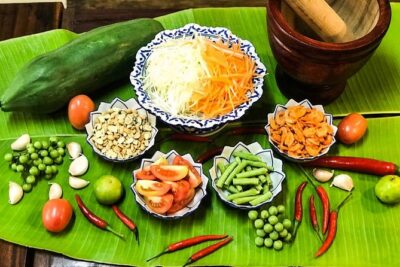
Pink Chili – Thai Cooking Class and Market Tour in Bangkok
Read our review →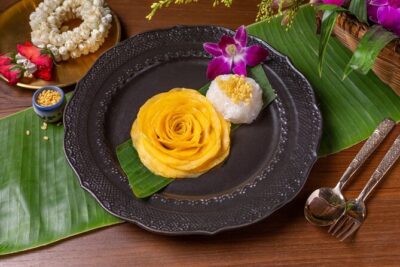
Authentic Thai Cooking with the Largest market visit &TukTuk ride
Read our review →Browse the lists this tour appears in