
Reviewed · BANGKOK STREET FOOD TOURS
Bangkok Chinatown: Self-Guided Mystery Puzzle Quest
Bangkok Chinatown becomes your game board in this self-guided quest. For $6.99, you follow the Questo app from one clue to the next, solving puzzles that point out old shops, temples, shrines, and local customs. The best moments come when a simple detail on a building or sign suddenly matters.
I like the freedom to start at any hour and stop when you need a drink or a bowl of noodles. I also like the mix of places: Wat Traimit’s huge gold Buddha, a century-old herbal drink shop, a noisy old coffee house, and small Chinese temples tucked into commercial streets. The catch is that this is not a polished walking tour with a person to sort out confusion. One player had trouble with unclear directions and inaccurate map points, so you need patience and a charged phone.
- Wat Traimit anchors the route: See Bangkok’s famous 5.5-tonne seated Buddha, housed in a temple near Hualampong Railway Station.
- Old Chinatown businesses become clues: Search around Kan Kee Nam Tao Thong and Eiah-Sae, two long-running local institutions.
- Small religious sites add surprise: Visit Wat Lokanukroh and the 1658 Leng Buai Ia Shrine amid market streets.
- The Questo app sets the pace: It gives directions and puzzles on screen, with no guide and no fixed departure time.
- The route works for private groups: One person can buy access for everyone, and each participant plays on a smartphone.
- The low price comes with a tradeoff: You get independence and privacy, but not human help if a clue or map location causes trouble.
In This Review
- Bangkok Chinatown as a Puzzle Board
- Kan Kee Nam Tao Thong and Chinatown’s Old Drinks
- Wat Traimit and the 5.5-Tonne Buddha
- Eiah-Sae Coffee Shop and the Sound of Old Chinatown
- Wat Lokanukroh Beside Sampeng Market
- Leng Buai Ia Shrine, Built in 1658
- Wat Leng Noei Yi and Its Chinese Motifs
- What the App Does Well, and Where It Can Fail
- Is $6.99 Good Value?
- Who Will Enjoy This Chinatown Quest?
- Should You Book It?
- FAQ
- How long does the Bangkok Chinatown mystery quest take?
- Is there a tour guide?
- Do I need an internet connection while playing?
- When can I start the activity?
- Where does the quest start?
- Where does the quest finish?
- Can a group play with one purchase?
- What is the cancellation policy?
Bangkok Chinatown as a Puzzle Board
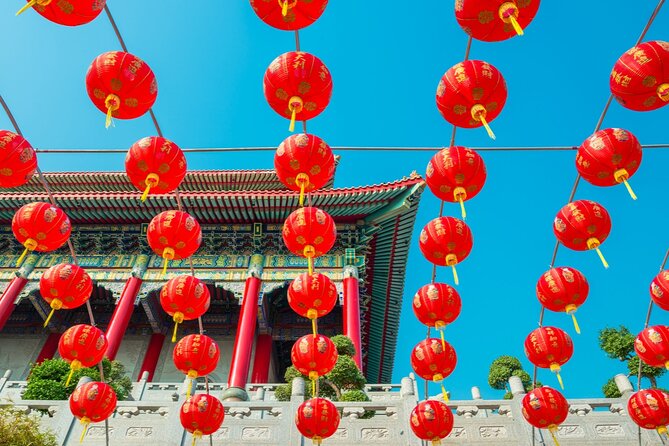
This experience is part walking tour, part outdoor escape game, and part treasure hunt. You are not simply led from one sight to another. At each stop, you look around for an answer, enter it into the app, and receive the next location and a short story about the place.
That format changes how you walk. A shop sign, doorway, statue, or piece of decoration that might otherwise pass unnoticed becomes useful. I like that the game asks you to pay attention to ordinary Chinatown details, not only the big temples shown in guidebooks.
The route takes about 90 minutes, although the flexible design lets you pause and continue later. You can begin at any hour, and the experience is listed as available every day, around the clock. The app can also be used offline while you explore, which matters if your mobile connection drops in crowded streets or indoor spaces.
You should think of the game as a framework for exploring, not a full historical tour. The app provides stories as you solve the challenges, but there is no guide to answer follow-up questions or explain local etiquette in person.
Kan Kee Nam Tao Thong and Chinatown’s Old Drinks
One early stop is Kan Kee Nam Tao Thong, a business known for Chinese herbal drinks and said to be about 100 years old. Many Chinatown shops have passed from one generation to the next, and this stop gives the route a useful connection to everyday local life.
The challenge asks you to look around the shop area for an answer. That sounds simple, but it is the central habit of the whole activity: pause, inspect the surroundings, and use what you see rather than rushing to the next pin on the map.
You may also have the chance to sample local drinks or food at shops popular with residents. The activity does not promise a tasting or include food in the price, so bring cash if you want to buy something. The value here is the chance to notice a working neighborhood business rather than passing only through grand religious sites.
A practical point: shopfronts can be harder to identify than major temples. Keep the app open, check the wording of the clue closely, and do not assume the first nearby storefront is the right one.
More street food tours in Bangkok:
- Bangkok: Backstreets Food Tour with 15+ Tastings
★ 4.9 · 2,880 reviews - Bangkok Backstreets Food Tour with 15+ Tastings
★ 5.0 · 1,926 reviews - Bangkok: Michelin Guide Street Food Tour by Tuk Tuk
★ 4.4 · 1,274 reviews
Wat Traimit and the 5.5-Tonne Buddha
Wat Traimit is the route’s major sight. The temple is known for its seated Buddha statue made of gold, dating to the 13th century. The statue weighs about 5.5 tonnes and measures nearly five meters high.
The temple is in Bangkok Chinatown, around 450 meters west of Hualampong Railway Station. That makes the area fairly easy to reach by public transport, although the activity itself begins at a listed point in Rong Muang, Pathum Wan. The app is meant to guide you step by step to the first challenge, so check the start point carefully before setting out.
The puzzle gives you a reason to examine the temple area instead of simply taking a photograph and leaving. You look for the detail needed to move on, then receive the next piece of the story. I like this approach because it gives structure without forcing you to keep up with a group.
Allow extra time if you want to look around properly. The advertised 90 minutes is an approximate playing time, not a promise that every stop will be a quick glance. Temple visits also work better when you are prepared to behave quietly and respectfully, even though the experience itself is informal.
Eiah-Sae Coffee Shop and the Sound of Old Chinatown
Eiah-Sae is an almost century-old coffee shop passed through generations. Its appeal is not a grand monument. It is the atmosphere of an old neighborhood business, with a homey and noisy setting that has survived as Chinatown changed around it.
This stop gives the puzzle a different texture. Instead of searching a temple courtyard or shrine, you are looking at a commercial place that still serves its everyday purpose. If you choose to buy a drink, the stop can become a natural rest point, though purchases are not included.
The app asks you to find an answer in the surroundings before it reveals the next destination. That may encourage you to notice the shop’s signs and details, but it can also slow you down if the clue is not clear. This is one place where the lack of a guide is most noticeable. A person could point out the intended detail at once. With the app, you must test the clue yourself.
I would treat the coffee shop as a chance to pause, not just another checkpoint. The route is short, but Chinatown streets can be tiring, and a brief break makes the rest of the game more enjoyable.
Wat Lokanukroh Beside Sampeng Market
Wat Lokanukroh is described as one of Bangkok’s smallest temples. No monks live there, yet people still come to pray and hold ceremonies. Its location in the middle of Sampeng Market gives it a useful contrast with the surrounding trade and movement.
This is the kind of stop that makes the route feel less predictable. You are not visiting only the famous temple with the large statue. You are also being sent to a smaller religious site that continues to serve people even without a resident monastic community.
The market setting may make finding the clue harder. The provided route information does not promise a quiet space or a clear entrance, so follow the app closely and give yourself room to stop without blocking others. The game works best when you treat the street as part of the experience, not as empty space between attractions.
I especially like this stop for visitors who want a glimpse of how worship and commerce sit side by side in Chinatown. It is a small lesson in the district’s daily rhythm, delivered through a puzzle rather than a lecture.
A few more Bangkok half-days to weigh up
- Bangkok: Tuk Tuk Day Pass App & Boat Chao Phraya River
★ 4.2 · 593 reviews - Bangkok Combo: Tuk Tuk App Pass, Chao Phraya Boat & E-sim
★ 4.5 · 94 reviews - Private ‘Breeze & Pleased’ Canal Boat Ride – 2hrs (self-guided)
★ 5.0 · 91 reviews - Bangkok: Audio guides for Bangkok, Ayutthaya & Chiang Mai
★ 4.0 · 38 reviews
Leng Buai Ia Shrine, Built in 1658
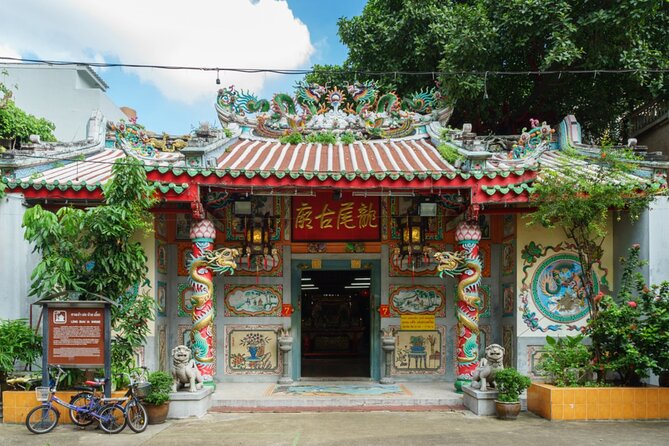
Leng Buai Ia Shrine is an ancient Teochew Chinese shrine and is identified as the oldest Chinese shrine in Thailand. It was built in 1658 during the Central Ayutthaya period, when Chinese businesspeople came to pray for protection and prosperity.
The shrine uses traditional Chinese architectural details. Its original role also helps explain why religious sites appear so often along old commercial routes. For merchants, worship was not separate from business life. A prayer for a safe journey or a successful shop could take place only a short walk from the market.
The app turns the visit into a close look at the building. You need to find the answer to continue, then the story of the shrine appears. That gives you a reason to notice architectural elements that might otherwise blur together during a busy street walk.
Remember that this is an active place of worship, not a museum display. Keep your behavior respectful and avoid treating ceremonies as a performance. The activity data does not provide detailed dress rules, so use ordinary temple courtesy and follow any posted instructions.
Wat Leng Noei Yi and Its Chinese Motifs
Another major temple on the route is now called Wat Leng Noei Yi. It opened as Wat Leng Noei Yi in the 1870s and helped introduce Mahayana Buddhism in Bangkok. King Chulalongkorn later gave it its present title.
The temple is decorated with animal, flower, and Chinese dragon motifs. Its ordination hall contains a gold-colored Buddha. These details give the final part of the route a strong visual finish, especially after the smaller shrine and market stops.
Here again, the puzzle encourages you to look carefully. The experience does not simply point out the temple and send you away. You search for the clue, solve it, and receive the next part of the story. I find that useful for people who enjoy learning through small discoveries rather than listening to a long speech.
The route’s stated end point is 586 Charoen Krung Road in Pom Prap, and the app guides you step by step. Because the start and end addresses are listed in different parts of Bangkok’s Chinatown area, check the route in the app before beginning and keep track of your position as you go.
What the App Does Well, and Where It Can Fail
The best feature is control. You decide when to begin, how long to spend at a stop, and when to take a break. A private group can play together without a stranger joining, and one person can purchase access for the full number of participants. Each group member can then play on a smartphone.
The offline function is also practical. You do not need an internet connection while exploring, which reduces one common worry with app-led activities. You should still make sure the app and game content are ready before you start, since the experience depends entirely on your phone.
The main weakness is navigation. A reported experience found the instructions confusing and several Google Maps locations inaccurate, leading the player to stop before finishing. That is not a minor issue in a puzzle route. If the location pin is wrong, the challenge cannot work as intended.
I would prepare in three ways:
- Charge your phone fully before leaving.
- Read the instructions slowly and compare the clue with the actual street.
- Keep the app open, but do not rely blindly on one map pin if the surroundings do not match.
If you are easily frustrated by map errors, a guided Chinatown walk may suit you better. If you enjoy solving problems and can accept a little trial and error, the low price makes the risk easier to manage.
Is $6.99 Good Value?
At $6.99 per person, this is inexpensive for a private activity lasting about 90 minutes. You are paying for the app, the puzzle design, and a route through several notable places. You are not paying for transport, food, temple admission if any applies, or a guide.
The value is strongest for a couple or small group that wants a planned walk but does not want a fixed tour time. Group pricing can make the cost even more attractive because one person can buy access for everyone by selecting the total number of players.
The price also tells you what not to expect. This is not a detailed cultural tour with a local expert. The stories are short and tied to the challenges. The experience works as a light introduction to Chinatown, then you can decide which places deserve a longer visit.
With free cancellation available up to 24 hours before the local start time, you have some protection if your schedule changes. A cancellation made within 24 hours is not refundable, and late changes are not accepted.
Who Will Enjoy This Chinatown Quest?
I would recommend it most to independent visitors, couples, families, and friends who like riddles and short walking games. It gives a group a shared task, which can be more engaging than simply following one person through a busy district.
It also suits people who want to avoid human contact or group crowds. The activity is private, uses only your phone, and has no guide. Service animals are allowed, and the experience is near public transportation. The information says most people can participate, but it does not give a detailed route assessment for mobility needs.
You may want another option if you prefer deep explanations, exact navigation, or a calm pace set by an expert. The route passes through active streets and markets, and the map problem reported by one player is worth taking seriously.
For a first look at Chinatown, the mix is appealing: a gold Buddha, herbal drinks, old coffee, a market-side temple, an ancient Chinese shrine, and a Mahayana Buddhist temple. You get a sense of the district’s religious and commercial sides without spending much money.
Should You Book It?
Book this quest if you want an affordable, private way to explore Bangkok Chinatown and enjoy solving clues on your phone. The old shops and smaller temples give it more character than a basic landmark checklist, while the flexible hours suit an uneven Bangkok schedule.
Skip it if you need a guide, dislike map-based games, or want every direction to be perfectly clear. My advice is to book only when you can keep your phone charged, allow extra time for wrong turns, and accept that the puzzle itself is part of the challenge. At $6.99, it is a sensible low-cost experiment for an independent explorer, but not a replacement for a guided cultural tour.
FAQ
How long does the Bangkok Chinatown mystery quest take?
The approximate playing time is 1 hour and 30 minutes. You can pause at any time and resume later.
Is there a tour guide?
No. This is a self-guided experience operated through the Questo app. There is no physical guide.
Do I need an internet connection while playing?
No. The experience is designed to be played offline while you explore.
When can I start the activity?
You can start at any hour. It is listed as available 24 hours a day, every day of the year.
Where does the quest start?
The listed start location is Rong Muang, Pathum Wan, Bangkok 10330, Thailand. The Questo app guides you step by step to the first location.
Where does the quest finish?
The listed end point is 586 Charoen Krung Road, Khwaeng Pom Prap, Khet Pom Prap Sattru Phai, Bangkok.
Can a group play with one purchase?
Yes. One person can purchase access for the whole group by selecting the total number of participants. All group members can play on their own smartphones.
What is the cancellation policy?
You can cancel for a full refund up to 24 hours before the experience start time. Cancellations or changes made within 24 hours are not accepted for a refund.
Just added around Bangkok
- Bangkok: Fallabella River Front Iconsiam★ 4.7 · 3 reviews
- Private Grand Palace Bangkok City Tour & Klong Longtail Boat Trip★ 4.5 · 3 reviews
- Bangkok: Divana Scentuara Spa Chidlom Branch E-Voucher★ 5.0 · 3 reviews
- Bangkok: Flower Market & Sunset Walking Tour★ 3.7 · 3 reviews
- Private Shore Excursion: Best of Bangkok in a day★ 3.5 · 3 reviews
- From Bangkok: Kanchanaburi, River Kwai and Erawan Waterfall Tour★ 3.0 · 3 reviews
- Private Damnoen Saduak and Maeklong Railway Market Tour(min 2pax)★ 5.0 · 3 reviews
- Damnoen Saduak Famous Floating Market and Mea Klong Railway Tour★ 5.0 · 3 reviews
Bangkok Street Food Tours, compared.
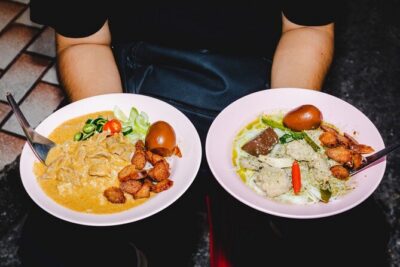
Bangkok Backstreets Food Tour with 15+ Tastings
Read our review →

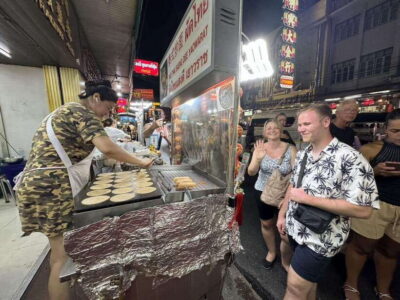
Bangkok Authentic Tasting Thai-Chinatown Walking Food Tour
Read our review →
Tuk Tuk Adventure Chinatown Michelin Food & Temples
Read our review →
Bangkok Tuk-Tuk Tour by Night with Chinatown Street Food Meal
Read our review →
Browse the lists this tour appears in