Reviewed · TOURS
Bangkok: Jim Thompson House and Baan Krua Community Tour
Jim Thompson’s former home gives this Bangkok outing its polished opening, but the canal-side walk through Baan Krua supplies its soul. You move from a handsome complex of traditional Thai teak houses to the community where Cham silk weavers helped shape the Jim Thompson brand.
I like the hotel pickup and the easy air-conditioned ride, especially in Bangkok’s heat. I also like the chance to meet the last Baan Krua family still making silk for a living, then buy pieces directly at the source. The main drawback is that the community’s silk production has dwindled. Only two looms remain, so the Baan Krua visit may feel quieter and smaller than you expect.
In This Review
- Key points to know before booking
- Why the Jim Thompson and Baan Krua pairing works
- Starting around 8:30 AM with a private Bangkok pickup
- Inside the six traditional Thai houses
- From Jim Thompson to Baan Krua by the canal
- Meeting Uncle Aood’s silk-making family
- What the $55 price really covers
- Who will get the most from this morning tour
- Practical tips for a better visit
- Should you book the Jim Thompson and Baan Krua tour?
- FAQ
- How long does the Jim Thompson House and Baan Krua tour last?
- What time does the tour start?
- Is hotel pickup included?
- Is transportation air-conditioned?
- What languages are available?
- Is lunch included?
- How many traditional houses make up Jim Thompson House?
- Can I buy silk during the Baan Krua visit?
Key points to know before booking
- Jim Thompson House is a six-house teak complex, assembled from structures brought from several parts of Thailand and completed in 1959.
- Baan Krua sits beside Klong Saen Saeb, giving you a glimpse of a historic canal community rather than just another museum room.
- Uncle Aood’s family still makes silk, making this the most direct part of the tour.
- Guides Tum Tum and Kiwi have earned praise for personal service, clear explanations, and extra help with questions and shopping.
- The community silk trade is now very small, with much of the production moved to a factory elsewhere.
- The $55 price includes transport, guide, entrance, and taxes, but not lunch or personal purchases.
Why the Jim Thompson and Baan Krua pairing works
Many Bangkok tours give you a grand house, then send you on to another grand house. This one follows a more useful thread: it connects Jim Thompson’s home with the people and place that helped make his silk business famous.
The two stops have very different moods. Jim Thompson House is orderly, quiet, and carefully preserved. Baan Krua is a living neighborhood beside the Klong Saen Saeb River, where the story shifts from one American businessman to a Cham community with a long tradition of fishing and silk weaving.
That connection is the real reason to choose this tour. The house alone is a good cultural stop, but the community visit explains why Thai silk mattered to Thompson and how his business grew from local skill.
You should also keep your expectations in check. This is not a large working silk village with rows of active looms. The trade has declined, and much of the weaving now happens in a factory elsewhere. What remains is smaller, more personal, and more fragile.
More Jim Thompson House and silk visits:
- Jim Thompson’s Story of Silk
★ 3.0 · 14 reviews - Jim Thompson House Museum Entrance Ticket & Hotel Pick up
★ 4.0 · 9 reviews - Jim Thompson’s House and National Museum Bangkok (Phranakorn)
★ 4.0 · 9 reviews
Starting around 8:30 AM with a private Bangkok pickup
Your English-speaking guide meets you at your hotel in Bangkok’s central business area at about 8:30 AM. A private, air-conditioned car takes you to Jim Thompson House, then later returns you to your hotel.
I like this arrangement for a short morning tour. You do not need to work out a taxi route, negotiate with a driver, or arrive hot and flustered at the first stop. Bangkok can be hard to read on a first visit, so door-to-door transport is a real part of the tour’s value.
The ride also lets you ask questions before arriving. The guide provides background on the house before you enter, setting up the visit instead of dropping you into a museum with no context.
The tour lasts four hours. That is long enough for both stops without turning the day into a full-day commitment. Since lunch is not included, plan to eat before pickup or after you return. The schedule gives you the rest of the day for other Bangkok plans.
The guide service is available in English or Thai. Names noted by past customers include Tum Tum and Kiwi, with Kiwi pronounced like the fruit, though the Thai spelling is different. The guide and driver work as a team, and Kiwi in particular is praised for answering many questions and offering extra shopping suggestions suited to individual interests.
Inside the six traditional Thai houses
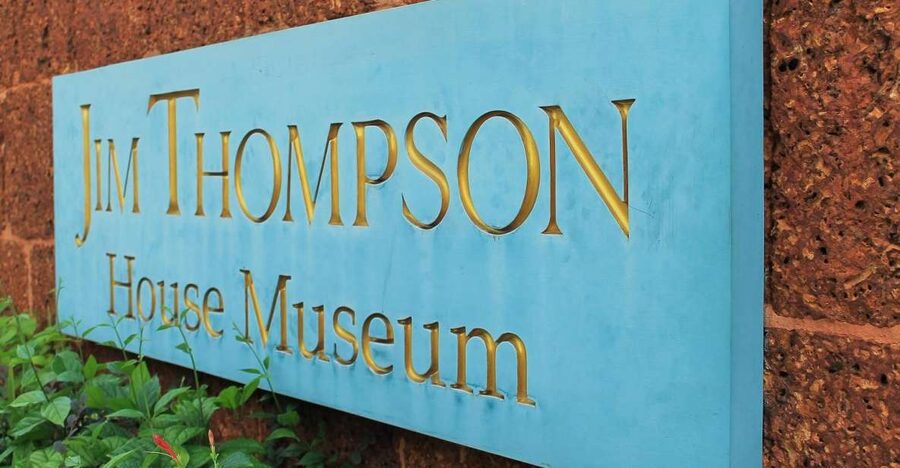
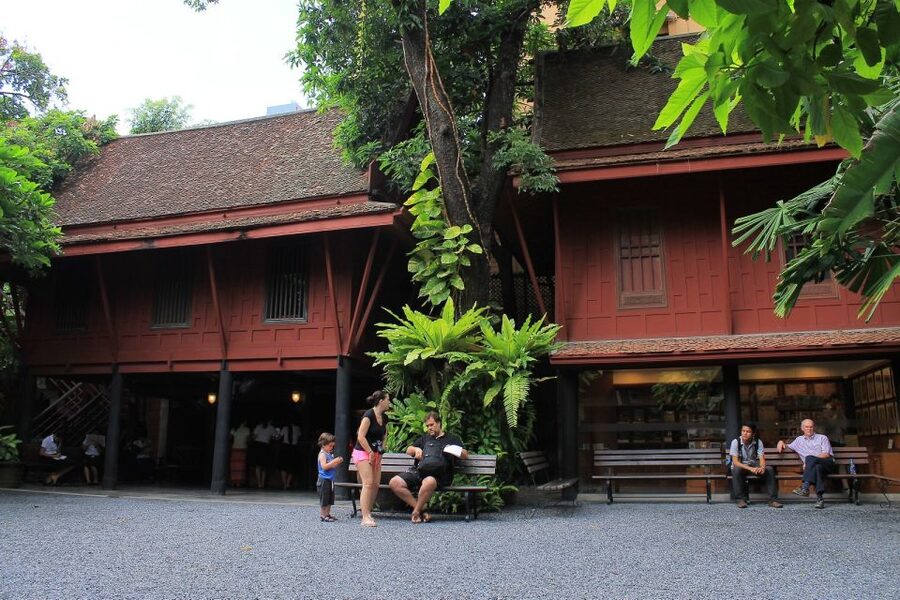
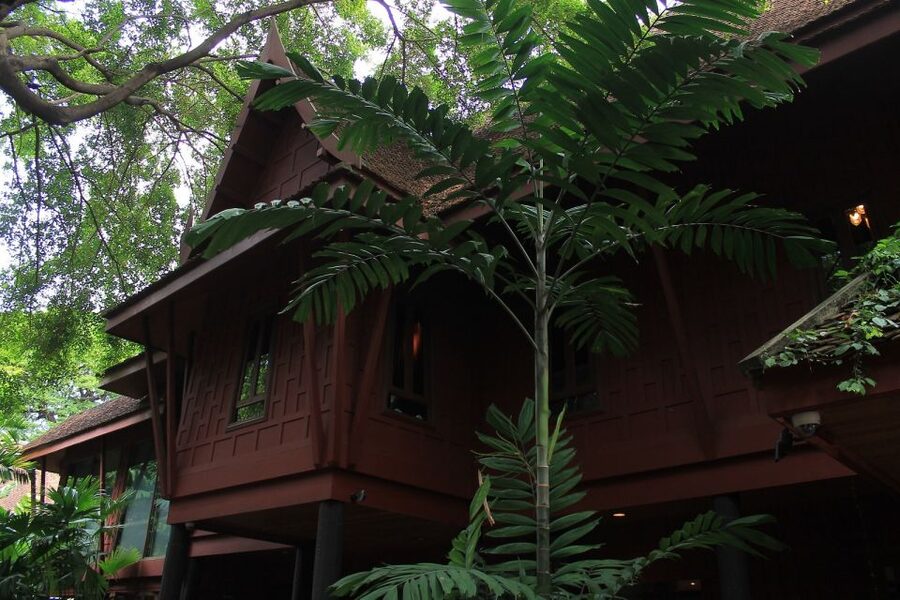
Jim Thompson House is made from a complex of six traditional Thai-style houses. The teak structures were bought from several owners, moved from different parts of Thailand, and assembled at their present Bangkok location. Construction finished in 1959.
That history gives the house its character. You are not looking at one ordinary home that simply survived intact. You are seeing a carefully assembled collection of Thai architecture, brought together by Thompson as his home and social center.
A guide from Jim Thompson House escorts you through the interior. Your tour guide first gives you basic information, then the museum guide handles the house visit. This two-guide setup matters because the museum staff can explain the rooms and building in detail while your private guide remains available around the wider itinerary.
The house has changed little since Thompson disappeared in 1967. That fact lends the visit an unusual quality. It is not just a display of Thai design. It remains tied to the life of a man whose story ended suddenly and remains partly mysterious.
Expect a guided visit rather than a casual walk through rooms at your own pace. The house guides are reported to explain the sections clearly and bring the architecture to life. If you enjoy design, traditional building methods, art, or the personal stories behind museums, this is likely the strongest part of the morning.
I would not book this tour only for the house if you can easily visit it on your own. Admission and the house tour are the main fixed attraction, and the museum already has its own guides. The private car and the link to Baan Krua are what make the package more useful than a standalone museum ticket.
From Jim Thompson to Baan Krua by the canal
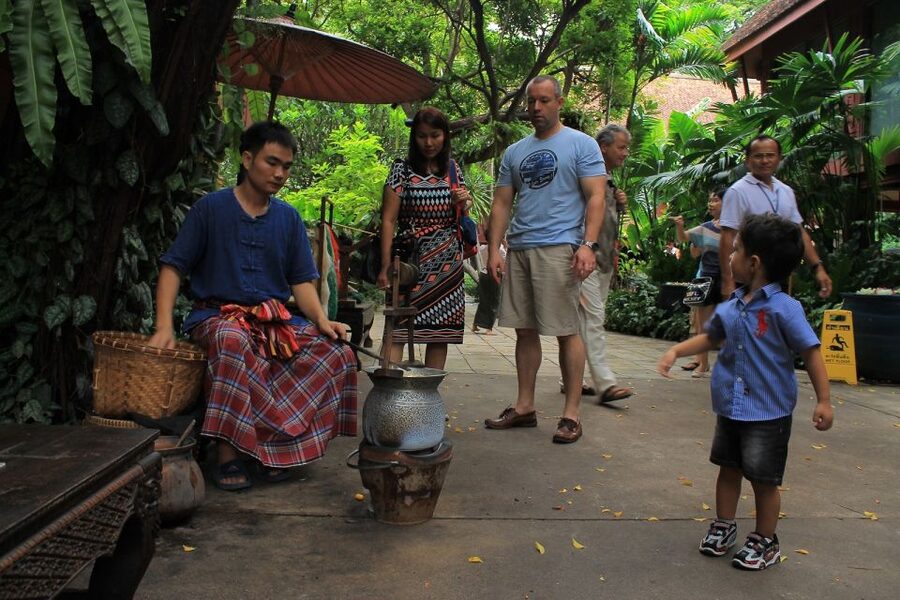
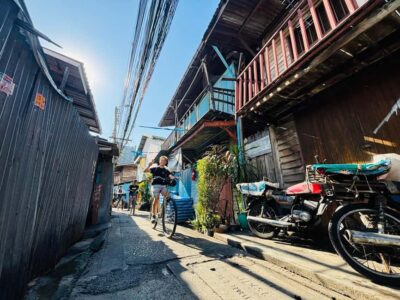
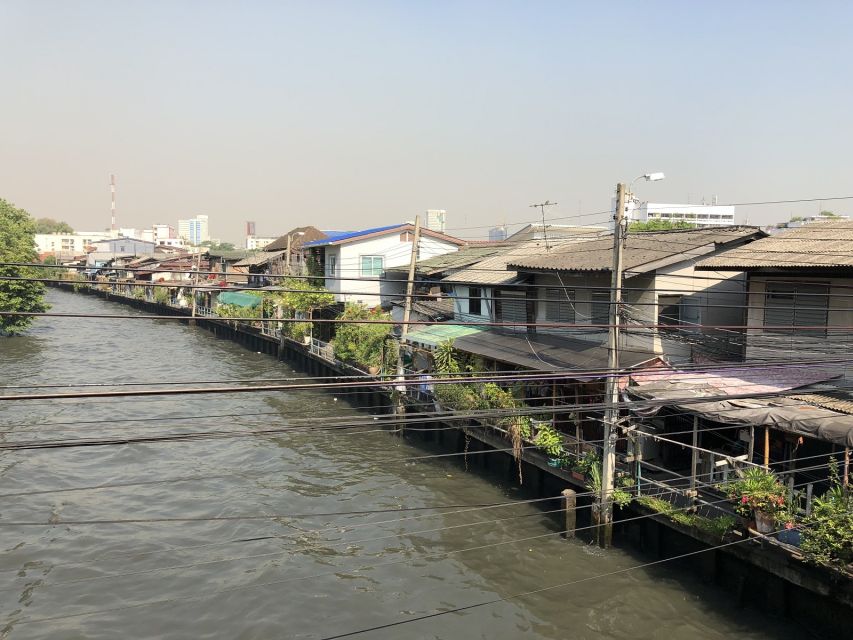
After the house, your guide takes you to Baan Krua Nhua, a community beside Klong Saen Saeb. The setting changes quickly from a preserved residence to a neighborhood shaped by daily life and water.
Baan Krua has been home to Cham people since the reign of King Rama I. The community’s traditional work included fishing and silk weaving. That gives the second half of the tour a stronger social focus than a typical craft demonstration.
The walk is valuable because you see where the story happened, not just the finished silk in a shop. Your guide explains how Thompson became interested in the local weaving tradition, supported the community, and bought silk for his company. The Jim Thompson name eventually became known around the world, but this stop keeps the focus on the local makers behind the label.
Do not expect a grand market or a large visitor center. The point is the neighborhood itself and the remaining family workshop. The community has declined as a weaving center, and only two looms are still making silk there. Much of the production now takes place at a factory elsewhere.
That limitation can feel disappointing if you picture a busy village full of looms. I would treat it differently. You are seeing a craft that is becoming rare in its original setting, not a staged attraction built solely for tour groups. The visit may be brief and modest, but it tells you something important about how traditional work changes when demand, technology, and family livelihoods shift.
Same city, a completely different afternoon:
- Bangkok: Damnoen Saduak Market and Maeklong Railway Market
★ 4.5 · 26,723 reviews - The Old Siam: Damnoen Saduak and Maeklong Railway Market
★ 4.5 · 10,992 reviews - From Bangkok: Ayutthaya Temples Guided Tour with Lunch
★ 4.7 · 10,535 reviews - Bangkok: Train Market & Floating Market with Boat Ride
★ 4.7 · 9,547 reviews
Meeting Uncle Aood’s silk-making family
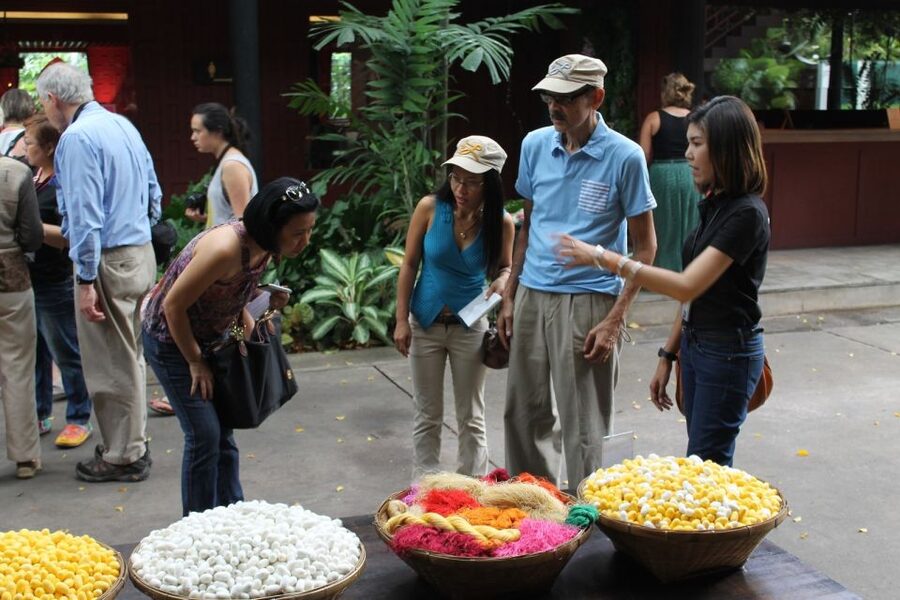
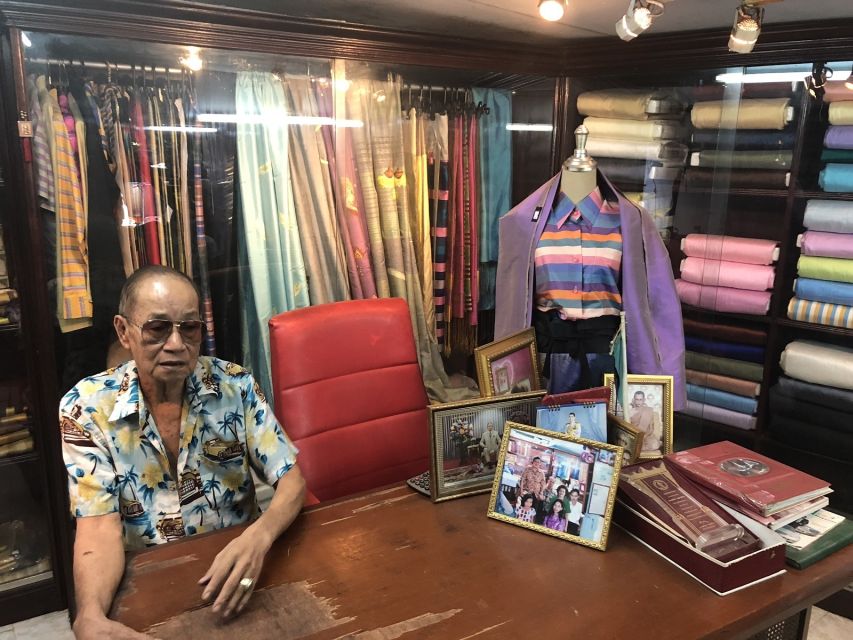
The most personal stop is the home of Uncle Aood, described as the last family in Baan Krua still continuing the silk business for a living. This is where the tour moves from general history to a specific household.
You can see the family’s connection to the trade and learn how the community’s silk tradition continues on a much smaller scale. The silk is valued for its texture, color, and durability. Those qualities help explain why Thompson saw such promise in Baan Krua’s work.
You also have the chance to buy Thai silk directly from the original community. That is appealing if you want a useful souvenir with a clear connection to the place you visited. Scarves, ties, and other silk products may be available, though the supplied details do not guarantee a particular product or price.
Shopping here calls for a little judgment. One customer felt that a couple of ties were sold at inflated prices and believed the guide received a cut from the loom owner. The same person decided the purchase could still support local entrepreneurs, but the concern is worth noting. Ask the price before buying, and buy only if you are comfortable with the amount.
I would not assume that every piece is woven entirely in the house. Since much of the community’s production has moved to a factory, ask your guide or the family which items are made on site and which come from elsewhere. That simple question helps you shop honestly and understand what you are buying.
What the $55 price really covers
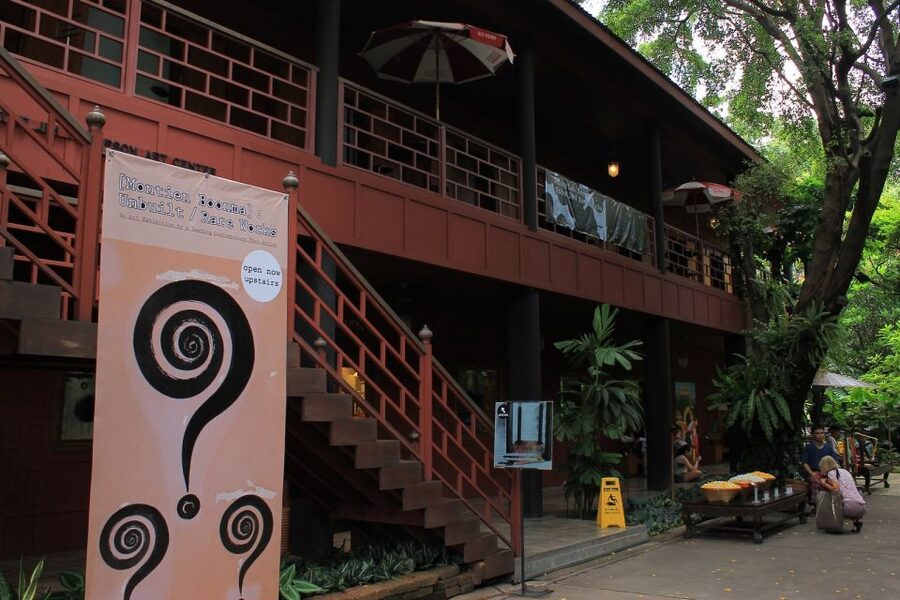
At $55 per person, the tour is not the cheapest way to see Jim Thompson House. The price includes private round-trip transfers from central Bangkok hotels, an English-speaking guide, admission to Jim Thompson House, and all taxes and fees.
That bundle can be good value for two reasons. First, private transport saves time and removes the hassle of getting between two places. Second, Baan Krua is not just an extra museum room. The guide supplies the historical link and helps you navigate the community and family workshop.
The value drops if you only want the Jim Thompson House. The museum can be visited separately, and the community’s remaining silk production is limited. In that case, you may prefer to arrange the house visit on its own and use your budget elsewhere.
The price does not include lunch, drinks, or personal expenses. Silk purchases are extra, and you should not feel obliged to buy anything. Plan your spending around the museum and transport, then treat shopping as optional.
For a first Bangkok visit, the private car and guide make the cost easier to justify. For repeat visitors who are comfortable arranging taxis and museum admission, the tour’s added value depends almost entirely on how much you want the Baan Krua connection.
Who will get the most from this morning tour
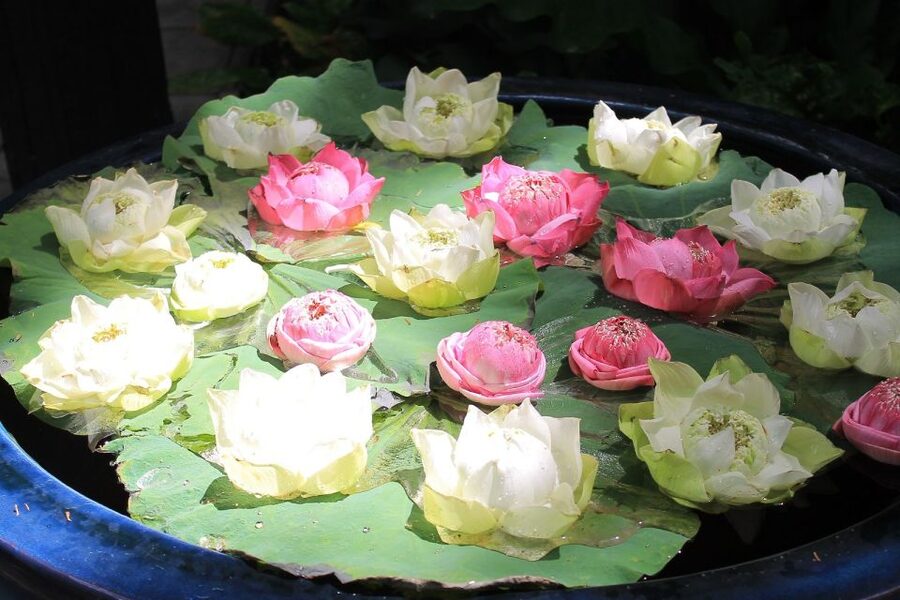
I would recommend this experience to you if you want more than temples and shopping malls. It suits people interested in Thai architecture, textiles, local communities, and the story behind a famous Bangkok name.
It is also a good fit for visitors who prefer a compact cultural outing. Four hours leaves room for lunch and an afternoon elsewhere, while hotel pickup keeps the morning simple.
Families and older visitors may appreciate the private vehicle, since you do not have to manage multiple transfers. Anyone with strong interest in silk should also consider it, though you should understand that the working side of the community is now quite small.
This may not suit you if you want a large-scale production demonstration, extensive shopping, or a full day of historical sights. The Baan Krua portion is quieter than the Jim Thompson House, and the contrast can make the second half feel less polished.
The quality of the morning also depends on your guide. Tum Tum is praised for explaining the silk process and Jim Thompson area, while Kiwi is praised for her warmth, answers, and useful shopping advice. A good guide helps the canal neighborhood make sense. Without that explanation, the walk could feel like a short visit to an ordinary residential area.
Practical tips for a better visit
- Eat before or after the tour: Lunch is not included, and the activity lasts four hours.
- Ask questions at Baan Krua: Find out which silk is made on site and which is produced elsewhere.
- Set a shopping budget: The family workshop offers direct purchases, but prices may not always feel low.
- Bring curiosity, not fixed expectations: The community has only a small amount of remaining weaving activity.
- Use the guide: Ask about the Cham community, the canal, Jim Thompson’s business, and the building’s unusual construction.
- Wear comfortable clothing: The outing includes a neighborhood visit as well as an indoor house tour.
Free cancellation is available up to 24 hours before the start time for a full refund, and you can reserve now and pay later. Pickup is limited to hotels in central Bangkok, so confirm that your accommodation falls within the service area.
Should you book the Jim Thompson and Baan Krua tour?
Book it if you want the story behind Jim Thompson silk, not just a look at his beautiful house. The house is the polished highlight, but Baan Krua gives the morning its human side and shows how little of the original weaving trade remains.
Skip it if you only want the museum or expect a large, busy silk village. The $55 price makes the most sense when you value private transport, a personal guide, and the chance to meet the final family still weaving in the community.
For many visitors, this is a thoughtful half-day introduction to Bangkok’s architecture, craft, and canal neighborhoods. Go knowing that the silk village is now small, ask clear questions before shopping, and you will get a more honest and rewarding visit.
FAQ
How long does the Jim Thompson House and Baan Krua tour last?
The tour lasts four hours.
What time does the tour start?
Pickup is scheduled around 8:30 AM. Exact starting times should be checked when you select your date.
Is hotel pickup included?
Yes. Private round-trip transfers are included from hotels in the central Bangkok area.
Is transportation air-conditioned?
Yes. The tour uses an air-conditioned car for transportation between your hotel and the sites.
What languages are available?
The activity offers English-speaking and Thai guides.
Is lunch included?
No. Lunch is not included, so plan to eat before or after the tour.
How many traditional houses make up Jim Thompson House?
The museum complex consists of six traditional Thai-style teak houses brought together from different parts of Thailand.
Can I buy silk during the Baan Krua visit?
Yes. You have an opportunity to buy Thai silk products directly from Uncle Aood’s family, described as the last family in the community still continuing the silk business.
Just added around Bangkok
- Yoga in the Park Thailand★ 5.0 · 12 reviews
- Bangkok and Ayutthaya 3 Days★ 4.5 · 12 reviews
- Private Tour: Damnoen Saduak Floating Market and Bangkok City Temples★ 5.0 · 12 reviews
- Chinatown (Yaowarat Road) Neon Photoshoot★ 5.0 · 12 reviews
- Ayutthaya Day Tour By Coach and Cruise★ 4.0 · 12 reviews
- Bangkok Suvarnabhumi Airport: VIP Meet & Greet Service (Fasttrack)★ 3.5 · 12 reviews
- Bangkok: Wow Park Interactive Amusement & Science Park★ 4.5 · 12 reviews
- Afternoon Ayutthaya & Ancient Temples at UNESCO site By Road★ 4.5 · 12 reviews
Tours, compared.
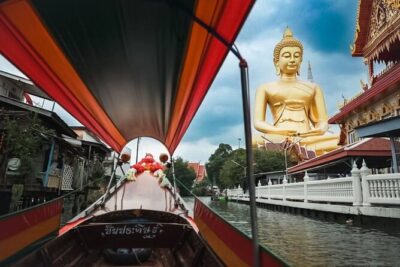
Bangkok Canal Tour: 2-Hour Longtail Boat Ride
Read our review →
Bangkok by Private Guide: Full Day Tour In and Around
Read our review →
City Highlights Temple and Market Walking Tour
Read our review →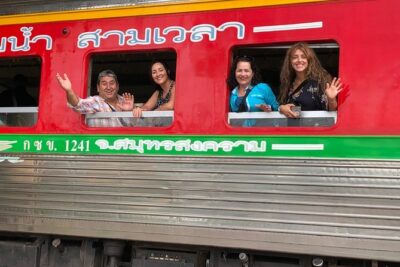
Half-Day Railway Market and Floating Market Tour in Thailand
Read our review →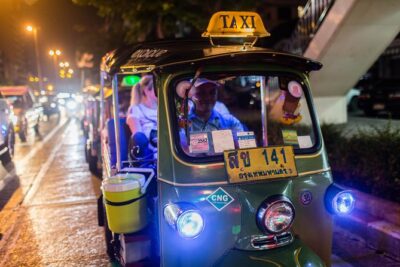
Bangkok by Night: Temples, Markets and Food Tuk-Tuk Tour
Read our review →
Grand Palace, Wat Pho, and Wat Arun Guided Tour
Read our review →