
Reviewed · HISTORICAL TOURS
Bangkok: Historic Siam and Cultural Gems Walking Tour
Bangkok’s past is packed into a surprisingly walkable set of districts, and this experience links the city’s temples, old canals, markets, royal parks, and Chinese quarter. I like the way the two guided themes, Historic Siam and Bangkok Cultural Gems, cover both famous sights and less obvious corners. I also like the three-day window, which gives you room to spread out the walking instead of racing through it.
The main drawback is that the advertised stops cover a very large part of Bangkok, while the guided walks themselves last about one to two hours. You should treat this as two short themed introductions, supported by app routes, rather than one single walk that visits every place listed.
In This Review
- Key points at a glance
- What the $24 ticket really gives you
- Old Bangkok, canals, forts, and prison history
- Temples that connect Thai and European design
- Golden Buddhas, Chinese Bangkok, and old trade streets
- Little India, flowers, medicine, and royal gardens
- Old capital symbols and Bangkok’s royal story
- Siam’s malls, shrines, and modern Bangkok
- How the guide and app work together
- Who should book it?
- FAQ
- How long does the walking experience last?
- What tours are included?
- Is the Vox City app included?
- Does the price include transportation?
- Are food and drinks included?
- Are attraction admission fees included?
- How many people can join the activity?
- Can I cancel for a full refund?
- My verdict on the Historic Siam and Cultural Gems Walking Tour
Key points at a glance
- Two guided walks: Historic Siam and Bangkok Cultural Gems focus on different parts of the city.
- Three days of flexibility: Your ticket remains valid for three days after first use.
- Seven self-guided routes: The Vox City app adds extra walks with audio in five languages.
- Temples and markets: Expect Wat Pho, Wat Traimit, Chinatown, Phahurat Market, and Pak Khlong Talat among the possible highlights.
- A $24 orientation: The price is fair if you use both guided walks and the app routes, but entry fees, food, and transport cost extra.
- Small review sample, strong praise: The available feedback specifically praises friendly guides and informative commentary, with Andy named as a standout guide.
What the $24 ticket really gives you
At $24 per person, this is best understood as a city orientation package, not a temple-entry tour. You receive two guided walking tours, a mobile ticket, access to seven self-guided walks through the Vox City app, and audio commentary in five languages.
That combination matters in Bangkok. The city’s main sights are spread across several districts, and it is easy to spend a morning admiring one temple without understanding how it connects to the old capital, Chinese trade, royal power, or modern shopping streets. A guide can give you that frame quickly. The app then lets you continue at your own pace.
You do not pay for attraction admission, food, drinks, or transportation. That keeps the basic price low, but you should budget separately if you want to enter museums or temple interiors along the way. Wat Pho, Wat Traimit, the Museum of Siam, and other named sights may be stops for orientation, but the ticket does not include their admission.
The flexible timing is one of the strongest practical features. The ticket is valid for three days from first use, despite the experience being described as a one to two-hour activity. Use one guided walk on one day, the second on another, then open the app when you have a free hour. That approach makes far more sense than trying to cover the entire list in one outing.
More history walks around Bangkok:
- From Bangkok: Ayutthaya Historical Park Guided Day Trip
★ 4.6 · 3,020 reviews - UNESCO’s Ayutthaya Historical Park: Full-Day Tour from Bangkok
★ 4.5 · 1,559 reviews - From Bangkok: Historical Day Tour to River Kwai
★ 4.6 · 868 reviews
Old Bangkok, canals, forts, and prison history
The Historic Siam route begins in the old city, where Buddhist temples sit beside traditional Thai buildings and narrow waterways. One early stop is an ornate Buddhist temple with a marble exterior and a gold Buddha. The exact appeal here is the contrast: polished religious art set against the older urban fabric of Bangkok.
Pi Kun Bridge crosses Khlong Khu Mueang Doem, also known as Khlong Lot. This old city moat gives you a glimpse of Bangkok before broad modern roads took over. A short bridge crossing may not sound like a headline sight, but it helps explain the shape of the old city and makes the walk feel tied to place rather than simply a parade of monuments.
Fort Mahakan adds a military note. Built in the 18th century, it is one of Bangkok’s oldest structures. I like having a fort on a temple-focused route because it widens the story. Bangkok was not only a religious center. It was also a defended royal capital, shaped by waterways, walls, and political change.
You then reach Rommaninat Park, a useful pause in the walking. The park has flowers, plants, trees, and the old Bangkok prison, now presented as a museum about Thailand’s prison system. Its earlier use as a place of punishment gives the park a darker layer. You will want to allow extra time here if the museum is open and admission is available, since the guided walk price does not include entry.
Another stop is a preserved old Bangkok street lined with shops selling Buddha statues and religious souvenirs. This is a good place to see how devotional objects move from temple culture into everyday commerce. It is also a reminder to shop respectfully. Religious images are not just decorative pieces, even when they are sold in rows.
Temples that connect Thai and European design
One of the listed monasteries combines Thai and European influences. That mix is worth noticing because Bangkok’s religious architecture is not frozen in one style. A temple may use familiar Thai forms while borrowing proportions, materials, or decorative ideas from Europe.
The route also includes Wat Racha Burana, described as a restored monastery ruin on the city island in Ayutthaya Historical Park. This stop needs a practical note: Ayutthaya is a separate historic destination from central Bangkok, so you should confirm the exact route and meeting details before assuming every named place belongs to the same walking session. The broad list appears to represent places connected to the two themes and app routes, not one continuous stroll.
Wat Pho is the major temple name here. The complex contains more than 1,000 Buddha images and statues, with the Reclining Buddha, Phra Buddha Saiya, as its best-known sight. Even if you have seen photographs, the scale and detail are difficult to grasp until you are near it.
Wat Pho is also valuable as a lesson in how Bangkok’s temples work. It is not only a single statue inside a building. It is a large religious complex with courtyards, chapels, images, and layers of use. Plan for respectful clothing and behavior at temple stops, although specific dress rules are not stated as part of this ticket.
Golden Buddhas, Chinese Bangkok, and old trade streets
The Cultural Gems route gives more attention to Bangkok’s Chinese community and the old commercial districts around Chinatown. Wat Mangkon Kamalawat is the city’s largest and most important Chinese temple. Founded in 1871 as Wat Leng Noei Yi, it offers a different religious setting from Bangkok’s Thai Buddhist monasteries.
The contrast is the point. Thailand’s capital has always been shaped by people, faiths, and trade routes crossing paths. A Chinese temple, a Thai monastery, an Indian market, and a royal park can all sit within the same broad central area.
Chinatown Gate marks the center of Bangkok’s Chinatown. The enormous red gate functions as a roundabout and includes plaques about the Chinese community. It is an easy landmark for finding your bearings, and it gives the neighborhood a clear civic symbol rather than leaving its identity to the shop signs alone.
Sampheng is the older market district of Chinatown. Its narrow commercial streets are associated with long-established trade, and the experience here is more about movement, merchandise, and street-level detail than grand architecture. You may find the lanes crowded, so keep the pace manageable and watch your footing.
Wat Traimit Withayaram Worawihan is another major stop. It is known for the world’s largest solid-gold Buddha statue, weighing 5.5 tonnes and measuring three meters high. The figure’s size and material make this one of Bangkok’s most memorable religious sights, but the wider temple matters too. The walk helps connect the statue to the Chinese quarter around it.
Food is part of the Chinatown experience. Kuai Chap Uan Photchana is a Michelin-rated street food restaurant known for kuai chap soup and taco-style dishes, with vegetarian choices available. Food is not included, so you pay directly for anything you order. This is a useful optional stop if you want the walk to include a taste of local life rather than only monuments.
More walking tours in Bangkok:
- Bangkok: City Highlights Temple and Market Walking Tour
★ 4.5 · 3,990 reviews - Bangkok: Grand Palace and Wat Phra Kaew Guided Walking Tour
★ 4.4 · 2,417 reviews - Bangkok: Wat Pho and Wat Arun Guided Walking Tour
★ 4.6 · 1,720 reviews - Bangkok Authentic Tasting Thai-Chinatown Walking Food Tour
★ 4.9 · 852 reviews
Little India, flowers, medicine, and royal gardens
Phahurat Market is known as Bangkok’s Little India and serves as the focal point of Indian life in the area. It is a strong counterpoint to Chinatown, showing how distinct communities have shaped central Bangkok through shops, food, faith, and daily commerce.
Pak Khlong Talat is Bangkok’s well-known flower market. It operates around the clock and also sells fruit and vegetables, but flowers are the main draw. This is one of the most sensory stops on the wider program. You may see flowers arriving from across Thailand, with sellers preparing them for homes, ceremonies, shrines, and businesses.
Saranrom Palace Park offers a quieter change of pace. Once reserved as an outdoor retreat for the Thai royal family, it contains rare and native plants, old trees, colorful flowers, and memorials. The park is close to the Grand Palace area, so it helps you see the royal quarter as more than a line of formal buildings.
The Berlin Pharmaceutical Museum presents the history of Western-style medicine introduced to Bangkok in the 1700s. It occupies the building where Dr. Chai Chaiyanuwat practiced medicine and honors his work. This is a small-scale historical stop with a personal focus. You will not get the same grand visual impact as Wat Pho, but you may gain a better sense of how modern medical practice entered Thai society.
Old capital symbols and Bangkok’s royal story
The Drum Tower reflects the early development of Bangkok as the new capital. Its design combines Chinese and Thai elements and follows a model from the Ayutthaya period. It is the kind of detail that can be easy to miss without explanation, since the building is less famous than the city’s major temples.
Wat Ratchanatdaram is another important architectural stop. Its 37 bronze-colored spires create a distinctive profile, and the temple sits beside the Royal Reception Pavilion and three smaller pavilions. The setting makes it useful for understanding how religious buildings and royal ceremonial spaces were placed together.
Wat Sa Ket rises on a 75-meter artificial hill. Reaching the top takes effort, but the view is the payoff. Inside, you will find a golden bell-shaped structure, colored walls, detailed paintings, and miniature sculptures. The climb is worth treating as a real part of the tour, not a casual flat walk.
Nearby, the Giant Swing sits in front of Wat Suthat, one of Bangkok’s oldest and most impressive Buddhist temples. The structure was once tied to religious ceremony, and its scale makes sense only when you see it against the temple and surrounding city streets.
The King Prajadhipok Museum adds political context. Housed in an early 1900s neoclassical mansion, it explains the life of King Prajadipok, Rama VII, whose reign included Thailand’s transition from an outright monarchy to a constitutional monarchy in 1932. This is a worthwhile stop for anyone who wants the walking tour to explain modern Thailand, not just its older religious traditions.
Siam’s malls, shrines, and modern Bangkok
The tour also reaches Siam Square, where large shopping centers meet lanes of street vendors. This is modern Bangkok in a compact form: polished retail, casual food, youth culture, and small businesses sharing the same district.
The Erawan Hindu shrine sits at the heart of the capital. Built in 1956 to ward off bad luck from a nearby hotel, it remains one of Bangkok’s best-known Hindu shrines. Its location beside major shopping areas shows how old religious practice and modern commerce operate side by side.
Wat Pathum Wanaram adds another religious stop to the Siam area. The Phrarajasatta Pavilion, constructed in 1993, is a beloved addition to this mid-19th-century Buddhist temple. Its placement near one of Bangkok’s busiest retail zones gives you an especially clear contrast between quiet temple grounds and the city’s commercial core.
Krungthong Plaza, near City Complex Pratunam, brings the route into the shopping district. This may appeal most if you want a broad look at Bangkok’s retail zones rather than a temple-only walk. It also reinforces the need to pace yourself. The city’s central districts contain many sights, but the experience is not designed to provide long shopping sessions at every stop.
Talat Phlu is another neighborhood with a strong food-and-rail identity. Its railway station is surrounded by food stalls and shophouses. This is the sort of place where the ordinary setting is the attraction. It gives you a look at a local neighborhood built around transport and small-scale trade.
The list also includes an entertainment complex and red-light district in Khlong Toei that describes itself as the world’s largest adult playground. This is an adult-oriented area, not a family attraction, and you should decide in advance if that subject fits your interests. Its inclusion shows the wide range of Bangkok life covered by the app-based routes.
How the guide and app work together
The human guide is most useful for the first layer of understanding. You can ask questions, get the basic story of a district, and avoid walking past an important feature without noticing it. The available feedback specifically praises friendly, informative guiding, and Andy is named as a guide who made the day especially pleasant.
The app serves a different purpose. It includes seven self-guided walks with audio commentary in five languages. Use it after the guided tours if you want to revisit a neighborhood, or use it when your schedule does not fit a set walking departure.
Do not expect the guide or app to replace full visits to every museum and temple. The ticket is for walking and commentary. Attraction admission, transportation, food, and drinks are separate, and no transfer service is included.
The activity allows service animals, is near public transportation, and most people can participate. The maximum group size is listed as 99, so the actual feel may depend on the departure you choose. If you prefer a very intimate guide experience, check the current group arrangements before booking.
Who should book it?
You should book this for a first Bangkok visit if you want a quick sense of how temples, royal history, Chinese and Indian communities, markets, and modern shopping districts fit together. It is also useful if you have only short windows of free time and want the app to fill gaps between other plans.
I would be more cautious if you want admission to every major sight, private guiding, hotel transfers, or a single carefully paced route. Those are not part of the package. The huge spread of named stops can also create unrealistic expectations if you read it as one complete walking circuit.
The free cancellation policy adds some comfort: cancel at least 24 hours before the local start time for a full refund. Changes or cancellations within 24 hours are not refunded.
FAQ
How long does the walking experience last?
The guided walking activity is approximately one to two hours. The ticket itself can be used for three days from first use, allowing you to spread the guided tours and app walks across more than one day.
What tours are included?
The ticket includes the Historic Siam walking tour and the Bangkok Cultural Gems walking tour.
Is the Vox City app included?
Yes. The ticket includes the Vox City app with seven self-guided walking tours and audio commentary in five languages.
Does the price include transportation?
No. Transportation is not included, so you must arrange and pay for transport to and between areas as needed.
Are food and drinks included?
No. Food and drinks are separate. Optional food stops include Kuai Chap Uan Photchana in Chinatown, which offers kuai chap soup, taco-style dishes, and vegetarian options.
Are attraction admission fees included?
No. Entry to attractions is not included in the $24 price.
How many people can join the activity?
The maximum group size is listed as 99 travelers.
Can I cancel for a full refund?
Yes, if you cancel at least 24 hours before the experience start time. Cancellations or changes made less than 24 hours before the start time are not refunded.
My verdict on the Historic Siam and Cultural Gems Walking Tour
At $24, this is a sensible buy if you use the flexibility well. Take one guided walk for orientation, use the second to explore another side of Bangkok, and treat the seven app routes as bonus material rather than trying to chase every listed stop.
I especially like the mix of Wat Pho, Wat Traimit, Chinatown, Little India, the flower market, royal parks, and Siam Square. The strongest value comes from the connections between those places. If you want a low-cost introduction with friendly guiding, practical audio support, and room to set your own pace, book it. If you want a private, admission-included sightseeing day, choose something more focused.
Just added around Bangkok
- Bangkok: Fallabella River Front Iconsiam★ 4.7 · 3 reviews
- Private Grand Palace Bangkok City Tour & Klong Longtail Boat Trip★ 4.5 · 3 reviews
- Bangkok: Divana Scentuara Spa Chidlom Branch E-Voucher★ 5.0 · 3 reviews
- Bangkok: Flower Market & Sunset Walking Tour★ 3.7 · 3 reviews
- Private Shore Excursion: Best of Bangkok in a day★ 3.5 · 3 reviews
- From Bangkok: Kanchanaburi, River Kwai and Erawan Waterfall Tour★ 3.0 · 3 reviews
- Private Damnoen Saduak and Maeklong Railway Market Tour(min 2pax)★ 5.0 · 3 reviews
- From Bangkok : Pattaya Island Trip with Activities & Drone Photo★ 4.0 · 3 reviews
Historical Tours, compared.
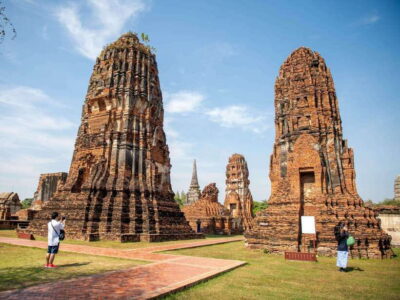
UNESCO’s Ayutthaya Historical Park: Full-Day Tour from Bangkok
Read our review →
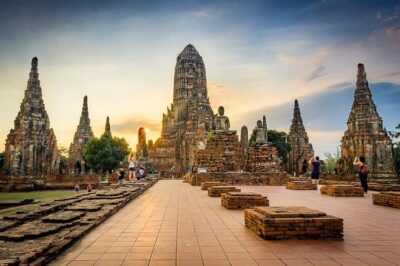
Historical City of Ayutthaya – Unesco Full Day Tour From Bangkok
Read our review →
Private Excursion to Floating Market and Ayutthaya World Heritage
Read our review →
Private Excursion to Ayutthaya, UNESCO World Heritage site with Boat Tour
Read our review →
River Kwai Day Tour from Bangkok – History, Scenery & Culture
Read our review →Browse the lists this tour appears in