
Reviewed · BANGKOK STREET FOOD TOURS
Bangkok: Chinatown Food Tour with Michelin Food Stalls
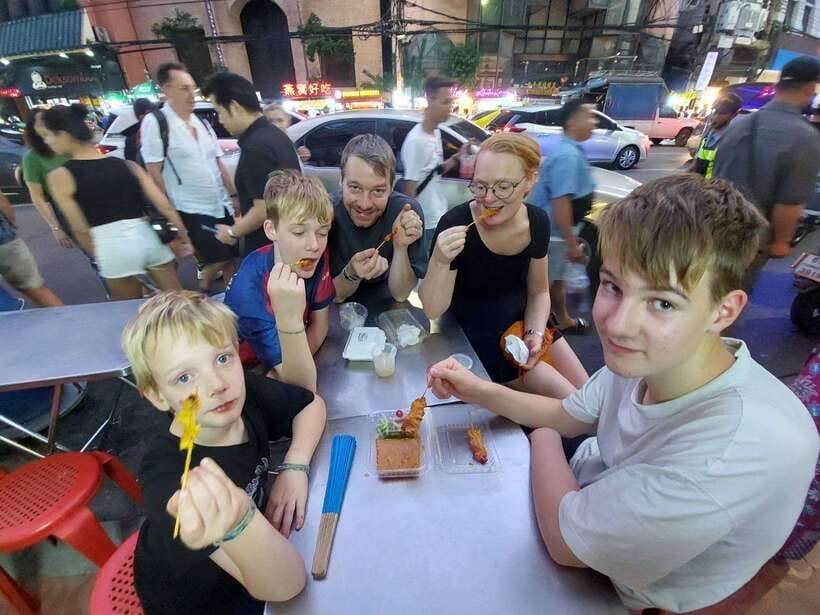
Yaowarat is at its most exciting when neon signs come on and food stalls take over the streets. This three-hour walk serves more than 10 tastings, from dumplings and roasted meats to noodles, seafood, and Chinese sweets, with a Michelin-recognized stop along the way.
I like the small groups of up to eight, which make it easier to cross crowded streets and ask questions. I also like the guide-led food choices: you can try places you might pass by on your own, without spending half the evening guessing what to order.
The main catch is that this is a serious eating session, not a light snack walk. Vegetarians and vegans should skip it, and the moderate walking, busy streets, and shared food make it a poor fit for wheelchair users or anyone under 10.
In This Review
- Key points to know before you go
- Why Yaowarat works so well for a food walk
- Meeting at Wat Mangkon Kamalawat
- The first tastings: Thai-Chinese street food
- Finding the lesser-known food stops
- The Michelin-recognized stop
- Sweet finishes and a Chinatown tea stop
- Three hours, moderate walking, and crowded streets
- What the $36 price really covers
- Who should book this Chinatown tour?
- Small details that improve the evening
- Should you book it?
- FAQ
- Where does the Bangkok Chinatown food tour start?
- Where does the tour finish?
- How long does the food tour last?
- How many food tastings are included?
- Does the tour include Michelin-recognized food?
- Is the tour suitable for vegetarians or vegans?
- Is the tour suitable for children and wheelchair users?
- What is included in the price?
Key points to know before you go
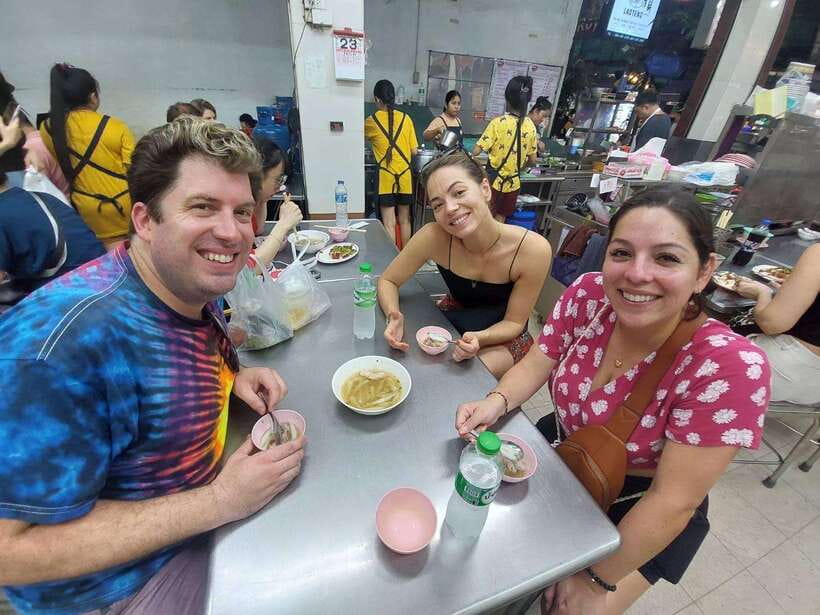
- More than 10 tastings: Expect a full evening of Thai-Chinese street food, drinks, and sweets.
- Michelin-recognized stop: The route includes at least one food stall with Michelin recognition, and some departures have included two recognized vendors or restaurants.
- Maximum eight people: The compact group helps your guide keep everyone together in crowded Yaowarat.
- Local guides make the difference: Guides including Peak, Eve, Na, Sunday, K, Ne, and Biga have been praised for humor, care, and clear explanations.
- Start at Wat Mangkon: The meeting point is Wat Mangkon Kamalawat, also called Wat Leng Noei Yi, and the walk ends at the Chinatown Gate.
- Come hungry: Portions can be generous, and several people have found themselves completely full before the three hours are over.
Why Yaowarat works so well for a food walk
Bangkok’s Chinatown is not just a place to eat. It is a district shaped by Chinese immigration, family-run food businesses, Thai cooking, and generations of adaptation. The result is a food scene where Chinese techniques and ingredients meet Thai heat, herbs, seafood, and sweet-sour flavors.
That blend is the real subject of the tour. Your guide explains what you are eating, but also why the area developed this way and how Chinatown’s food traditions have changed over time. I find that context useful because a plate of noodles or a steamed bun becomes more than a quick bite. You begin to notice the Chinese roots, Thai touches, and small differences between stalls.
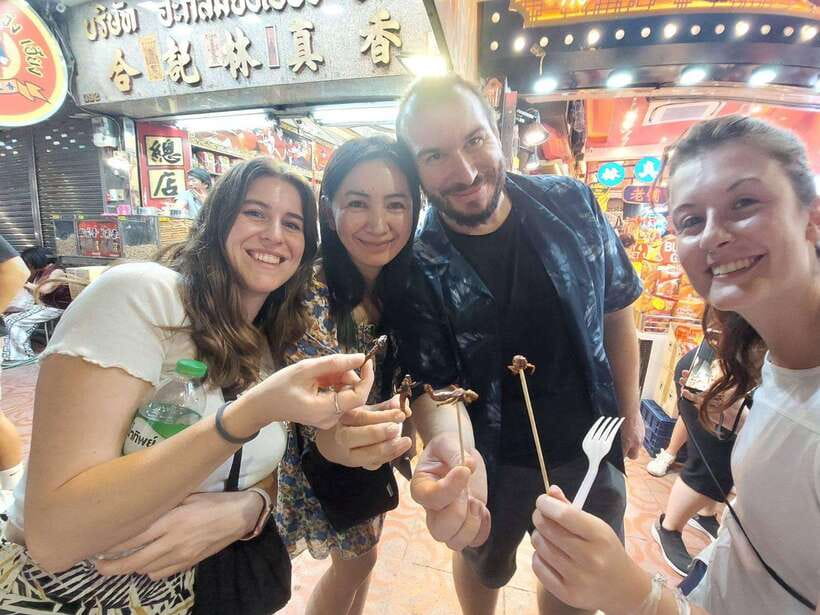
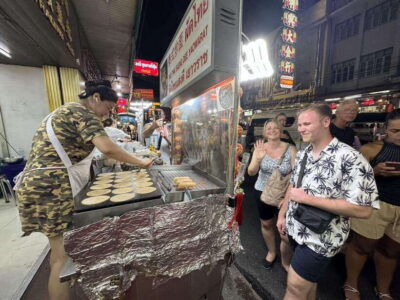
The evening setting helps. Neon signs light the main road and side lanes, cooks work over hot woks, and the smell of frying garlic, grilled meat, seafood, and sweet dough hangs in the air. It is lively, noisy, and crowded, so you should expect a city walk rather than a calm restaurant meal.
More street food tours in Bangkok:
- Bangkok: Backstreets Food Tour with 15+ Tastings
★ 4.9 · 2,880 reviews - Bangkok Backstreets Food Tour with 15+ Tastings
★ 5.0 · 1,926 reviews - Bangkok: Michelin Guide Street Food Tour by Tuk Tuk
★ 4.4 · 1,274 reviews
Meeting at Wat Mangkon Kamalawat
The tour begins at Wat Mangkon Kamalawat, also known as Wat Leng Noei Yi. This is a useful starting point because the temple connects directly with Chinatown’s Chinese Buddhist identity and gives the route a cultural opening before the eating begins.
You should arrive ready to walk and eat soon after meeting your guide. The tour does not include hotel pickup, so you are responsible for getting to Wat Mangkon and arranging your own return from the Chinatown Gate.
Your guide will lead the group into Yaowarat and keep the route moving through crowded streets. This matters more than it may sound. Chinatown can be confusing at night, and a good guide helps you cross roads, stay with the group, and reach small food stops without wasting time.
The guide assigned to your departure can vary. Names praised in recent feedback include Peak, Eve, Na, Sunday, K, Ne, Biga, and Kriag. Their styles differ, but the strongest pattern is attentive hosting. Peak is often described as funny, warm, and energetic, while Na and Eve are noted for careful explanations and looking after the whole group.
The first tastings: Thai-Chinese street food
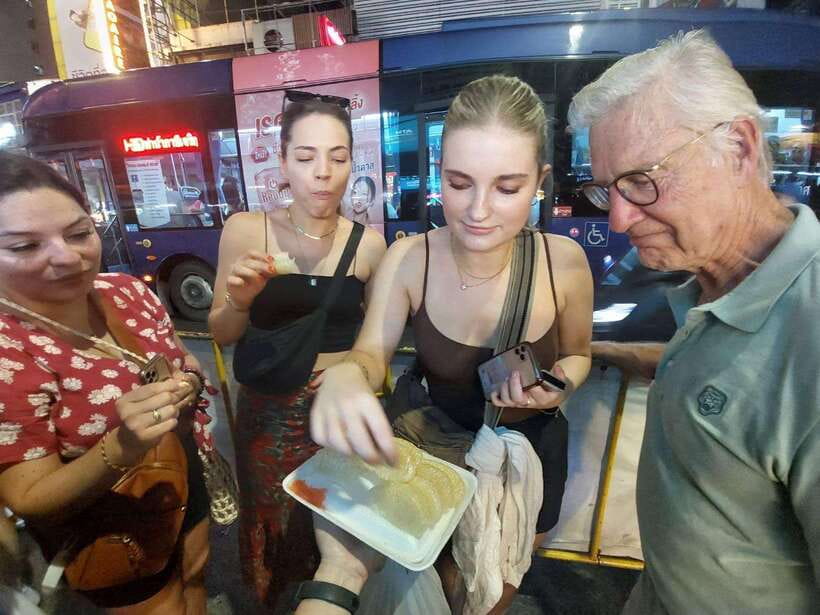
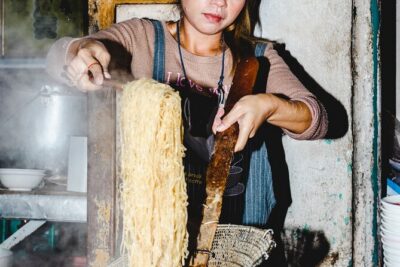
The early part of the walk introduces the broad range of Yaowarat cooking. Exact stops can vary, but the food described for this experience includes crispy spring rolls, barbecued meats, steamed dumplings, stir-fried dishes, noodle soups, seafood, and Chinese-style snacks.
This variety is one of the tour’s best features. You are not ordering one large dish and calling it dinner. Instead, you try small portions across several stops, which gives you a better feel for how the neighborhood eats.
Some dishes may be familiar, while others may be new to you. One person noted that the food was delicious but not especially unusual, so do not book this expecting extreme or daring food at every stop. The strength is the range and the chance to taste several well-established local specialties in one evening.
Your guide also helps with the practical side of street food. You can ask what an item contains, how it is normally eaten, and how spicy it may be. One guide helped a participant find gluten-free choices, and another adjusted the selection for a pescatarian. Dietary needs must be shared in advance, though the tour is not suitable for vegetarians or vegans.
Finding the lesser-known food stops
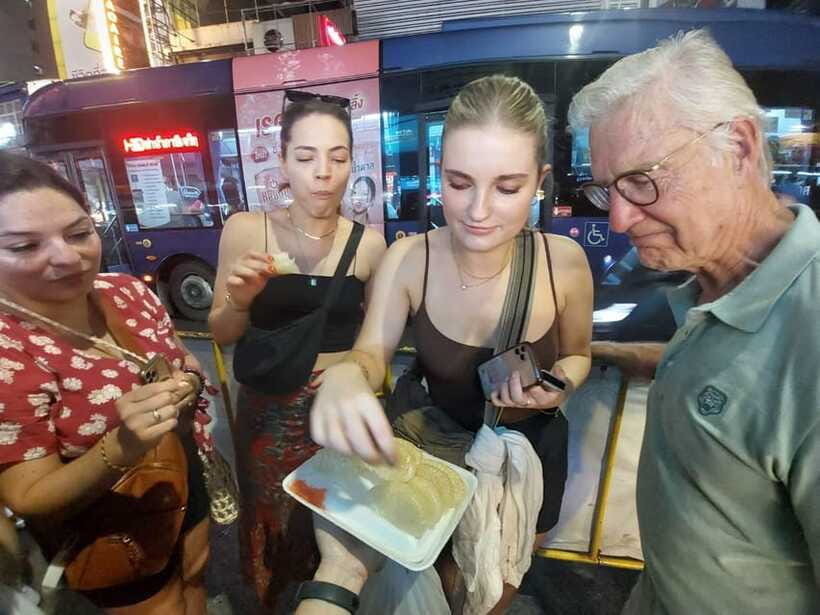
The value of a guide becomes clearer as the route leaves the most obvious parts of Yaowarat. Bangkok Chinatown has plenty of food that is easy to spot, but it also has small stalls and modest eateries that can be hard to judge if you do not read Thai or know the local food customs.
This is where the tour saves you time and uncertainty. Your guide chooses the stops, explains what to try, and handles the rhythm of ordering and sharing. You get a sample without having to commit to a large portion at every place.
The food may include fragrant noodle soup, spicy seafood, roasted meats, dumplings, and fried or stir-fried dishes. These are not presented as a formal tasting menu. You eat at working neighborhood businesses, often in the middle of the evening rush, so the setting is part of the experience.
There are trade-offs. Shared tastings mean you may use serving spoons, chopsticks, or your hands around the same food. Carry hand sanitizer or wipes, since these are not specifically included. Seating may also be limited, and you should not expect each stop to offer a long, quiet break.
More food and drink tours in Bangkok:
- Bangkok: White Orchid Chao Phraya Dinner Cruise free Beer
★ 4.4 · 4,573 reviews - Bangkok by Night: Temples, Markets and Food Tuk-Tuk Tour
★ 5.0 · 3,752 reviews - Bangkok Midnight Food Tuk Tuk Tour
★ 5.0 · 2,542 reviews - Old Siam Bangkok Food Tour with 15+ Tastings
★ 5.0 · 867 reviews
The Michelin-recognized stop
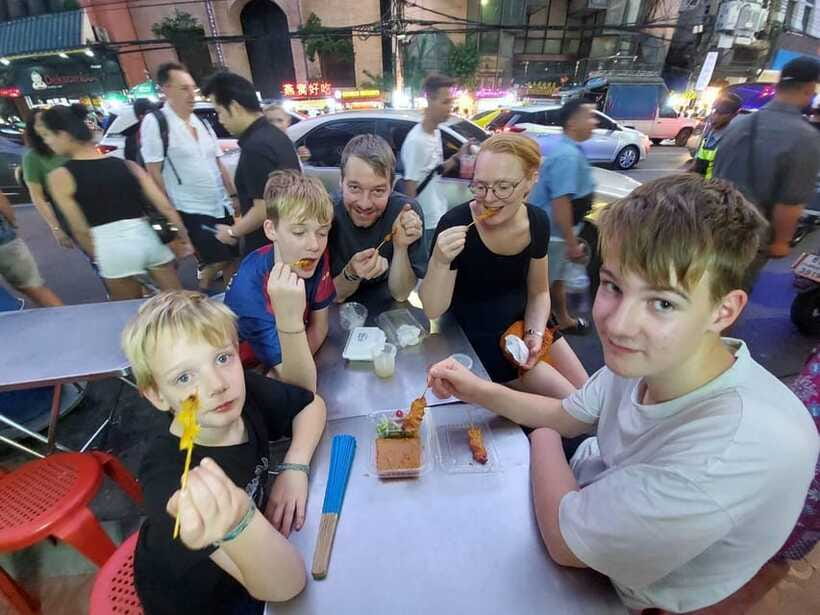
A Michelin-recognized food stall is one of the headline attractions. Michelin recognition does not turn the tour into fine dining. It means you get to try a specialty from a vendor that has earned attention from a respected food guide, while still eating in Chinatown’s informal street-food setting.
That combination is more interesting than a standard restaurant visit. You see the food prepared in the same kind of public setting that defines Yaowarat, then taste the dish with your guide explaining what makes it worth seeking out.
The exact number of recognized stops may differ by route or departure. The activity promises a stop at a Michelin-recognized stall, while some participants have experienced two Michelin-recognized vendors or restaurants. It is best to treat one as guaranteed and two as a pleasant possibility.
Do not judge the tour only by the Michelin label. Several of the strongest food memories may come from the ordinary-looking places between the headline stops. The point is not to collect awards. It is to understand how highly regarded food can exist alongside everyday neighborhood cooking.
Sweet finishes and a Chinatown tea stop
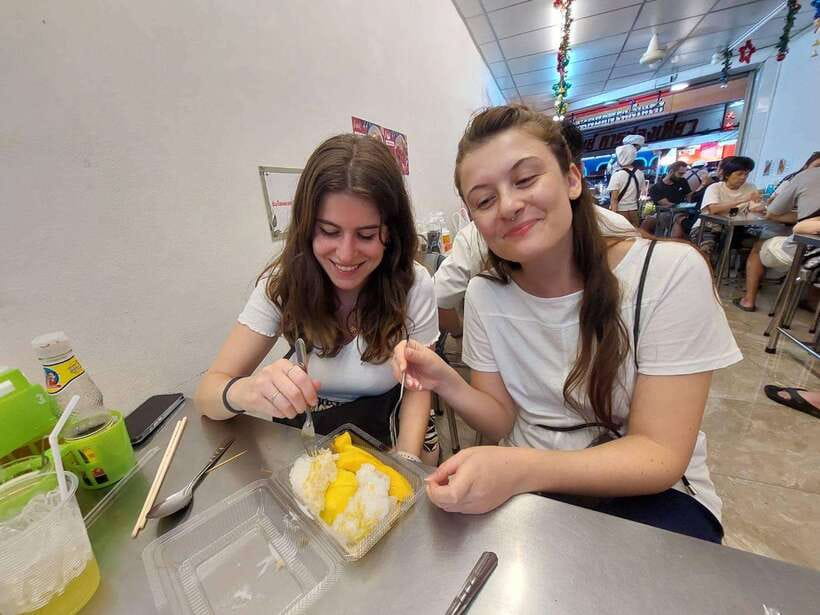
After the savory dishes, the route finishes with Chinese desserts and snacks. Depending on the evening, this can include freshly made buns, local-style pancakes, mango sticky rice, or similar sweet bites, paired with a refreshing drink from a traditional Chinatown tea stall.
The dessert course is important because it changes the pace and flavor of the evening. After grilled food, noodles, dumplings, and seafood, a soft bun or sweet rice dish gives you a gentler finish.
Mango sticky rice was a favorite stop for one participant, but the exact selection is not fixed in the information provided. You should expect traditional Chinese or Thai-Chinese sweets rather than a guaranteed list of named desserts.
Some departures may also include a secret bar or an informal drink stop, but this is not listed as a standard inclusion. Do not book the tour expecting nightlife access. The dependable feature is a sweet ending and a Chinatown tea drink.
Three hours, moderate walking, and crowded streets
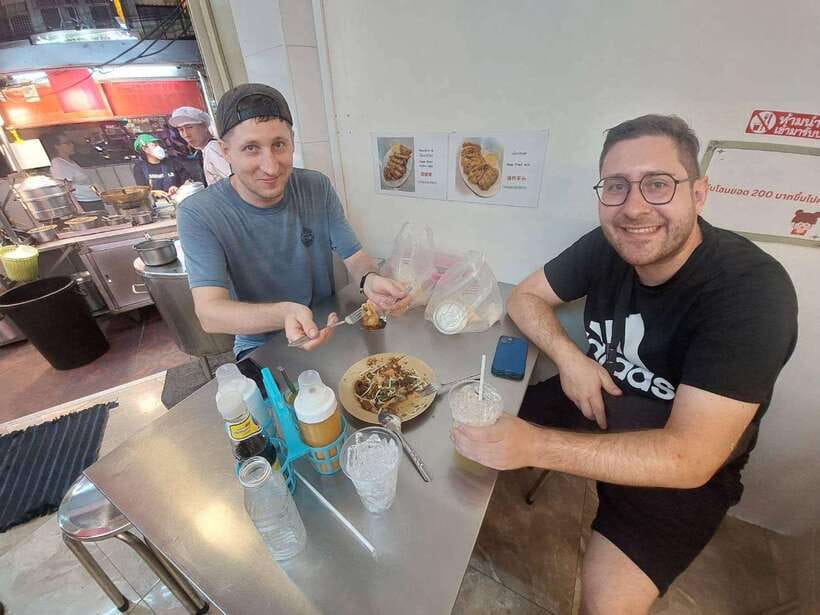
The route covers Chinatown on foot for about three hours. The walking distance is described as moderate, but the conditions can make it feel more demanding than the mileage suggests. Streets are crowded, sidewalks can be tight, and you may need to stop, turn, and cross roads while staying close to the group.
Comfortable shoes are essential. This is not a good evening for new sandals or hard-soled dress shoes. Bring a camera if you want photos of the signs, food preparation, and street scenes, but keep your belongings manageable while walking.
The small-group limit of eight is a major practical advantage. A larger group would be harder to keep together and less personal at busy food stalls. With eight or fewer, your guide has a better chance of answering questions, checking dietary needs, and making sure nobody is left behind.
The pace is usually designed around eating rather than rushing from landmark to landmark. One participant found the timing relaxed and said the group had enough time to try each dish properly. Another departure ran a little over three hours. Allow some flexibility if you have a strict evening appointment afterward.
What the $36 price really covers
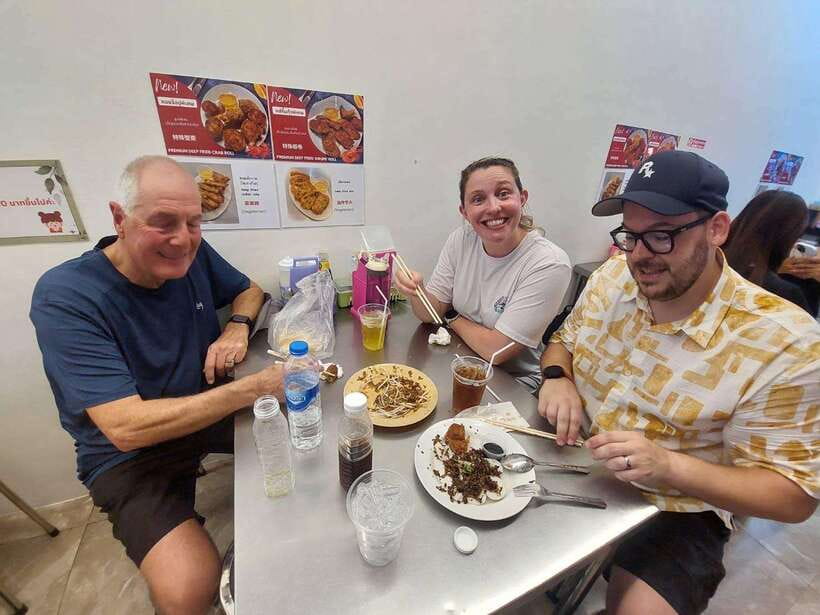
At $36 per person, the tour offers a strong food-to-cost ratio if you plan to sample widely. The price includes more than 10 tastings, a bottled water, an English-speaking guide, and a small group. You are also paying for local food selection, ordering help, cultural explanation, and route planning.
Buying the same number of dishes independently would be difficult for one person. You would need to find the stalls, decide what to order, manage portions, and avoid filling up too early. The group format lets you taste across many stops without ordering a full meal at each one.
The value is especially good for a first visit to Bangkok. You get an organized introduction to Chinatown in one evening, and the tour can help you identify places or dishes worth revisiting later.
Still, the $36 does not cover hotel transfers or personal spending. Bring some money for anything outside the included food and water. If you already know Yaowarat well and prefer choosing every dish yourself, a guided route may feel less necessary.
Who should book this Chinatown tour?
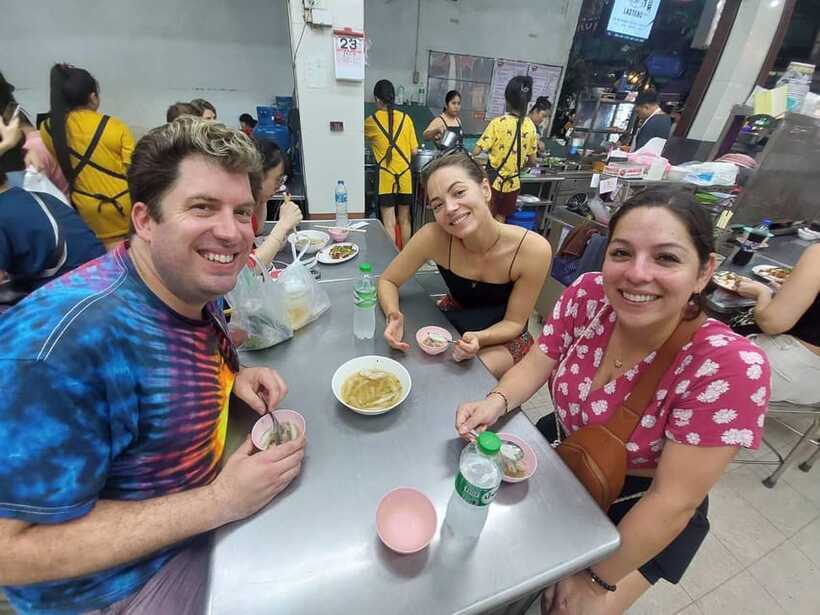
I would recommend it most to first-time visitors who want a broad introduction to Bangkok food without having to research every stall. It also suits solo visitors, since tasting ten or more dishes alone would be expensive and impractical.
It works well for couples and small groups who enjoy trying many things rather than sitting down for one long meal. The social format can also make the evening more fun, especially when the guide keeps the mood light and brings the group together.
You should think twice if you have strict dietary limits. Gluten-free choices and some pescatarian adjustments may be possible with advance notice, but vegetarians and vegans are specifically excluded. Children under 10 are not accepted, and wheelchair users should choose another activity because of the walking conditions.
People who dislike crowds, shared food, or uncertain seating may find the route tiring. Yaowarat is exciting precisely because it is active and informal, but that also means noise, heat, foot traffic, and changing street conditions.
Small details that improve the evening
Eat lightly beforehand, but do not arrive after a full meal. The tastings can be generous, and the tour is designed to leave you well fed. Several people finished completely full, while one person described trying more than 15 dishes.
Tell your guide about allergies and dietary needs before the tour begins. Guides have helped with gluten-free and pescatarian choices, but the available alternatives may reduce the range of food you can taste.
Wear comfortable walking shoes and carry hand sanitizer or wipes. Water is included, but you may also want to bring a little cash for personal expenses.
The tour ends at the Chinatown Gate rather than returning to your hotel. This gives you a useful point from which to continue your evening, but you need to arrange your own transport afterward. One guide even helped organize and bargain for a ride, though that kind of extra assistance should be treated as a kindness, not a promised service.
Should you book it?
Book this tour if you want a well-organized first taste of Yaowarat, especially if you are unsure where to eat or are traveling solo. The combination of 10-plus tastings, a Michelin-recognized stop, Chinese-Thai food culture, and a group capped at eight gives you a lot for $36.
Skip it if you are vegetarian or vegan, need wheelchair access, dislike crowded streets, or want a quiet restaurant meal. For everyone else, come hungry, wear good shoes, and allow the evening to run a little loose. The food is the draw, but a friendly guide such as Peak, Eve, Na, or Sunday can turn a long list of snacks into a much clearer picture of Chinatown.
FAQ
Where does the Bangkok Chinatown food tour start?
The tour starts at Wat Mangkon Kamalawat, also known as Wat Leng Noei Yi.
Where does the tour finish?
It finishes at the Chinatown Gate in Bangkok.
How long does the food tour last?
The scheduled duration is three hours, though one departure ran slightly over that time.
How many food tastings are included?
The tour includes more than 10 food tastings. Some participants have tried around 13 to 15 dishes during their evening.
Does the tour include Michelin-recognized food?
Yes. The experience includes a stop at a Michelin-recognized food stall. Some departures have included two Michelin-recognized vendors or restaurants.
Is the tour suitable for vegetarians or vegans?
No. The activity is not suitable for vegetarians or vegans. Dietary restrictions can be accommodated with advance notice, and pescatarian or gluten-free options may be possible.
Is the tour suitable for children and wheelchair users?
Children under 10 are not suitable for this activity, and it is not suitable for wheelchair users. The tour involves a moderate amount of walking through crowded streets.
What is included in the price?
The $36 price includes more than 10 food tastings, an English-speaking guide, a small group limited to eight participants, and bottled water. Hotel pickup, drop-off, and personal expenses are not included.
More Food Tours in Bangkok
- Bangkok Authentic Tasting Thai-Chinatown Walking Food Tour
★ 4.9 · 852 reviews - Bangkok: Tuk Tuk Adventure Chinatown Michelin Food & Temples
★ 4.3 · 725 reviews - Bangkok Tuk-Tuk Tour by Night with Chinatown Street Food Meal
★ 5.0 · 635 reviews - Bangkok: Must-Try Hidden Bike & Food Experience
★ 4.9 · 613 reviews
Just added around Bangkok
- Yoga in the Park Thailand★ 5.0 · 12 reviews
- Bangkok and Ayutthaya 3 Days★ 4.5 · 12 reviews
- Private Tour: Damnoen Saduak Floating Market and Bangkok City Temples★ 5.0 · 12 reviews
- Chinatown (Yaowarat Road) Neon Photoshoot★ 5.0 · 12 reviews
- Ayutthaya Day Tour By Coach and Cruise★ 4.0 · 12 reviews
- Bangkok Suvarnabhumi Airport: VIP Meet & Greet Service (Fasttrack)★ 3.5 · 12 reviews
- Bangkok: Wow Park Interactive Amusement & Science Park★ 4.5 · 12 reviews
- Afternoon Ayutthaya & Ancient Temples at UNESCO site By Road★ 4.5 · 12 reviews
Bangkok Street Food Tours, compared.
Bangkok Backstreets Food Tour with 15+ Tastings
Read our review →
Bangkok Authentic Tasting Thai-Chinatown Walking Food Tour
Read our review →
Tuk Tuk Adventure Chinatown Michelin Food & Temples
Read our review →
Bangkok Tuk-Tuk Tour by Night with Chinatown Street Food Meal
Read our review →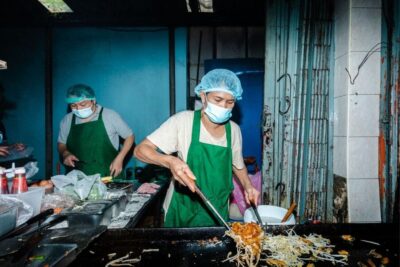
Browse the lists this tour appears in