
Reviewed · BANGKOK STREET FOOD TOURS
Bangkok: Chinatown By Night Walking Tour
Bangkok’s Chinatown is at its best after sunset, when neon signs glow over Yaowarat Road, food stalls take over the pavement, and narrow lanes reveal old temples, shrines, markets, and family-run shops. This two-hour evening walk connects the sights with the story of Bangkok’s Chinese-Thai community, including the gold trade and the district’s changing food scene.
I like the way the tour combines street food with local history, rather than treating Chinatown as one long eating stop. I also like the chance to see less obvious places, such as the Chareon Chai Community Museum, So Heng Tai Mansion, and Zhou Si Kong Shrine. The main drawback is the crowd: Chinatown can be hot, noisy, and tightly packed, and a group of up to 99 people may feel large on narrow streets.
In This Review
- Key Points
- Why Chinatown Works Better After Dark
- Starting at the Chareon Chai Community Museum
- A European Villa Mosque in a Chinese-Thai District
- Talat Kao and the Narrow Market Lane
- The Small Temple Near the Chao Phraya
- So Heng Tai Mansion in Talat Noi
- Temples and Shrines Along the Route
- Street Food Without Guesswork
- The Guides Make the Difference
- Is $15 a Fair Price?
- Heat, Crowds, and the Two-Hour Pace
- Who Will Enjoy This Walk Most?
- Should You Book the Bangkok Chinatown Night Tour?
- FAQ
- Where does the Bangkok Chinatown night tour start?
- What time does the tour begin?
- How long does the walking tour last?
- Where does the tour finish?
- Is food included in the tour price?
- What is included besides the guided walk?
Key Points
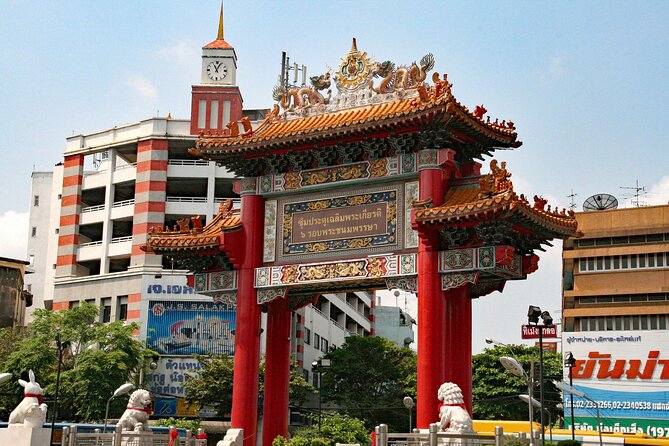
- Nighttime Chinatown atmosphere: Walk Yaowarat Road and its side lanes when the district is at its liveliest.
- History beyond the main road: Visit old community buildings, a European-style mosque, temples, shrines, and a Chinese courtyard mansion.
- Street-food guidance: Your guide can point out local dishes, drinks, and stalls, with chances to try food at your own expense.
- Guides who add personality: Guides including Nam, Jimmy, Tony, Bobby, Kim, Bass, Den, and Dan have led departures.
- Low price: At $15 per person, the tour is a useful introduction to a complicated part of Bangkok.
- Easy evening plan: Meet at Hua Lamphong at 6:30 pm, then return to the same meeting point after about two hours.
Why Chinatown Works Better After Dark
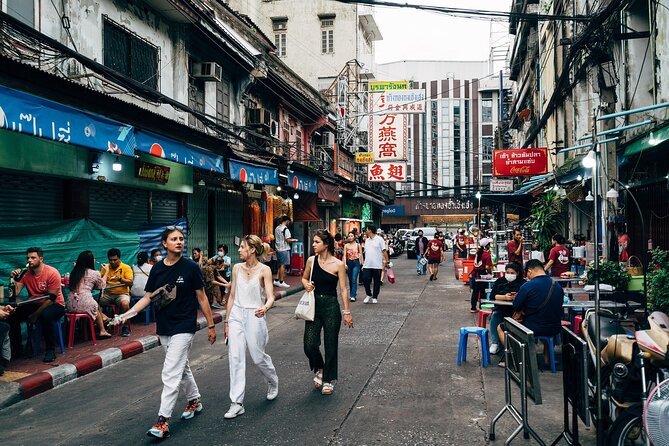
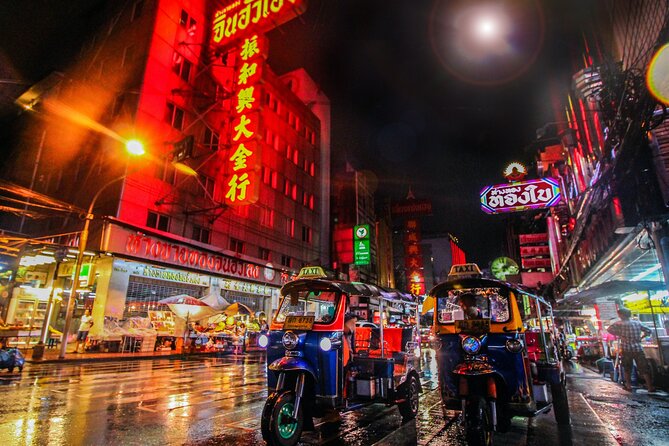
I find Bangkok’s Chinatown easier to appreciate at night than during the heat of the day. The signs light up, shopfronts open onto the pavement, and the smell of cooking follows you through the lanes. The district feels less like a collection of sights and more like a working neighborhood.
Your guide gives these scenes a frame. You learn why gold trading became so important, how Chinese and Thai traditions developed side by side, and what you are looking at when you pass a shrine or an old shop house. That context matters because Chinatown’s details are easy to miss when you are simply following the crowds.
The tour starts at Hua Lamphong, at Rong Muang in Pathum Wan, at 6:30 pm. The experience finishes back at this meeting point, which gives you a clear end point for arranging a taxi, public transport, or dinner afterward.
The advertised duration is about two hours, though one departure took around an hour and a half. I would keep your evening flexible rather than planning a tight reservation immediately afterward.
More street food tours in Bangkok:
- Bangkok: Backstreets Food Tour with 15+ Tastings
★ 4.9 · 2,880 reviews - Bangkok Backstreets Food Tour with 15+ Tastings
★ 5.0 · 1,926 reviews - Bangkok: Michelin Guide Street Food Tour by Tuk Tuk
★ 4.4 · 1,274 reviews
Starting at the Chareon Chai Community Museum
One of the most useful early stops is an old house converted into a community museum. Its purpose is to preserve the history, culture, and daily life of the Chareon Chai Community.
This is the kind of place that helps you understand Chinatown as a home, not only as a tourist district. The old building gives your guide a place to explain how families lived, worked, and maintained local customs. You get a closer look at the human side of the neighborhood before moving on to the brighter streets.
Entry to attractions is not included, so you should be prepared for the possibility of an extra admission charge if the group enters a site. The provided information does not specify an entrance fee or guarantee entry during every departure. Ask your guide on the night if you want to know which stops are open for interior visits.
A European Villa Mosque in a Chinese-Thai District
The old mosque built in the style of a European villa is an unexpected sight. In a district known for Chinese shrines, gold shops, and food stalls, its architecture offers a reminder that Bangkok’s communities have long overlapped.
I like this stop because it breaks up the usual Chinatown story. The walk is not only about Chinese influence. It also shows the area’s religious and architectural variety, with your guide explaining the details that you might otherwise pass without a second look.
You should dress and behave respectfully around religious buildings. The provided details do not promise an interior visit, so treat this as a possible exterior viewing and storytelling stop rather than a formal mosque tour.
Talat Kao and the Narrow Market Lane
Chinatown’s Old Market, known as Talat Kao, occupies a long, narrow alley leading off Yaowarat Road. This is where the walk shifts from broad street scenes to tighter spaces filled with old commercial activity.
The lane can feel cramped, especially when other people are shopping or eating. That is part of its appeal, but it also means you need to stay close to your guide and watch your footing. Comfortable shoes are more useful here than anything stylish.
This is also a good point to pay attention to how shops are arranged. Traditional shopfronts sit close to newer food businesses, and the contrast helps explain why Chinatown remains popular without becoming only a display for visitors.
More walking tours in Bangkok:
- Bangkok: City Highlights Temple and Market Walking Tour
★ 4.5 · 3,990 reviews - Bangkok: Grand Palace and Wat Phra Kaew Guided Walking Tour
★ 4.4 · 2,417 reviews - Bangkok: Wat Pho and Wat Arun Guided Walking Tour
★ 4.6 · 1,720 reviews - Bangkok Authentic Tasting Thai-Chinatown Walking Food Tour
★ 4.9 · 852 reviews
The Small Temple Near the Chao Phraya
The itinerary includes a small temple visible from the riverside, close to the Marine Department station on the Chao Phraya orange express line. Its location makes it easy to miss if you are focused on the main road.
I appreciate stops like this because they reward careful looking. The temple is not described as a large complex with a long visit. Instead, it adds another piece to the area’s religious character and connects Chinatown with the river that helped shape Bangkok’s trade and transport.
The tour does not include transportation on the orange express boat, and the stop should not be confused with a river cruise. You are exploring on foot, with the riverside setting providing part of the view.
So Heng Tai Mansion in Talat Noi
So Heng Tai Mansion is a nineteenth-century Chinese courtyard house in the historic Talat Noi neighborhood. Its layout offers a glimpse of the traditional Chinese residence style that is easy to overlook among modern Bangkok buildings.
A courtyard house is valuable here because it shows how architecture supported family life and community ties. Rather than seeing only the front of a shop, you get a sense of the private spaces behind the commercial streets.
The information provided does not confirm that the mansion’s interior is always open to the tour or that admission is included. You may view the exterior and hear the story even if an indoor visit is not possible. If entering the mansion matters to you, check with the guide at the start.
Temples and Shrines Along the Route
The walk also reaches an old royal monastery established during the Ayutthaya era. That places the site within a much older chapter of Thai history than the modern neon streets suggest.
The route includes Zhou Si Kong Shrine as well, an approximately 200-year-old shrine beside the Chao Phraya in Talat Noi. It is associated with prayers for good luck, good health, strength, and freedom from illness throughout the year.
These stops give the evening a calmer rhythm. You move from traffic and food stalls into places where people come to pray, make offerings, and keep local traditions alive. I would not expect a long guided religious lecture, but the guide can point out the meaning of the buildings and practices.
Because these are active religious sites, avoid treating them like theatrical backdrops. Follow local instructions, keep your voice low, and ask before taking close-up photographs of worshippers or ceremonies.
Street Food Without Guesswork
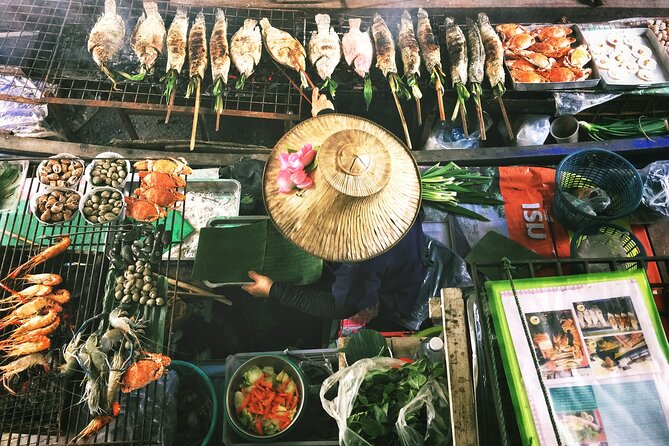
Food is one of the strongest reasons to book this walk. Your guide can explain popular Thai street foods, introduce Chinese-influenced dishes, and point out traditional Chinese herbal drinks. You may also have chances to purchase and try food from stalls along the way.
The tour description refers to tasting popular Thai street food, but the included list does not specifically promise a meal or a set number of tastings. I would budget extra cash for anything you want to eat. That approach also gives you freedom: you can try a little, skip a dish, or buy something that catches your eye.
This is where guide quality matters most. Jimmy is described as explaining the local food scene well, while Bobby took people to places with delicious food and connected the dishes to Thai culture. Den is noted for offering useful street-food suggestions and showing traditional herbal drinks.
If you have food allergies, dietary restrictions, or a low tolerance for spice, tell your guide before ordering. The supplied information does not promise vegetarian, allergy-safe, halal, or gluten-free arrangements.
The Guides Make the Difference
The experience depends heavily on the person leading your group. Nam is described as passionate and engaging, while Tony was especially attentive to a young participant struggling with the heat. Bass is noted for creating a reassuring experience and explaining both Chinatown’s stories and Chinese cooking.
Jimmy appears several times as a friendly guide who explains food and leads people through the district. Kim is praised for explaining Thai history and the culture of Thai-Chinese communities. Dan is described as taking people along smaller streets and pointing out signs that are easy to miss.
Those details suggest a tour that works best when you ask questions. Do not simply follow the group in silence. Ask about a dish, a shrine, a Chinese character on a sign, or the history of a building. A local guide can turn a quick walk past a shop into a useful piece of Bangkok history.
Guide assignments can change, so you should not book solely to meet a particular person. The names above are examples of guides who have led this experience, not a guarantee of who will be present on your date.
Is $15 a Fair Price?
At $15 per person, I consider this a good-value orientation to Chinatown. You receive a guided walk, local explanations, storytelling, and access to three free self-guided tours through the Vox City app.
The price is especially reasonable if you are new to Bangkok and want help understanding the district before exploring it alone. A guide can save you from wandering past the important places without realizing what they are.
Still, $15 does not cover everything. Attraction entry is not included, headphones are not provided, and food costs may be extra. The app tours add value only if you plan to use them after the walk, so do not count them as part of the live evening unless you actually want self-guided sightseeing later.
The maximum group size is listed as 99 people. That is a large possible group for narrow market lanes, though the actual number on your departure may be smaller. If you prefer quiet, highly personal guiding, a private walk or small-group option may suit you better.
Heat, Crowds, and the Two-Hour Pace
Bangkok remains warm after sunset, and Chinatown’s packed streets can make the heat feel stronger. One guide adjusted the pace when a young person was struggling, but you should still bring water and wear light clothing.
The crowds are not a flaw to hide. They are part of the evening character, especially around Yaowarat Road and the food stalls. The practical issue is that you may need patience when the group stops, and it can be harder to hear in traffic or beside busy vendors.
Bring comfortable walking shoes and keep your phone, wallet, and small belongings secure. The tour is near public transportation, but the exact route between stops is not detailed, so allow time for the guide to gather the group at the meeting point.
The mobile ticket is convenient. You receive confirmation when booking, and you can show the ticket on your phone. Free cancellation is available if you cancel at least 24 hours before the 6:30 pm start. Inside that window, the amount paid is not refunded, and changes are not accepted.
Who Will Enjoy This Walk Most?
I would choose this tour if you want a first look at Chinatown without spending a full day inside museums or planning every lane yourself. It suits couples, solo visitors, and families who can manage a steady walk through crowded streets.
The experience also works well for people who care about food but want more than a list of dishes. You get help understanding what you are seeing and eating, along with temples, community buildings, and old homes.
Families should note that the route can be crowded and warm. One departure included a 13-year-old, and the guide adapted when needed, but young children may find the noise, heat, and walking tiring.
I would be less likely to choose it if you want guaranteed restaurant seating, a full dinner, or long interior visits at every landmark. It is a guided introduction to Chinatown, not a formal museum tour or a fixed food menu.
Should You Book the Bangkok Chinatown Night Tour?
Book it if you want an affordable, guided introduction to Bangkok’s Chinese-Thai quarter, especially if you enjoy street food, old buildings, religious sites, and stories that connect them. The strongest parts are the mix of food and history, the smaller lanes around Talat Kao and Talat Noi, and the chance to see places such as So Heng Tai Mansion and Zhou Si Kong Shrine.
Go with realistic expectations. Food is not clearly listed as a separate inclusion, attraction entry is extra, and a group of up to 99 people could make the walk feel less intimate. With those limits in mind, $15 buys a useful evening orientation and gives you enough local context to return to Chinatown on your own.
FAQ
Where does the Bangkok Chinatown night tour start?
The tour starts at Hua Lamphong, Rong Muang, Pathum Wan, Bangkok 10330, Thailand.
What time does the tour begin?
The scheduled start time is 6:30 pm.
How long does the walking tour last?
The advertised duration is approximately two hours. One departure lasted about an hour and a half.
Where does the tour finish?
The activity ends back at the meeting point.
Is food included in the tour price?
Food is not listed among the confirmed inclusions. The walk includes opportunities to learn about and try street food, but you should plan to pay for food yourself.
What is included besides the guided walk?
The price includes the Chinatown walking tour, local insights, expert storytelling, and three free self-guided tours in the Vox City app. Headphones and attraction entry are not included.
More Evening Outings in Bangkok
- Bangkok by Night: Temples, Markets and Food Tuk-Tuk Tour
★ 5.0 · 3,752 reviews - Bangkok:The Planet Sunset&Dinner Cruise on Chao Phraya River
★ 4.3 · 812 reviews - Bangkok: Night Bike Tour with Temples & Flower Market Visit
★ 4.8 · 751 reviews - Bangkok: Evening Tour with Wat Arun, Wat Pho & Tuk Tuk Ride
★ 4.6 · 701 reviews
Just added around Bangkok
- Yoga in the Park Thailand★ 5.0 · 12 reviews
- Bangkok and Ayutthaya 3 Days★ 4.5 · 12 reviews
- Private Tour: Damnoen Saduak Floating Market and Bangkok City Temples★ 5.0 · 12 reviews
- Chinatown (Yaowarat Road) Neon Photoshoot★ 5.0 · 12 reviews
- Ayutthaya Day Tour By Coach and Cruise★ 4.0 · 12 reviews
- Bangkok Suvarnabhumi Airport: VIP Meet & Greet Service (Fasttrack)★ 3.5 · 12 reviews
- Bangkok: Wow Park Interactive Amusement & Science Park★ 4.5 · 12 reviews
- Afternoon Ayutthaya & Ancient Temples at UNESCO site By Road★ 4.5 · 12 reviews
Bangkok Street Food Tours, compared.
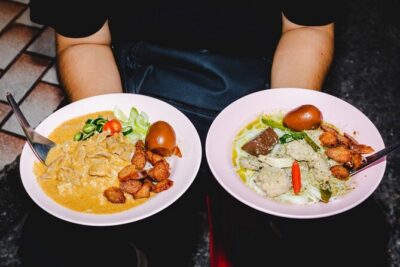
Bangkok Backstreets Food Tour with 15+ Tastings
Read our review →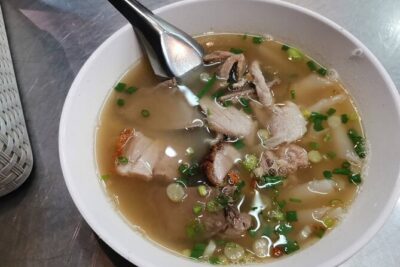
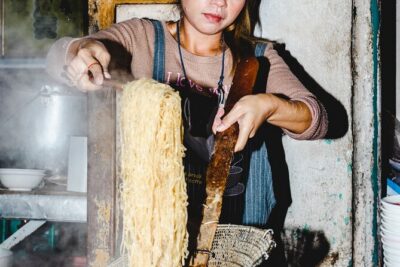
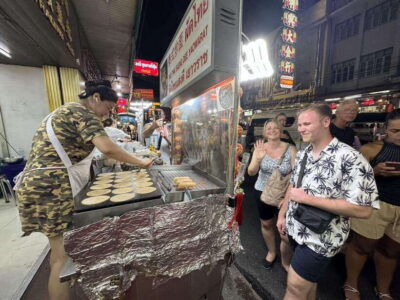
Bangkok Authentic Tasting Thai-Chinatown Walking Food Tour
Read our review →
Tuk Tuk Adventure Chinatown Michelin Food & Temples
Read our review →
Bangkok Tuk-Tuk Tour by Night with Chinatown Street Food Meal
Read our review →
Browse the lists this tour appears in