
Reviewed · HISTORICAL TOURS
Bangkok China Town ,a Bangkok historic neighbourhood
Bangkok’s Chinatown is more than neon signs and busy food lanes. This three-hour walk leads you into Talat Noi, an old riverside quarter shaped by Portuguese settlers, Chinese immigrants, Vietnamese families, and Khmer residents. You’ll see a 900-year-old Guan Yin statue, local wall art, a coffee shop open for 94 years, and a Portuguese Catholic church.
I like the small group of eight or fewer, which gives you room to ask questions. I also like the route’s cultural mix: Buddhist and Chinese worship, neighborhood street art, old food traditions, and Catholic history all appear in one compact walk. The main caution is timing. The advertised duration is about three hours, while one account describes a much longer five-hour walk, so ask for clarification if your afternoon schedule is tight.
In This Review
- Key points to know before booking
- Why Talat Noi gives this Chinatown walk its character
- Starting at Kuan Yim Shrine and the Thian Fa Foundation
- Finding Talat Noi’s stories on the walls
- A pause at Earsae Coffee, open for 94 years
- Holy Rosary Church and the Portuguese chapter
- What the small group changes
- Is $78.73 a fair price?
- Who will get the most from this walk?
- Practical details that affect your afternoon
- Should you book Bangkok Chinatown and Talat Noi?
- FAQ
- How long is the Bangkok Chinatown and Talat Noi experience?
- What time does the tour start?
- Where does the tour begin and end?
- What places are included?
- How many people can join the tour?
- Can I cancel for a full refund?
Key points to know before booking
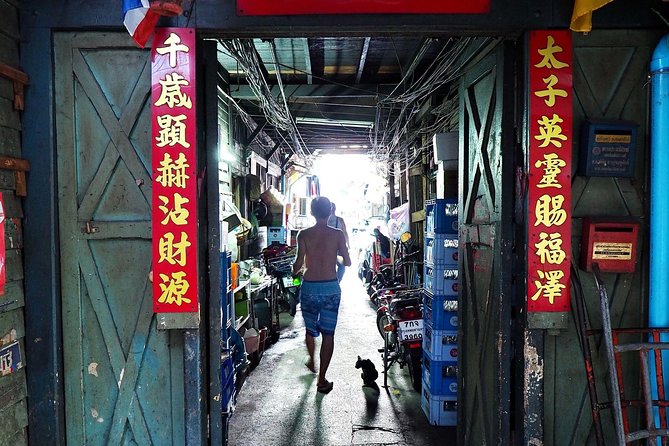
- A 900-year-old Guan Yin statue: Visit Kuan Yim Shrine at the Thian Fa Foundation, where locals come to pray to the Chinese Goddess of Mercy.
- Talat Noi beyond the main Chinatown streets: See old lanes, house-front art, local speech, food customs, and folk beliefs.
- A 94-year-old coffee shop: Earsae Coffee adds a small but memorable piece of neighborhood history.
- Portuguese roots in Bangkok: Holy Rosary Church, also called Kalawar Church, links Talat Noi to the city’s early European settlers.
- A genuinely small group: The maximum is eight people, useful in narrow lanes and at busy shrines.
- A useful afternoon finish: The walk begins at 3:00 pm and ends at River City Bangkok, on the Chao Phraya River.
Why Talat Noi gives this Chinatown walk its character
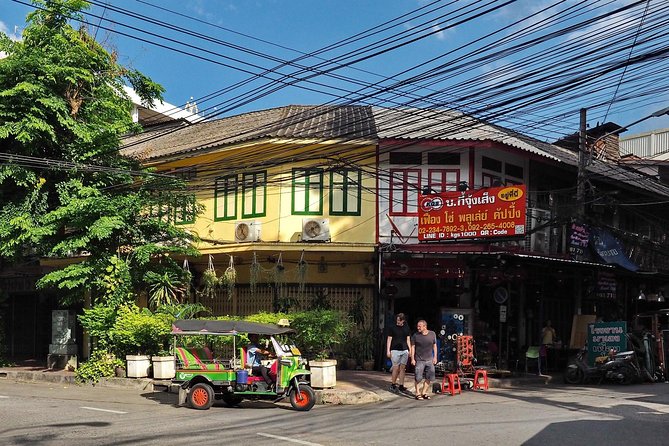
Many visitors picture Bangkok’s Chinatown as Yaowarat Road, with bright signs, food stalls, and crowds. This experience points you toward Talat Noi, a nearby quarter with an older and quieter feel. Its story reaches back before Bangkok became the capital.
The Portuguese were the first ethnic group to settle here after coming from Ayutthaya. Later, Chinese, Vietnamese, and Khmer communities made their homes in the area. Talat Noi also served as Bangkok’s first port, where immigrants arrived by river before spreading into the city.
That background changes how you look at the narrow lanes. A weathered wall is not just an attractive photo. A church is not an isolated landmark. A shrine is not merely a colorful stop. Each place helps explain how Bangkok grew through migration, trade, faith, and river traffic.
I like that the walk does not focus on one community alone. You get Chinese religious traditions, Portuguese Catholic history, and the local culture of Talat Noi in one outing. The result is a useful introduction to Bangkok’s layered past without requiring a full-day historical tour.
More history walks around Bangkok:
- From Bangkok: Ayutthaya Historical Park Guided Day Trip
★ 4.6 · 3,020 reviews - UNESCO’s Ayutthaya Historical Park: Full-Day Tour from Bangkok
★ 4.5 · 1,559 reviews - From Bangkok: Historical Day Tour to River Kwai
★ 4.6 · 868 reviews
Starting at Kuan Yim Shrine and the Thian Fa Foundation
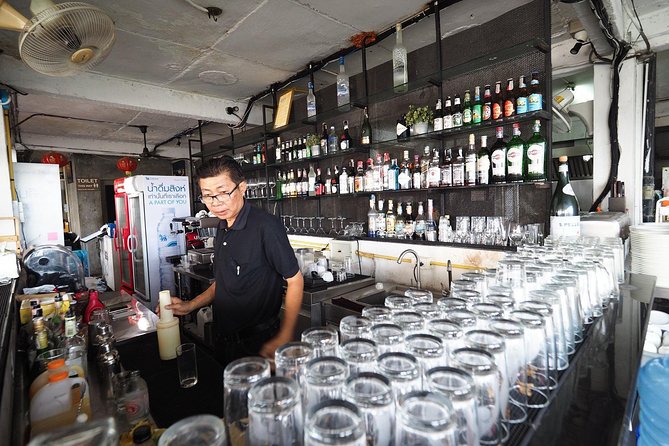
The first stop is Kuan Yim Shrine at the Thian Fa Foundation. The shrine is one of Chinatown’s most colorful sights, but its importance goes well beyond decoration.
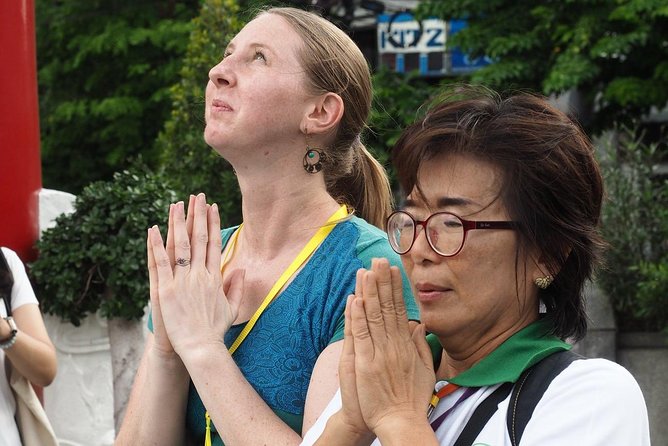
Inside, Guan Yin, the Chinese Goddess of Mercy, is represented by a statue said to be 900 years old. Thousands of local worshippers come here to pray, so you are seeing a place that still functions as part of daily religious life rather than a monument preserved only for tourists.
I would give this stop your full attention. Watch how people use the shrine, listen to the guide’s explanation, and remember that you are entering an active place of worship. The 30-minute visit is long enough to understand the setting without making the tour feel stuck in one location.
Admission is included, which keeps the visit simple. Still, a shrine can be a more personal experience than a standard sightseeing stop. You should be comfortable observing respectfully and following any guidance given on site.
For me, this is a strong opening because it places Chinatown’s Chinese identity at the center of the walk. It also prepares you to notice the difference between a religious site used by local people and a building visited mainly for its architecture.
Finding Talat Noi’s stories on the walls
The next part moves into Talat Noi, where the streets themselves become part of the experience. Local houses and lanes carry graffiti and wall art, making the district popular with younger residents and people looking for a more creative side of Bangkok.
The art is only one part of the appeal. Talat Noi has retained its own form of speech, food traditions, and folk beliefs. A guide can connect those everyday details to the buildings and lanes you pass, giving the area more meaning than a quick photo stop would provide.
The wall art stop is scheduled for about an hour, making it the longest part of the listed route. That extra time matters. You are not simply being marched past a few painted walls. You have a chance to look at the neighborhood at walking speed and notice how old homes and modern creative work sit beside one another.
I especially like this section for visitors who have already seen Bangkok’s major temples and shopping areas. Talat Noi offers a different kind of sightseeing. It is local, visual, and rooted in ordinary streets rather than grand monuments.
The drawback is that street art is changeable. Paint fades, walls get repaired, and new work may replace older pieces. You should book this part for the character of Talat Noi, not for a fixed gallery of specific murals.
A pause at Earsae Coffee, open for 94 years
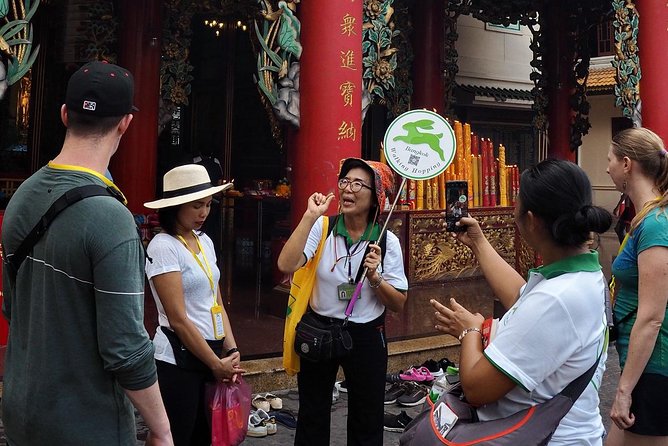
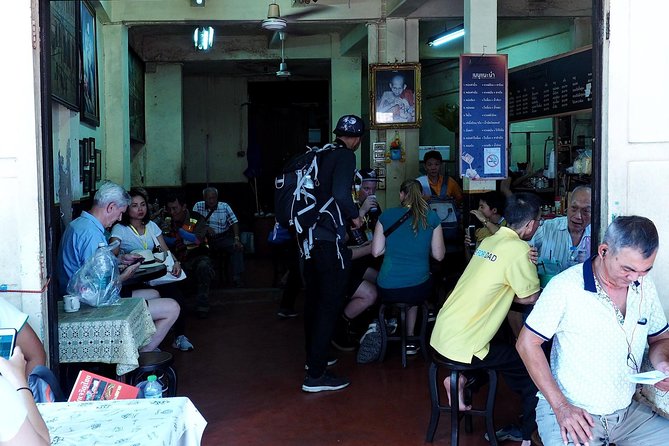
Earsae Coffee is listed as a 94-year-old coffee shop and forms part of the Talat Noi portion of the walk. Its age gives you a small but telling link to the district’s working past.
Old neighborhood shops can reveal more about a place than a polished attraction. A long-running coffee house points to habits that have survived across generations, including the simple act of meeting, eating, and taking a break in the same local setting.
The information provided does not specify a particular drink, snack, or tasting inclusion, so I would not book this as a food tour. Instead, treat the coffee shop as a cultural stop within the walk. It gives the route a pause and helps explain how Talat Noi’s traditions continue in practical, everyday places.
One account describes small culinary surprises along a longer walk. That suggests food may add to the experience, but you should not assume a full meal or a set tasting menu. If food is a major reason for booking, confirm exactly what is included before paying.
Same city, a completely different afternoon:
- Bangkok: Damnoen Saduak Market and Maeklong Railway Market
★ 4.5 · 26,723 reviews - The Old Siam: Damnoen Saduak and Maeklong Railway Market
★ 4.5 · 10,992 reviews - From Bangkok: Ayutthaya Temples Guided Tour with Lunch
★ 4.7 · 10,535 reviews - Bangkok: Train Market & Floating Market with Boat Ride
★ 4.7 · 9,547 reviews
Holy Rosary Church and the Portuguese chapter
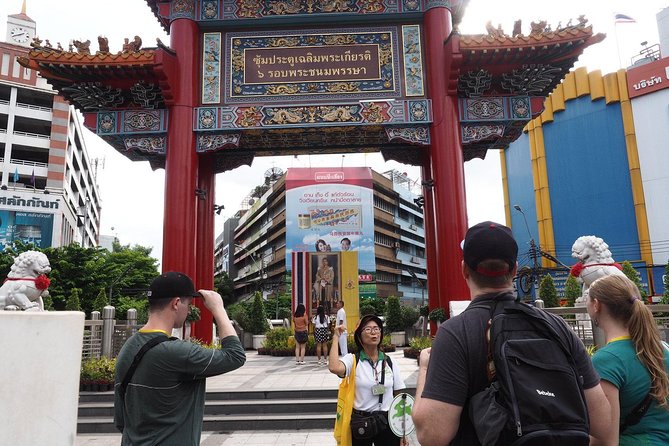
Holy Rosary Church is the final listed stop. In Thai, it is known as Wat Kalawa, and it is also called Kalawar Church. The Roman Catholic church sits in Bangkok’s Samphanthawong District on the eastern bank of the Chao Phraya River.
The church connects directly to Talat Noi’s Portuguese beginnings. Portuguese settlers from Ayutthaya built a Portuguese church here in 1786. That makes this stop especially useful after the shrine and street art, because you can see how several religious and cultural traditions share the same old riverside district.
I like the contrast. The Kuan Yim Shrine reflects Chinese devotion, while Holy Rosary Church represents the Catholic community that helped shape the area. The route does not present Chinatown as a single story. It shows how Bangkok’s identity grew through different groups arriving, settling, and maintaining their beliefs.
The church visit lasts about 30 minutes. You should expect a focused look rather than a long architectural tour, since the experience also has to cover the surrounding neighborhood. The available information does not promise a special service, interior access beyond the visit, or a church ceremony, so keep your expectations centered on the site’s history and setting.
The walk ends at River City Bangkok, at 23 Soi Charoen Krung 24. That is a practical finish near the river and gives you a clear place to continue your afternoon. It also means the route moves from Chinatown toward the riverside rather than returning to the starting point.
What the small group changes
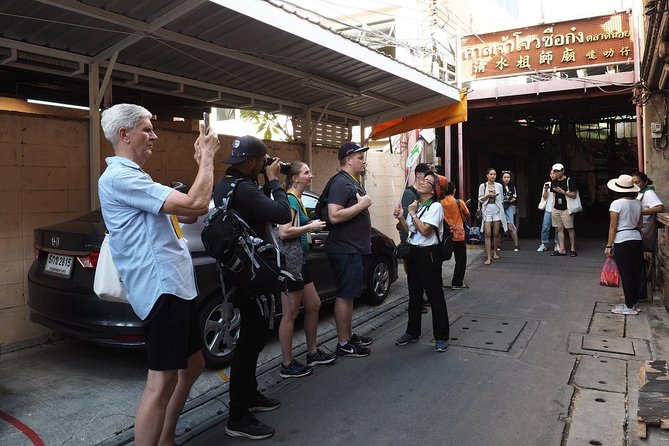
The maximum group size is eight. That is one of the strongest features here.
Small groups work well in Talat Noi because the appeal lies in details. Narrow lanes, small shrines, old shop fronts, and wall art are easier to handle with fewer people. You can also ask direct questions instead of waiting for a large group to move along.
Guide Kaew receives especially strong praise for answering questions and giving extra help. If Kaew is leading your departure, you can expect a guide who is willing to respond to curiosity rather than simply recite facts.
The tour is also suitable for most people according to the supplied details, and it is near public transportation. Still, this is a walking experience. You should be ready to spend the afternoon on foot, with stops in active neighborhood spaces rather than controlled museum rooms.
The starting point is 552 Charoen Krung Road, in Pom Prap. The start time is 3:00 pm. Since the route ends at River City Bangkok, check the exact meeting instructions carefully and allow time to reach the start by public transport.
Is $78.73 a fair price?
At $78.73 per person, this is not the cheapest way to look around Chinatown. The value depends on what you want from the afternoon.
If you only want photographs of street art and a quick walk through Talat Noi, the price may feel high. You could explore parts of the area independently, though you would lose the historical links between the Portuguese church, Chinese shrine, immigrant port, and local traditions.
The price makes more sense if you want context and a guide who can answer questions. Admission is included at the listed stops, and the group is capped at eight. Those details matter because you are paying for interpretation, organization, and a more personal pace, not simply transportation between sights.
The route also covers several different subjects in a short time: religion, migration, neighborhood customs, street art, coffee culture, and riverside history. I see it as a compact orientation to an old part of Bangkok rather than a bargain sightseeing loop.
One detail needs checking. The official duration is approximately three hours, but one account describes five hours of walking with food surprises. That could reflect a longer version, delays, or a different pace. Before booking, confirm how long your specific departure is expected to last. A longer walk may be welcome if you want more local detail, but it could affect dinner plans or transport afterward.
Who will get the most from this walk?
I would recommend it to you if you want to understand Chinatown rather than simply pass through it. The experience suits first-time Bangkok visitors who want an introduction to the city’s mixed cultural roots, especially if you enjoy history explained at street level.
It also fits repeat visitors who have already seen the central temples and want something more residential and local. The Talat Noi section, with its wall art, old homes, folk beliefs, and coffee shop, offers a different look at Bangkok.
The tour may be a good match for photographers, but I would not call it a photography-only outing. The guide’s explanations are a major part of the value. If you prefer to move alone and spend as long as you like at each mural, independent exploration may suit you better.
Families and older visitors should consider the walking time. Most people can participate, but the supplied details do not specify step-free access, seating, or the exact walking distance. Ask before booking if those points matter to you.
Practical details that affect your afternoon
You receive confirmation when booking, and the ticket is mobile, so you do not need to handle a paper voucher. The activity is near public transportation, which is useful in central Bangkok, where road traffic can make short distances take time.
The meeting point is on Charoen Krung Road, and the end point is River City Bangkok. Since these are different locations, do not assume you will finish where you began. Plan your onward route from River City, especially if you have a dinner reservation or evening activity.
Free cancellation is available if you cancel at least 24 hours before the 3:00 pm start time. Cancellations made less than 24 hours before the start are not refunded, and late changes are not accepted. The cut-off follows Bangkok local time.
The experience is run by Plan Vacation Asia Co., Ltd. The small maximum of eight is worth noting when comparing it with larger Chinatown walks. It can make a real difference when the route enters narrow lanes or pauses at a busy shrine.
Should you book Bangkok Chinatown and Talat Noi?
I would book this walk if you want a guided introduction to the human story behind Bangkok’s Chinatown. The strongest reasons are the small group, the mix of Chinese and Portuguese heritage, the 900-year-old Guan Yin statue, and the chance to see Talat Noi as a living neighborhood rather than a quick photo stop.
I would hesitate only if you want a short, tightly timed outing or a dedicated food tour. The duration needs clarification, and the available details do not promise a full meal or a fixed tasting list.
For most visitors, this is a thoughtful way to spend an afternoon. You finish at River City Bangkok with a better sense of how immigrants, faith communities, local customs, and old trade routes shaped this corner of Bangkok.
FAQ
How long is the Bangkok Chinatown and Talat Noi experience?
The stated duration is approximately three hours. One account describes a five-hour walking experience, so confirm the expected length for your departure before booking.
What time does the tour start?
The tour starts at 3:00 pm local time.
Where does the tour begin and end?
It begins at 552 Charoen Krung Road in Pom Prap, Bangkok. It ends at River City Bangkok, 23 Soi Charoen Krung 24, in Talat Noi.
What places are included?
The route includes Kuan Yim Shrine at the Thian Fa Foundation, Talat Noi wall art, Earsae Coffee, a 94-year-old coffee shop, and Holy Rosary Church, also known as Kalawar Church or Wat Kalawa.
How many people can join the tour?
The group is limited to a maximum of eight people.
Can I cancel for a full refund?
Yes. You can cancel for a full refund at least 24 hours before the experience start time. Cancellations or changes made less than 24 hours before the start are not accepted for a refund.
Just added around Bangkok
- Bangkok: Fallabella River Front Iconsiam★ 4.7 · 3 reviews
- Private Grand Palace Bangkok City Tour & Klong Longtail Boat Trip★ 4.5 · 3 reviews
- Bangkok: Divana Scentuara Spa Chidlom Branch E-Voucher★ 5.0 · 3 reviews
- Bangkok: Flower Market & Sunset Walking Tour★ 3.7 · 3 reviews
- Private Shore Excursion: Best of Bangkok in a day★ 3.5 · 3 reviews
- From Bangkok: Kanchanaburi, River Kwai and Erawan Waterfall Tour★ 3.0 · 3 reviews
- Private Damnoen Saduak and Maeklong Railway Market Tour(min 2pax)★ 5.0 · 3 reviews
- Damnoen Saduak Famous Floating Market and Mea Klong Railway Tour★ 5.0 · 3 reviews
Historical Tours, compared.
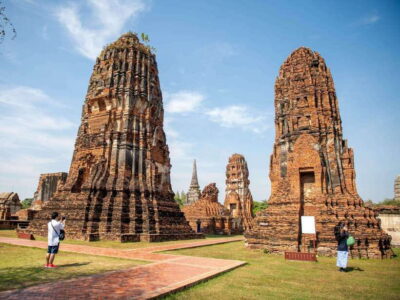

UNESCO’s Ayutthaya Historical Park: Full-Day Tour from Bangkok
Read our review →

Historical City of Ayutthaya – Unesco Full Day Tour From Bangkok
Read our review →
Private Excursion to Floating Market and Ayutthaya World Heritage
Read our review →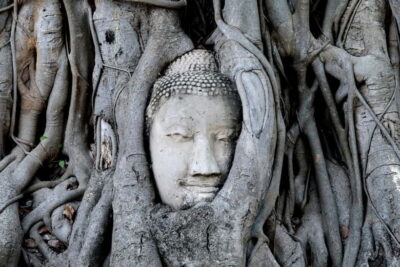
Private Excursion to Ayutthaya, UNESCO World Heritage site with Boat Tour
Read our review →
River Kwai Day Tour from Bangkok – History, Scenery & Culture
Read our review →Browse the lists this tour appears in