
Reviewed · GRAND PALACE & TEMPLE TOURS
Angkor Wat 3-Day Tour from Bangkok
Angkor Wat is the star, but the real story is the full overland journey: Thailand, the Poipet border, rural Cambodia, Siem Reap, Tonle Sap Lake, and a full day among Khmer temples. Guides such as Sothy, Bun, Sava, and Vithyea have made the temple day especially rewarding with clear explanations, local stories, and help with photographs.
I like the private format, since your own group can set the pace, and I like having two nights in Siem Reap rather than racing back after one night. The main drawback is the border crossing and the long road journey. Plan for heat, delays, luggage handling, and a possible six to ten hours on the road each way.
In This Review
- Key points before you book
- The long road from Bangkok to Poipet
- Cambodia entry, visas, and the return to Thailand
- Tonle Sap and Chong Kneas on the first afternoon
- Two nights in Siem Reap, with breakfast included
- Angkor Wat: the day’s main event
- Angkor Thom and Bayon’s stone faces
- Preah Khan and Ta Prohm
- What private transport really means here
- Is $490 per person good value?
- Who should choose this three-day route?
- Should you book it?
- FAQ
- Where does the tour start and end?
- How long is the tour?
- Is the Cambodian visa included?
- What is included in the price?
- Are meals included?
- How many people can join the private tour?
- What should I wear at the temples?
Key points before you book
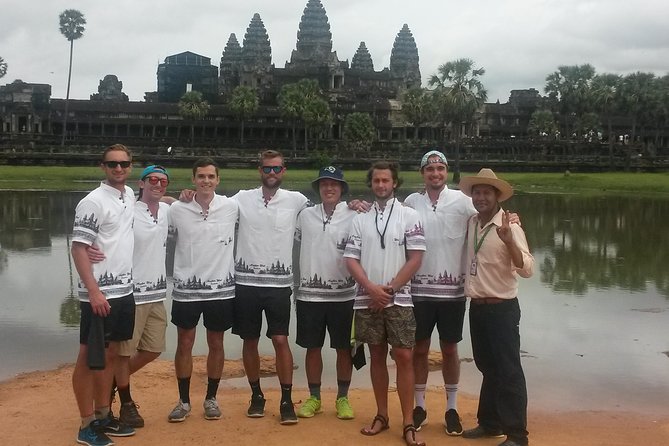
- Angkor Wat comes with four major temple stops: You visit Angkor Wat, Angkor Thom’s South Gate, Bayon, Preah Khan, and Ta Prohm on the main temple day.
- Tonle Sap is part of the arrival day: A private boat takes you around Chong Kneas floating village in the afternoon.
- The border is the tour’s weak link: Poipet can be confusing, crowded, and slow, especially during Thai or Cambodian holidays.
- Two hotel nights give you breathing room: You have an evening in Siem Reap and time for Pub Street, restaurants, or the Night Market.
- The price covers the costly basics: Private transport, a licensed guide, temple tickets, two nights at a four-star hotel, breakfast, and hotel transfers are included.
- Visa planning matters: Cambodia’s visa is not included, and your nationality can affect both entry to Cambodia and your return to Thailand.
The long road from Bangkok to Poipet
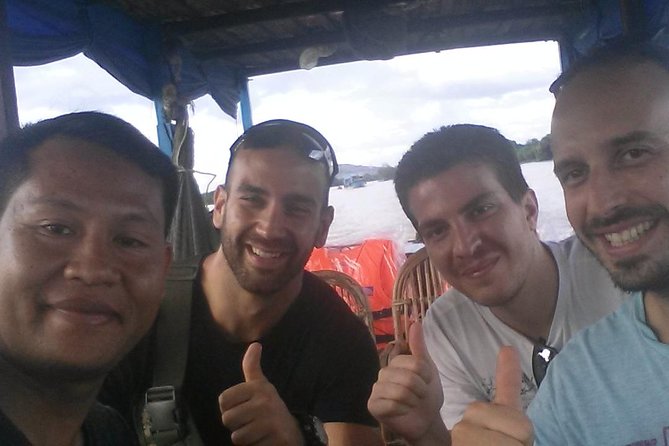
The day begins around 6:30 a.m. with pickup at your hotel in Bangkok, Pattaya, or Koh Chang. From Bangkok, the drive to Poipet is a major part of the day, and the full journey to Siem Reap can feel long even with rest stops.
At about 10:30 a.m., you reach the Thai-Cambodian border. The listed schedule allows roughly an hour before continuing toward Siem Reap, but this is only a rough guide. Immigration lines can change quickly. During Chinese New Year, Thai holidays, Cambodian holidays, and other busy periods, the crossing has taken two to three and a half hours, and the overall return trip has stretched to ten hours.
The border process is not a normal coach stop. You leave the vehicle, exit Thailand, walk through the crossing area, and enter Cambodia. You may change cars and drivers after immigration. Some people have been dropped a short distance from the border and left unsure which direction to take, while others have received smooth help from a border representative.
That makes preparation important. Keep your passport, visa papers, phone, and money where you can reach them. If you have a printed Cambodian e-visa, carry two copies as requested by the operator. Visa on arrival is also listed, with one original passport photograph required.
The walking section can include heat, stairs, and luggage. If you are traveling alone, or if you are not comfortable navigating an unfamiliar border area, ask the driver or tour representative to explain the handoff clearly before you leave the vehicle. The Cambodia side may use a different driver, so confirm the car and contact person before moving on.
More Grand Palace and temple tours:
- From Bangkok: Ayutthaya Temples Guided Tour with Lunch
★ 4.7 · 10,535 reviews - Bangkok: City Highlights Temple and Market Walking Tour
★ 4.5 · 3,990 reviews - Bangkok by Night: Temples, Markets and Food Tuk-Tuk Tour
★ 5.0 · 3,752 reviews
Cambodia entry, visas, and the return to Thailand
The tour price of $490 per person does not include the Cambodian visa. You can apply for an e-visa in advance or use visa on arrival at Poipet, depending on your nationality and current entry rules.
The supplied instructions say citizens of ASEAN countries receive a free Cambodian visa for 30 days. Mexican and Burmese passport holders need to check re-entry or multiple-entry requirements for Thailand, since a simple border crossing may not be suitable for returning to Thailand. Indian passport holders are asked to carry printed hotel booking and onward flight documents.
These rules are too important to treat casually. Check your own passport requirements before booking, and confirm that you can legally return to Thailand by land. If your documents do not fit the land-border rules, the operator recommends returning by air instead.
The return on day three follows the same general route. After breakfast, you check out and travel back to Thailand. The border wait is the biggest unknown. If you have a flight from Bangkok that day, this trip carries real risk. I would not schedule a tight international connection after the tour, especially around a holiday.
Tonle Sap and Chong Kneas on the first afternoon
After the border crossing and the drive to Siem Reap, the first sightseeing stop is Chong Kneas floating village on Tonle Sap Lake. The boat trip is scheduled for about three hours, from roughly 3:30 to 5:30 p.m., with a return to the hotel afterward.
This is a useful first look at life around Cambodia’s largest lake. The village is built around the water, and the boat gives you a different view of homes, boats, and daily routines than you get in the temple complex. The timing also aims for the late afternoon, when the light is softer and the heat may ease.
The stop is not as polished as a museum or formal attraction. Water levels and weather affect what you see, and the experience is more about observing a working community than checking off a grand monument. Keep your expectations grounded and listen to your guide’s explanation of the area.
Back at the hotel around 5:30 p.m., the evening is free. You can walk around Siem Reap, eat at a restaurant, visit the Night Market, or spend time around Pub Street. This free evening is one of the strongest reasons to choose the three-day plan. You are not forced to leave Cambodia as soon as the temple gates close.
Two nights in Siem Reap, with breakfast included
The package includes two nights in a four-star hotel and breakfast. The exact hotel is not guaranteed in the supplied details, though one booking described Tara Angkor as comfortable, with a broad breakfast buffet and a pool area suitable for relaxing after the temple day.
That hotel time matters. Angkor’s temples require walking in hot weather, and a quiet evening or a swim can make the second day much more pleasant. The included breakfast also simplifies an early start, though lunch and dinner are your responsibility.
The room arrangement is specific: couples receive one room with a king-size bed, while friends or families receive one room with two beds. If you need separate rooms, adjoining rooms, or a particular bed setup, ask before paying.
Siem Reap itself is easy to explore in the free evening, according to the information provided. Restaurants, Pub Street, and the Night Market are all listed as options. U.S. dollars and Cambodian riels are commonly used in the places described, and Thai baht may also be accepted. The supplied advice notes that ATMs dispense either riels or U.S. dollars.
A few more Bangkok half-days to weigh up
- Muay Thai Vacation Package (3 Days, 3 Nights: Training & Room Stay)
★ 5.0 · 18 reviews - Bangkok and Ayutthaya 3 Days
★ 4.5 · 12 reviews
Angkor Wat: the day’s main event
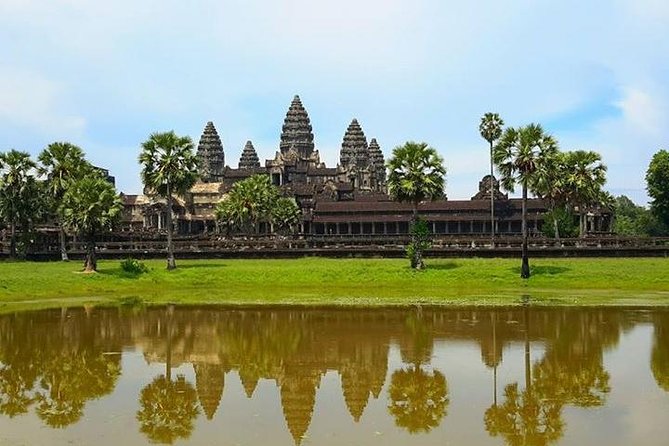
The second day is devoted to the Angkor temple complex, beginning with Angkor Wat. The monument covers a vast site and is one of the world’s largest religious buildings. Its towers, galleries, courtyards, and carved walls need time, not a rushed photo stop.
The scheduled visit is about two hours, though the full temple day includes several other sites. Your guide’s role matters here. A good guide can explain the Hindu and Buddhist stories shown in the carvings, point out architectural details, and connect the buildings to the Khmer kings who ordered them built.
Guides named Sothy, Bun, Sava, Vithyea, Saruon, Narith, and Bunrong have all been specifically praised for their temple explanations, warmth, humor, and ability to adjust the pace. English ability can vary, especially among drivers, but the Cambodian guides are assigned to lead the sightseeing.
Some departures may offer an optional sunrise start at Angkor Wat. One detailed account described the sun rising behind the temple towers as a highlight. Since the published schedule does not give a fixed sunrise time or confirm that it is included, ask the operator how this option works before you book.
Dress rules are firm. Short clothing is not allowed at the temples, so wear clothing that covers your shoulders and knees. You will also want water, sun protection, and shoes suitable for uneven stone surfaces. The vehicle has air conditioning, which is a welcome relief between stops.
Angkor Thom and Bayon’s stone faces
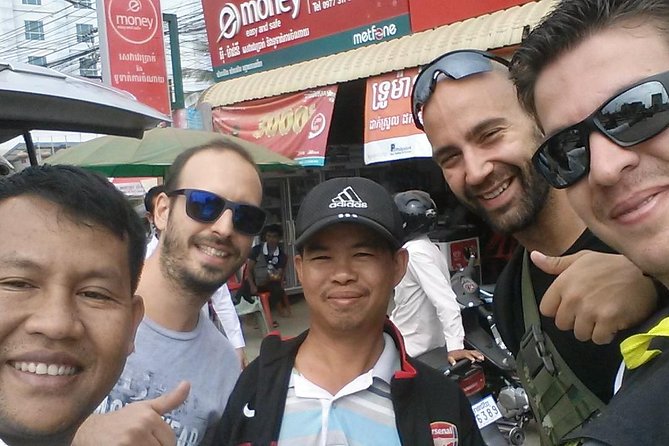
From Angkor Wat, the route continues to Angkor Thom’s South Gate, scheduled for about an hour. This entrance leads into the former capital city, and the approach gives you a sense of the scale of the Angkor complex beyond one famous temple.
Bayon follows, with about an hour allotted. Its carved faces are the visual signature of the site, but the temple is more than a quick picture stop. The structure has tight passages, towers, galleries, and stone reliefs that are easier to understand when a guide points out the figures and stories.
This is where a private tour earns its keep. You can ask questions, pause for pictures, or move on when the heat becomes too much. The itinerary is full, so you will not have unlimited time at every monument, but a private vehicle keeps you from waiting for a large group to gather.
The temple day is physically demanding. Five stops, tropical heat, stone steps, and several hours outdoors can wear you down. The air-conditioned car and the driver’s readiness between sites are not minor comforts. One account specifically appreciated returning to a cool vehicle after each stop.
Preah Khan and Ta Prohm
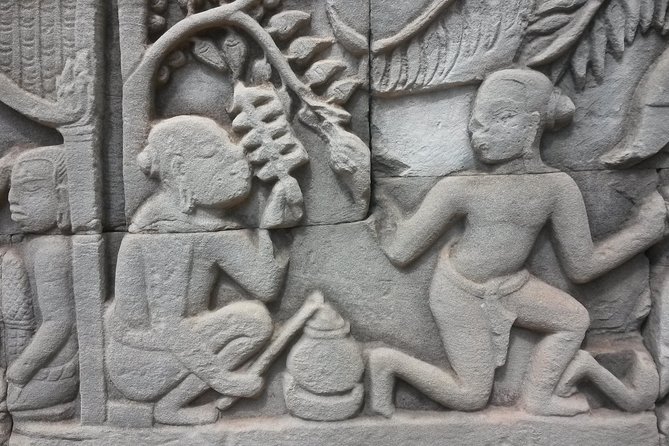
Preah Khan is scheduled for about an hour and offers a different mood from Angkor Wat and Bayon. Built in the 12th century by King Jayavarman VII in honor of his father, it extends through long corridors and partially ruined spaces.
Your guide can help you read the site as more than old stone. The carvings, religious symbols, and layout reveal the mixture of political power and spiritual purpose that shaped the Angkor complex. Guides have also been praised for explaining both Hindu and Buddhist traditions represented across the temples.
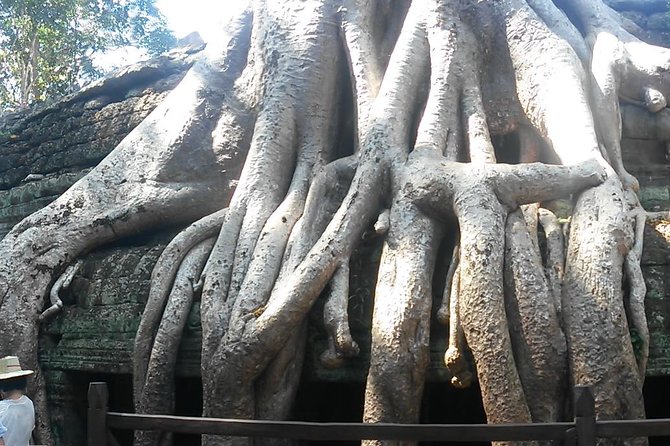
Ta Prohm is the final listed temple stop, also with about an hour. Its fame comes from the way trees and roots have grown through the ruins. That makes it photogenic, but the appeal is not only the famous images. The broken walls and living roots show how the site looked before large-scale restoration and modern visitor routes.
The sequence works well. Angkor Wat gives you scale, Bayon gives you sculpture and faces, Preah Khan gives you long corridors and carved detail, and Ta Prohm gives you atmospheric ruins. It is a lot for one day, but the stops are distinct enough to keep the experience from feeling repetitive.
Lunch is not included. You will stop at a local restaurant arranged or suggested by the guide, but you pay for your own meal. Bring cash, and allow enough time to eat rather than trying to squeeze lunch into every spare minute.
What private transport really means here
The vehicle is private and air-conditioned for your party, with a maximum group size of 15. That does not mean one car carries you continuously from Bangkok into Siem Reap. The border requires immigration procedures, and you may transfer to another Cambodian driver after crossing.
This arrangement can work very well when communication is clear. Drivers have been described as punctual and helpful, and some have made regular stops during the long road journey. On the temple day, having the car close by lets you escape the sun between monuments.
The weak point is coordination at Poipet. Make sure you know who will meet you, what vehicle to look for, and how your luggage will be handled. Take a photograph of the driver or vehicle if needed. The operator has acknowledged past problems with people becoming separated at the border, so this is worth treating as a practical planning issue, not a small detail.
The return transfer may also vary. Most of the experience is private, but walking through immigration can place you among many other people. One account described being sent onward in an older, unpleasant-smelling taxi, while other accounts describe comfortable vans and smooth transfers. The service can be uneven at the handoff points.
Is $490 per person good value?
At $490 per person, this is not a budget border crossing. Still, the cost includes two hotel nights, breakfast, private air-conditioned transport, hotel pickup and return, a licensed Cambodian guide, the Tonle Sap boat trip, and temple tickets.
Compare that with arranging separate transport, accommodation, a guide, temple entry, and a boat trip yourself. The package also removes much of the planning inside Cambodia. If you are starting in Bangkok and have only three days, that convenience has real value.
The price looks less attractive if you dislike long road journeys, want full control over hotels and meals, or can arrange a cheap flight to Siem Reap. The tour also excludes the Cambodian visa, lunch, dinner, and personal expenses. You should budget for those separately.
For a couple or small private group, the package is easier to justify than for a solo visitor. The published minimum is one person and the maximum is 15, but the per-person price may feel high when you are carrying the full cost of private services alone.
Who should choose this three-day route?
I would choose this tour if you are based in Bangkok, want Angkor Wat without arranging every transfer yourself, and value a private guide. It suits people who want a taste of Siem Reap, not only a single temple photograph.
The three-day format is also better for anyone who wants time to recover after the road journey. The free evening, hotel pool, and second night mean the temple day does not immediately become another border day.
I would hesitate if you have a strict flight schedule, limited mobility, or little patience for immigration queues. The border involves walking with luggage, and the temple day involves heat and uneven ground. The tour is not a good match for a rushed itinerary built around a same-day Bangkok connection.
Free cancellation is available if you cancel at least 24 hours before the start time. Changes or cancellations inside that window are not accepted for a refund.
Should you book it?
Book it for the private guide, the full Angkor temple day, and the chance to spend two nights in Siem Reap rather than treating Cambodia as a quick photo stop. The strongest guides, including Sothy, Bun, Sava, and Vithyea, can turn the carvings and ruins into a readable story, while the private vehicle gives you welcome relief from the heat.
Book with care if your passport needs special visa or re-entry treatment. Print your e-visa, confirm the border meeting process, and leave a large time cushion for the return. If you can accept a long drive and an imperfect border crossing, this is a practical way to reach Angkor Wat from Thailand. If you cannot, flying to Siem Reap is the safer choice.
FAQ
Where does the tour start and end?
Pickup and return are offered from hotels in Bangkok, Pattaya, or Koh Chang. The listed meeting point and end point are Bangkok, Thailand.
How long is the tour?
The experience lasts approximately three days and includes two nights of accommodation in Siem Reap.
Is the Cambodian visa included?
No. The Cambodian visa is not included. You can apply for an e-visa in advance or use visa on arrival at the Poipet border, depending on your nationality and entry requirements.
What is included in the price?
The price includes hotel pickup and drop-off, private transport in an air-conditioned vehicle, two nights at a four-star hotel, breakfast, a licensed tour guide, the Tonle Sap boat trip, and temple tickets.
Are meals included?
Breakfast is included at the hotel. Lunch and dinner are not included, and personal expenses are also your responsibility.
How many people can join the private tour?
The minimum is one person and the maximum is 15 people. Only your own party participates in the private tour service.
What should I wear at the temples?
Short dress is not allowed at the temples. Wear clothing that covers your shoulders and knees, and choose comfortable shoes for walking around the temple grounds.
Just added around Bangkok
- Yoga in the Park Thailand★ 5.0 · 12 reviews
- Bangkok and Ayutthaya 3 Days★ 4.5 · 12 reviews
- Private Tour: Damnoen Saduak Floating Market and Bangkok City Temples★ 5.0 · 12 reviews
- Chinatown (Yaowarat Road) Neon Photoshoot★ 5.0 · 12 reviews
- Ayutthaya Day Tour By Coach and Cruise★ 4.0 · 12 reviews
- Bangkok Suvarnabhumi Airport: VIP Meet & Greet Service (Fasttrack)★ 3.5 · 12 reviews
- Bangkok: Wow Park Interactive Amusement & Science Park★ 4.5 · 12 reviews
- Afternoon Ayutthaya & Ancient Temples at UNESCO site By Road★ 4.5 · 12 reviews
Grand Palace & Temple Tours, compared.
City Highlights Temple and Market Walking Tour
Read our review →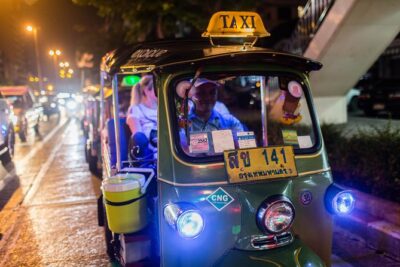
Bangkok by Night: Temples, Markets and Food Tuk-Tuk Tour
Read our review →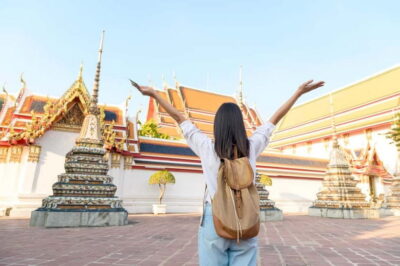
Grand Palace, Wat Pho, and Wat Arun Guided Tour
Read our review →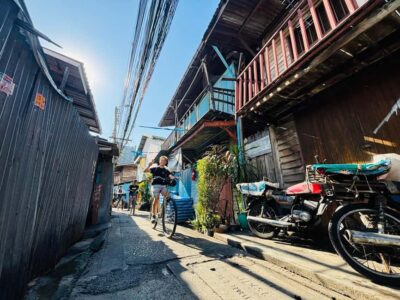
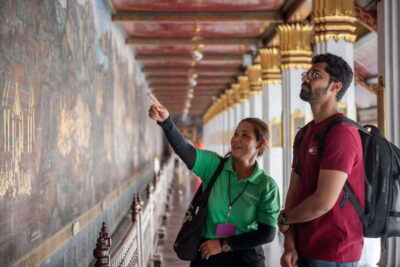
Grand Palace and Wat Phra Kaew Guided Walking Tour
Read our review →
Grand Palace, Wat Pho, Wat Arun Sacred & Local Tour
Read our review →
Browse the lists this tour appears in